
We read your photo as:
Energy enters the ecosystem.
ScanSolve AI Answer
Answer
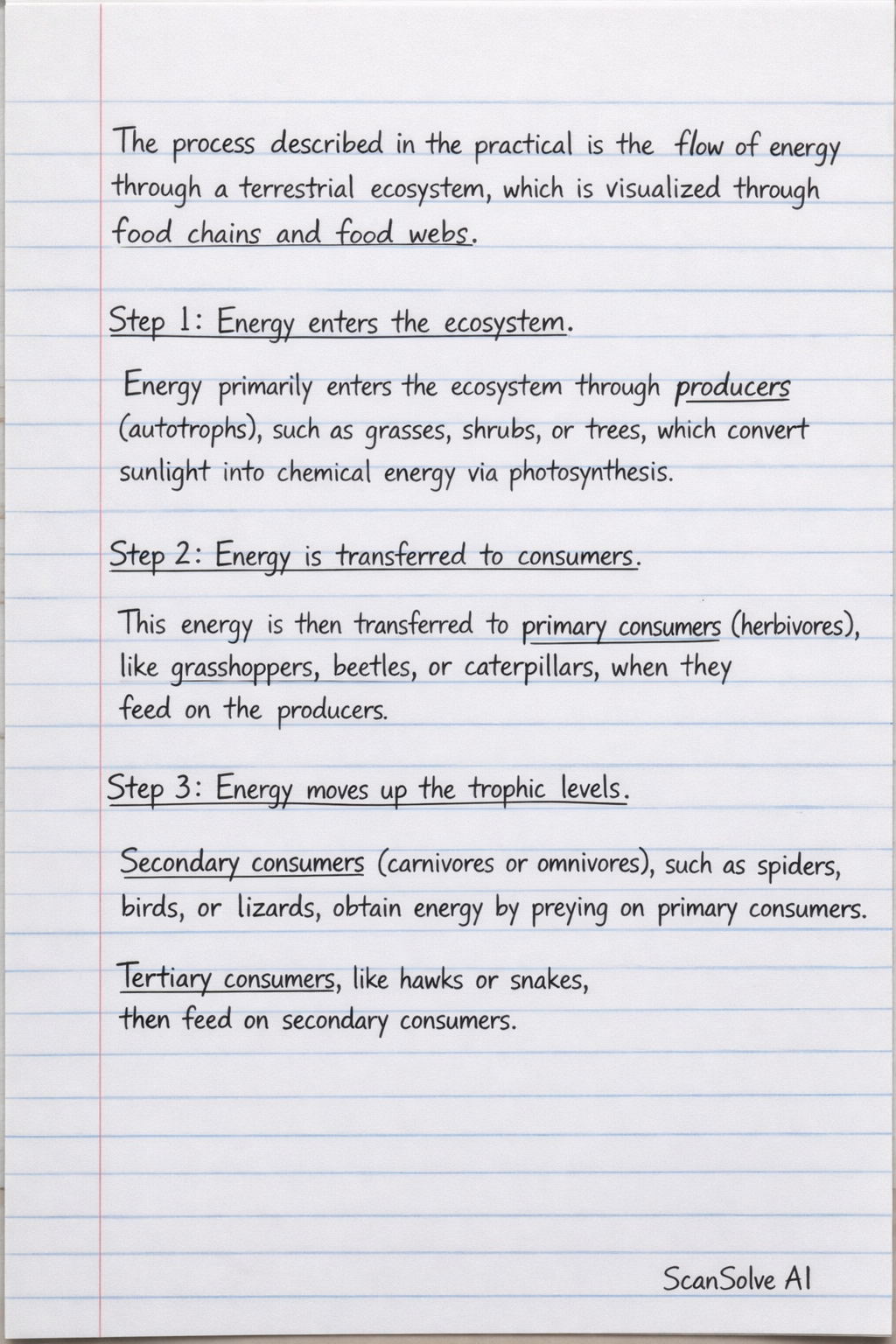
The process described in the practical is the flow of energy through a terrestrial ecosystem, which is visualized through food chains and food webs.
Step-by-step solution
4 stepsEnergy enters the ecosystem.
Energy primarily enters the ecosystem through producers (autotrophs), such as grasses, shrubs, or trees, which convert sunlight into chemical energy via photosynthesis.
Energy is transferred to consumers.
This energy is then transferred to primary consumers (herbivores), like grasshoppers, beetles, or caterpillars, when they feed on the producers.
Energy moves up the trophic levels.
Secondary consumers (carnivores or omnivores), such as spiders, birds, or lizards, obtain energy by preying on primary consumers. Tertiary consumers, like hawks or snakes, then feed on secondary consumers.
Formation of food chains and webs.
A food chain illustrates a single pathway of this energy transfer (e.g., plant grasshopper bird). A food web shows the complex network of interconnected food chains, demonstrating multiple feeding relationships and the overall energy flow within the ecosystem.
Still stuck on this one?
Ask a follow-up, and the answer starts from this question.
More Physics Questions
Handwritten Step-by-Step Solution
Get this as a handwritten image on WhatsApp — like a tutor wrote it for you.
Try on WhatsApp