
We read your photo as:
Solve the following pinhole camera problems: 1) Given u=10cm, Ho=5m, v=2m, calculate Hi and M. 2) Given v=12.67m, Hscreen=16cm, Ho=1.86m, calculate u. 3) Given H_o=3.0m, u=7.50m, calculate image heigh
ScanSolve AI Answer
Step-by-step solution
11 stepsHere are the solutions to the pinhole camera problems:
1)
Convert all units to meters.
Object distance () =
Object height () =
Image distance () =Calculate the height of the image () using the magnification formula.
Calculate the magnification ().
2)
Identify the given values and convert units.
Image distance () =
Screen height () =
Object height () =
For a full photo, the image height () must be equal to the screen height. So, .Calculate the maximum object distance () using the magnification formula.
3)
Convert all units to meters.
Object height () =
Object distance () =
Image height () =Calculate the distance of the film from the pinhole (image distance, ) using the magnification formula.
4)
Convert all units to meters.
Screen side =
Image distance () =
Object distance () =
The image occupies three quarters of the height of the screen, so image height () = .Calculate the height of the flag staff (object height, ) using the magnification formula.
5)
Identify the given values.
Length of pinhole camera (image distance, ) =
Object height () =
Object distance () =Calculate the height of the image () using the magnification formula.
Still stuck on this one?
Ask a follow-up, and the answer starts from this question.
More Physics Questions
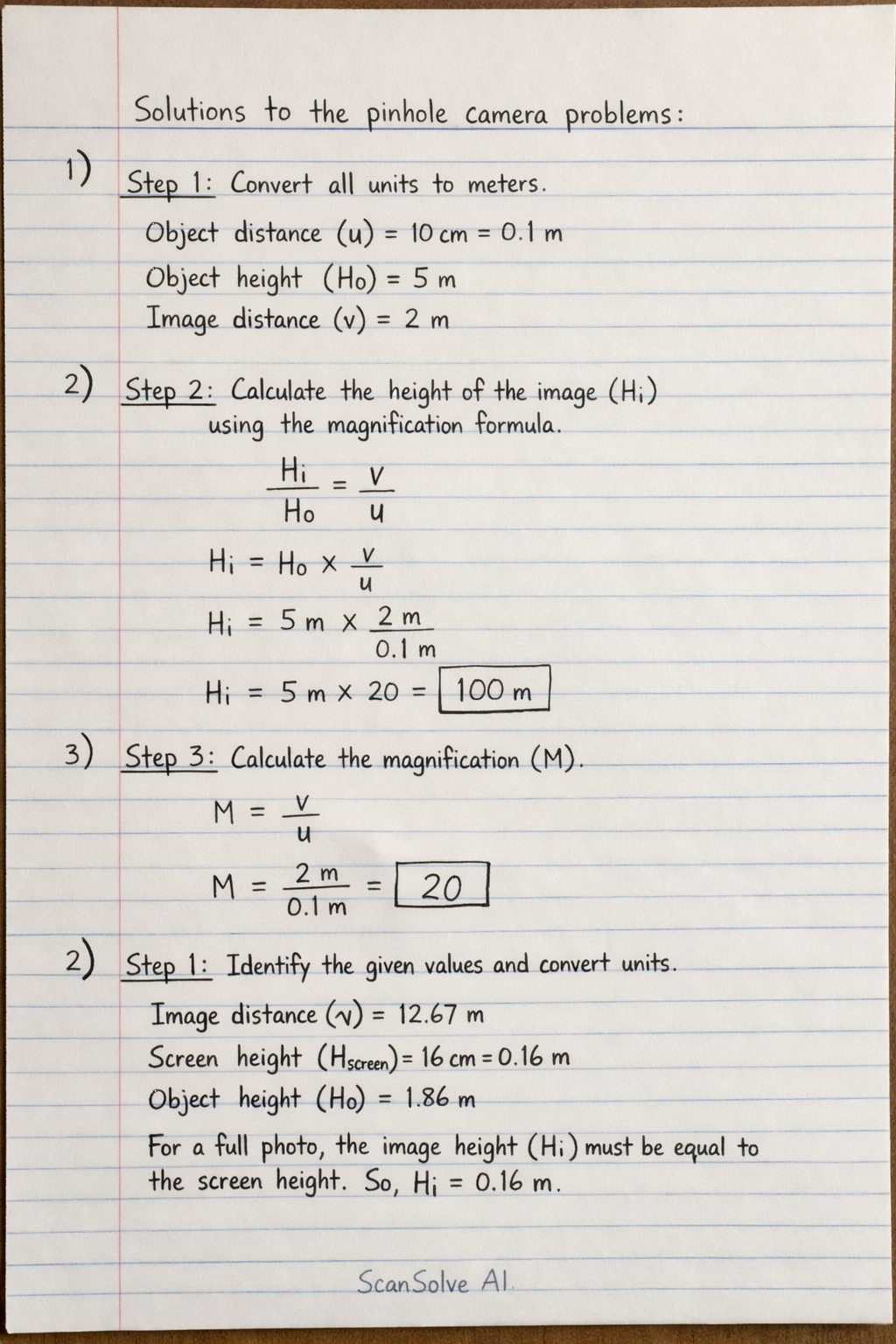
Handwritten Step-by-Step Solution
Get this as a handwritten image on WhatsApp — like a tutor wrote it for you.
Try on WhatsApp