
We read your photo as:
Calculate the heat gained by the calorimeter and water, and the energy lost by the metal nut.
ScanSolve AI Answer
Step-by-step solution
9 stepsHere's the solution to the problem:
b) i) Heat gained by the calorimeter and water.
Calculate the temperature change.
The initial temperature of the calorimeter and water is , and the final temperature is .
Calculate the heat gained by the copper calorimeter.
Mass of copper calorimeter,
Specific heat capacity of copper,Calculate the heat gained by the water.
Mass of water,
Specific heat capacity of water,Calculate the total heat gained by the calorimeter and water.
b) ii) Energy supplied (lost) by the metal nut.
According to the principle of calorimetry, the heat lost by the hot object (metal nut) is equal to the heat gained by the cold objects (calorimeter and water), assuming no heat loss to the surroundings.
b) iii) The specific heat capacity of the material making the nut.
Identify the given values for the nut.
Mass of metal nut,
Initial temperature of nut,
Final temperature of nut,
Heat lost by nut, (from part ii)Calculate the temperature change of the nut.
Use the formula for heat lost to find the specific heat capacity ().
c) Calculate the specific latent heat of fusion of ice.
Calculate the energy supplied by the electric heater.
Power of heater,
Time,Use the formula for latent heat to find the specific latent heat of fusion ().
Mass of ice,
The energy supplied by the heater is used to melt the ice.
Still stuck on this one?
Ask a follow-up, and the answer starts from this question.
More Physics Questions
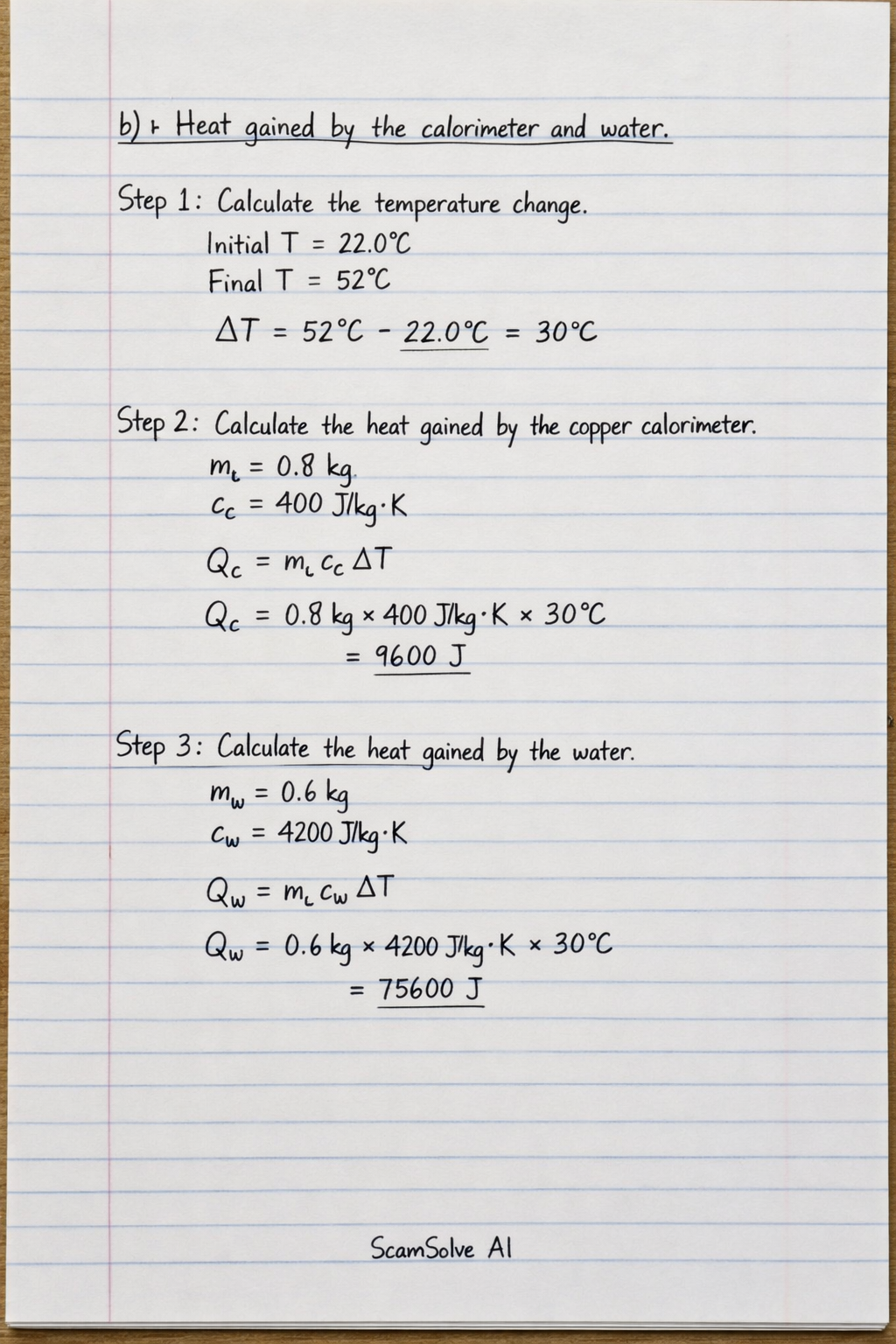
Handwritten Step-by-Step Solution
Get this as a handwritten image on WhatsApp — like a tutor wrote it for you.
Try on WhatsApp