
We read your photo as:
Name two types of mirrors that always form a virtual image and describe the characteristics of the image formed by a concave mirror when the object is placed between its pole and principal focus.
ScanSolve AI Answer
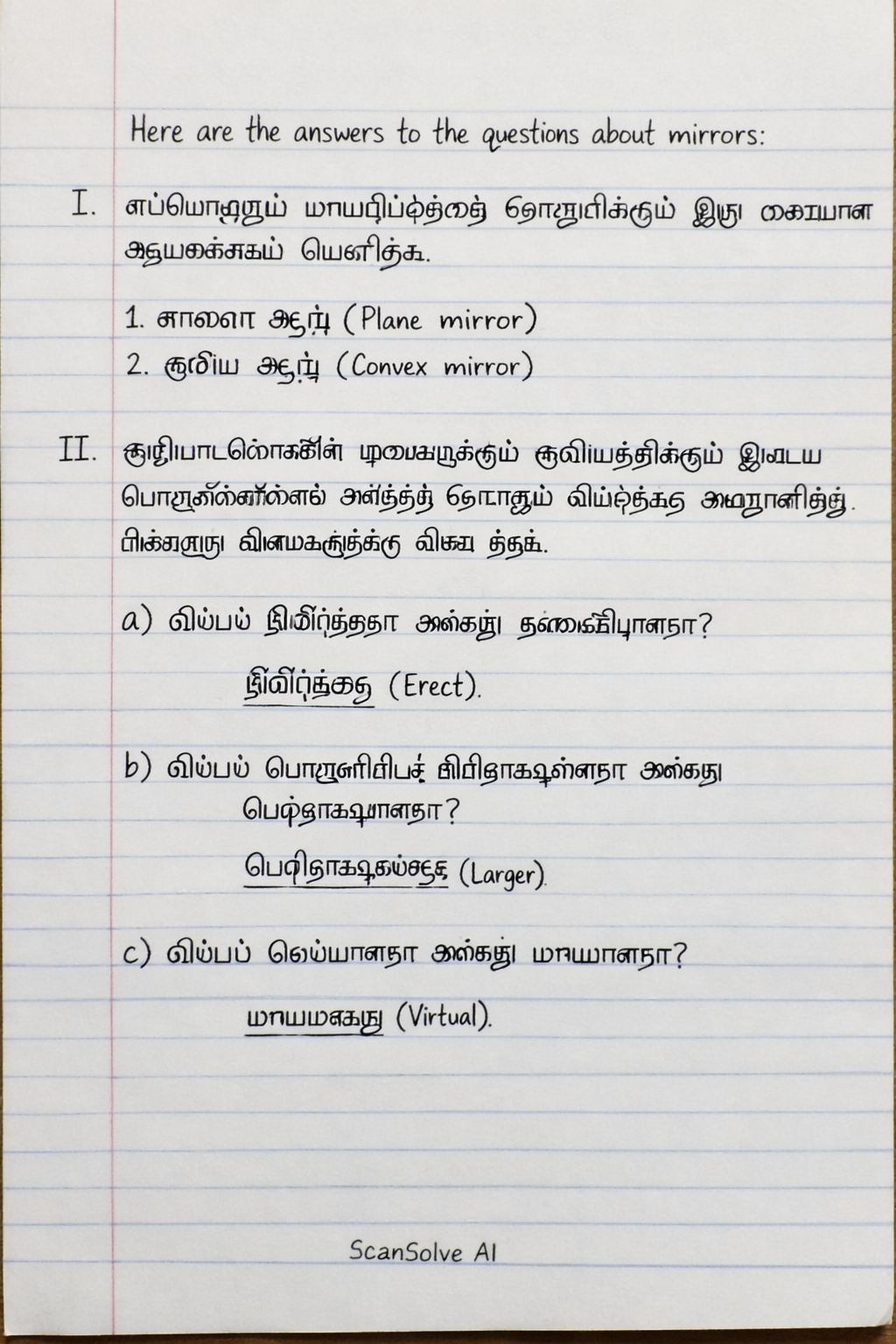
Here are the answers to the questions about mirrors:
I. எப்பொழுதும் மாயவிம்பத்தைத் தோற்றுவிக்கும் இரு வகையான ஆடிகளைப் பெயரிடுக.
(Name two types of mirrors that always form a virtual image.)
- சமதள ஆடி (Plane mirror)
- குவிய ஆடி (Convex mirror)
II. குழியாடியொன்றின் முனைவுக்கும் குவியத்திற்கும் இடையே பொருளொன்றை வைத்துத் தோன்றும் விம்பத்தை அவதானித்து பின்வரும் வினாக்களுக்கு விடை தருக.
(Observe the image formed when an object is placed between the pole and the principal focus of a concave mirror and answer the following questions.)
-
a) விம்பம் நிமிர்ந்ததா அல்லது தலைகீழானதா? (Is the image erect or inverted?)
- நிமிர்ந்தது (Erect)
-
b) விம்பம் பொருளினிடச் சிறிதாகவுள்ளதா அல்லது பெரிதாகவுள்ளதா? (Is the image smaller or larger than the object?)
- பெரிதாகவுள்ளது (Larger)
-
c) விம்பம் மெய்யானதா அல்லது மாயமானதா? (Is the image real or virtual?)
- மாயமானது (Virtual)
-
d) பொருள் குவியத்திலிருந்து முனைவை நோக்கி நகர்த்தப்படும் போது விம்பம் படிப்படியாகச் சிறிதாகுமா அல்லது பெரிதாகுமா? (When the object is moved from the focus towards the pole, will the image gradually become smaller or larger?)
- சிறிதாகும் (Smaller)
III. குழியாடியொன்றில் மிகப்பெரிய விம்பம் ஒன்றைப் பெறுவதற்கு
(To obtain the largest possible image in a concave mirror:)
-
a) பொருள் எங்கு வைக்கப்பட வேண்டும்? (Where should the object be placed?)
- குவியத்தில் (At the principal focus (F))
-
b) இங்குப் பெறப்படும் விம்பம் நிமிர்ந்ததா அல்லது தலைகீழானதா? (Is the image obtained here erect or inverted?)
- தலைகீழானது (Inverted)
**IV. குவியாடியொன்றின் முன்னால் பொருளொன்றை வைத்து அதில் தோன்றும் விம்பத்தை அவ
Still stuck on this one?
Ask a follow-up, and the answer starts from this question.
More Physics Questions
Handwritten Step-by-Step Solution
Get this as a handwritten image on WhatsApp — like a tutor wrote it for you.
Try on WhatsApp