
What scale should I use for the y and x axis
ScanSolve AI Answer
Answer
Step-by-step solution
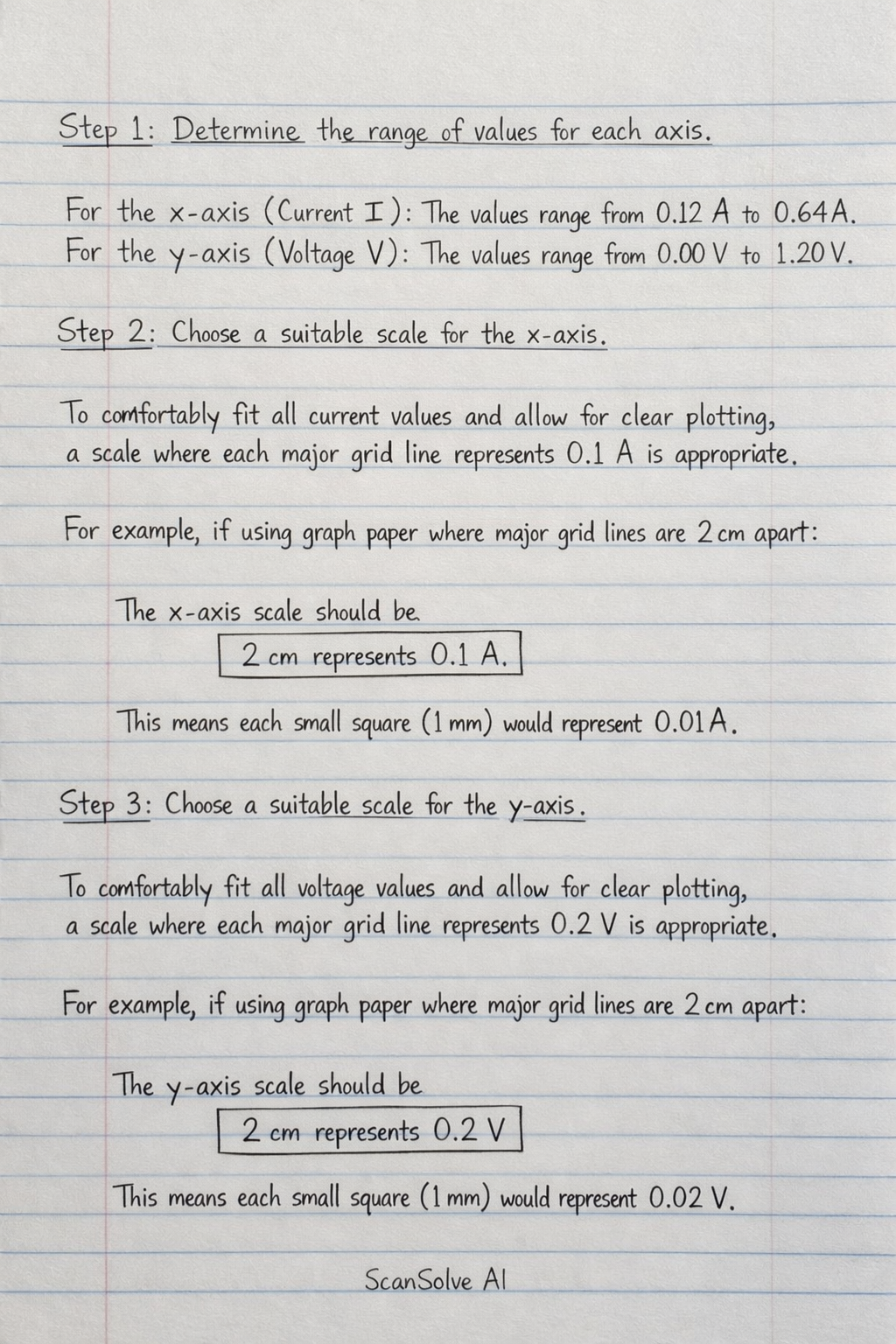
3 stepsDetermine the range of values for each axis.
For the x-axis (Current ): The values range from to .
For the y-axis (Voltage ): The values range from to .Choose a suitable scale for the x-axis.
To comfortably fit all current values and allow for clear plotting, a scale where each major grid line represents is appropriate.
For example, if using graph paper where major grid lines are apart:
The x-axis scale should be .
This means each small square (1 mm) would represent .Choose a suitable scale for the y-axis.
To comfortably fit all voltage values and allow for clear plotting, a scale where each major grid line represents is appropriate.
For example, if using graph paper where major grid lines are apart:
The y-axis scale should be .
This means each small square (1 mm) would represent .
Try one yourself
A new problem that tests the same skill.
Still stuck on this one?
Ask a follow-up, and the answer starts from this question.
More Physics Questions
Handwritten Step-by-Step Solution
Get this as a handwritten image on WhatsApp — like a tutor wrote it for you.
Try on WhatsApp