
We read your photo as:
Calculate the total energy from breakfast, lunch, and supper.
Physics
ScanSolve AI Answer
Step-by-step solution
3 stepsa) i)
Calculate the total energy from breakfast, lunch, and supper.
Calculate the energy from 50g of fats.
(Assuming 1g of fat provides 9 kcals of energy).
Calculate the total daily energy derived from his meals.
a) ii)
The man's daily energy intake of 1950 kcals is significantly lower than the recommended 3000 kcals. This indicates an insufficient energy intake, which could lead to fatigue and nutritional deficiencies over time.a) iii)
Here are the steps in the production of yoghurt:- Milk Preparation and Pasteurization: Raw milk is first standardized for fat and solids content. It is then heated to a high temperature (e.g., for several minutes) to kill harmful bacteria and denature whey proteins, which helps in thickening the final product.
- Cooling: The pasteurized milk is cooled to the optimal fermentation temperature, typically between , to allow the starter culture to thrive.
- Inoculation: A starter culture containing specific lactic acid bacteria, such as Lactobacillus bulgaricus and Streptococcus thermophilus, is added to the cooled milk.
- Incubation: The inoculated milk is held at the optimal temperature for several hours. During this time, the bacteria ferment the lactose (milk sugar) into lactic acid, which causes the milk proteins to coagulate, thickening the milk and giving yoghurt its characteristic tangy flavor.
- Cooling and Storage: Once the desired acidity and texture are achieved, the yoghurt is rapidly cooled to stop the fermentation process and prevent over-acidification. It is then refrigerated to maintain its quality and extend its shelf life.
a) iv)
Uses of yoghurt in the diet include:- Source of Probiotics: Yoghurt contains live beneficial bacteria that can improve gut health, aid digestion, and boost the immune system.
- Rich in Nutrients: It is an excellent source of essential nutrients such as protein, calcium, phosphorus, and B vitamins (especially B12 and riboflavin).
- Improved Lactose Digestion: The bacteria in yoghurt break down lactose, making it easier to digest for individuals with lactose intolerance.
- Bone Health: Its high calcium content, often fortified with vitamin D, contributes to strong bones and teeth.
Was this helpful?
Still stuck on this one?
Ask a follow-up, and the answer starts from this question.
Got a different question?Ask your own question
More Physics Questions
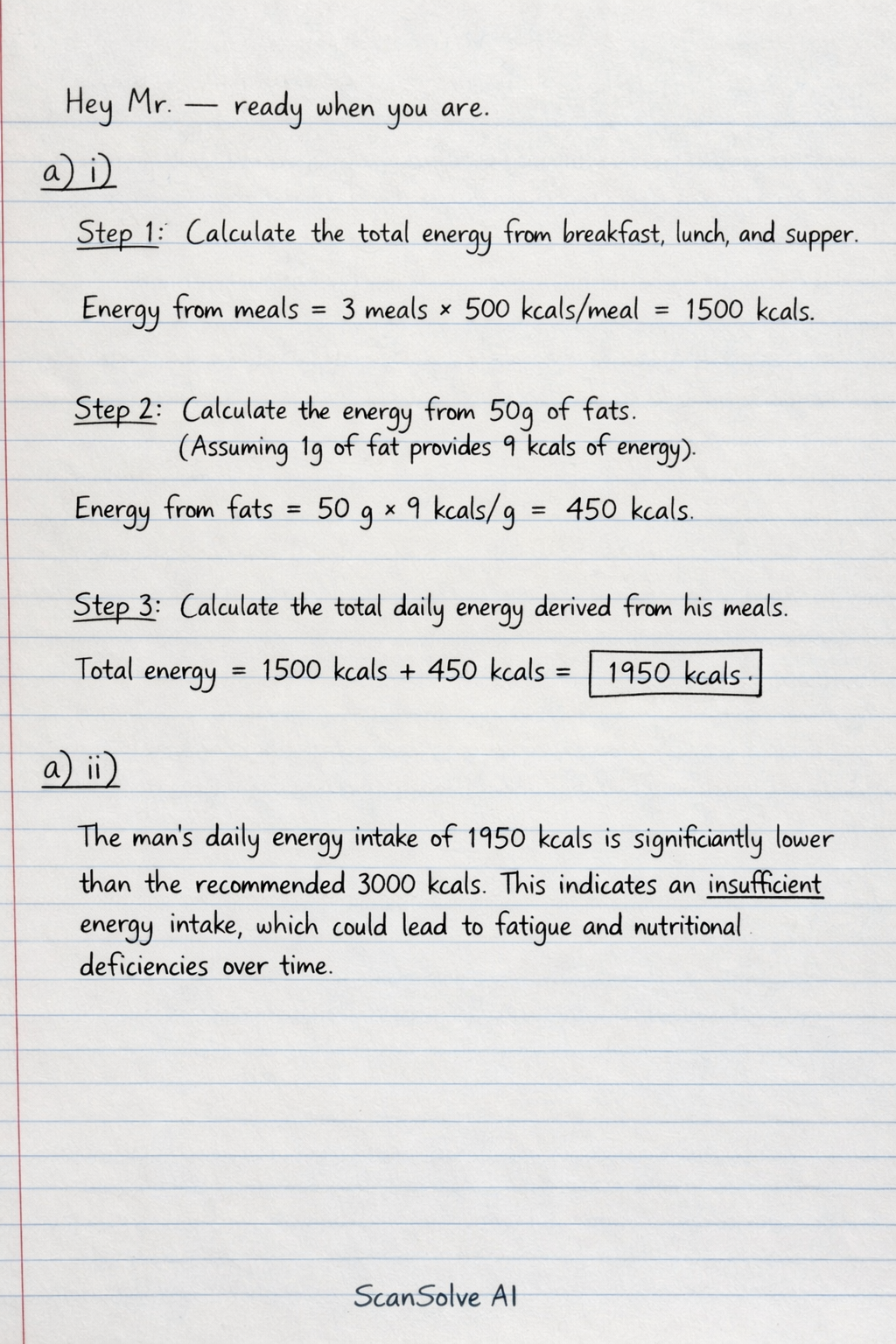
Handwritten Step-by-Step Solution
Get this as a handwritten image on WhatsApp — like a tutor wrote it for you.
Try on WhatsApp