
Evaluate your self 🧪 Flame Test MCQs (1–10) Q1. The yellow color in flame test is characteristic of: A. K⁺ B. Na⁺ C. Ca²⁺ D. Ba²⁺ Q2. The lilac flame color is produced by: A. Li⁺ B. Na⁺ C. K⁺ D. Sr²⁺ Q3. Which ion gives a brick-red flame? A. Ca²⁺ B. Sr²⁺ C. Ba²⁺ D. Cu²⁺ Q4. Which ion produces an apple-green flame? A. Ca²⁺ B. Ba²⁺ C. Cu²⁺ D. Li⁺ Q5. The blue-green flame is characteristic of: A. Cu²⁺ B. Ba²⁺ C. Na⁺ D. K⁺ Q6. The flame color in flame test is due to: A. Proton excitation B. Neutron emission C. Electron transition between energy levels D. Nuclear reactions Q7. Which of the following can interfere most with flame test results? A. Potassium contamination B. Calcium contamination C. Sodium contamination D. Lithium contamination Q8. Why are chlorides preferred in flame tests? A. They are colored B. They are more volatile C. They are less reactive D. They are heavier Q9. Which ion gives a crimson red flame? A. Sr²⁺ B. Li⁺ C. Ca²⁺ D. Ba²⁺ Q10. Which statement is TRUE about flame tests? A. It is a quantitative method B. It gives continuous spectrum C. It is a qualitative test D. It works best for all metals
ScanSolve AI Answer
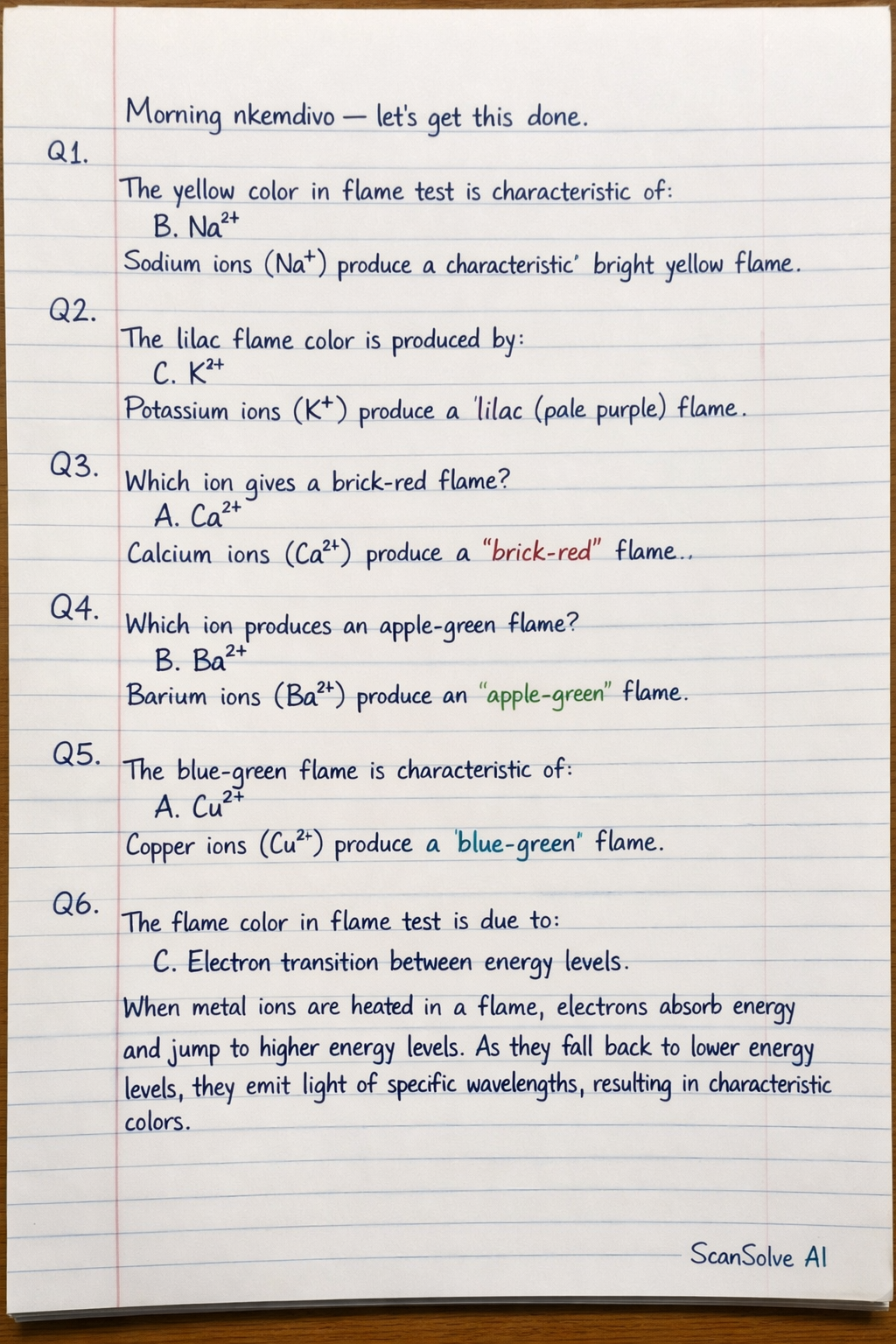
Q1.
The yellow color in flame test is characteristic of:
B. Na⁺
Sodium ions (Na⁺) produce a characteristic bright yellow flame.
Q.2
The lilac flame color is produced by:
C. K⁺
Potassium ions (K⁺) produce a lilac (pale purple) flame.
Q3.
Which ion gives a brick-red flame?
A. Ca²⁺
Calcium ions (Ca²⁺) produce a brick-red flame.
Q4.
Which ion produces an apple-green flame?
B. Ba²⁺
Barium ions (Ba²⁺) produce an apple-green flame.
Q5.
The blue-green flame is characteristic of:
A. Cu²⁺
Copper ions (Cu²⁺) produce a blue-green flame.
Q6.
The flame color in flame test is due to:
C. Electron transition between energy levels
When metal ions are heated in a flame, electrons absorb energy and jump to higher energy levels. As they fall back to lower energy levels, they emit light of specific wavelengths, resulting in characteristic colors.
Q7.
Which of the following can interfere most with flame test results?
C. Sodium contamination
Sodium is a common contaminant and produces a very intense yellow flame that can mask the colors of other ions, making it difficult to observe them.
Q8.
Why are chlorides preferred in flame tests?
B. They are more volatile
Chlorides are generally more volatile than other salts, meaning they vaporize more easily in the flame, allowing the metal ions to be excited and emit light more effectively.
Q9.
Which ion gives a crimson red flame?
B. Li⁺
Lithium ions (Li⁺) produce a crimson red flame.
Q10.
Which statement is TRUE about flame tests?
C. It is a qualitative test
Flame tests are used to identify the presence of certain metal ions based on their characteristic flame colors, making it a qualitative method. It does not measure the quantity of the substance.
Still stuck on this one?
Ask a follow-up, and the answer starts from this question.
More Physics Questions
Handwritten Step-by-Step Solution
Get this as a handwritten image on WhatsApp — like a tutor wrote it for you.
Try on WhatsApp