
We read your photo as:
Describe common household conflicts and ways to resolve sibling toy disputes.
Psychology
ScanSolve AI Answer
HOME WORK:
1. Describe four common situations or issues that often trigger conflicts within a household:
- a) Unequal distribution of chores or responsibilities: When some family members feel they are doing more work than others, it can lead to resentment and arguments.
- b) Disagreements over money or spending habits: Different priorities for how household income should be used (e.g., savings vs. immediate purchases) can cause significant tension.
- c) Sibling rivalry or competition: Children often conflict over toys, attention, or perceived favoritism, leading to disputes and emotional distress.
- d) Differences in personal values, beliefs, or lifestyle choices: Varying opinions on important matters like discipline, social activities, or future plans can create friction among family members.
2. Imagine a disagreement arises between siblings sharing a toy. Explain peaceful ways you could guide them to resolve this conflict:
- a) Facilitate Turn-Taking: Guide the siblings to agree on a fair system for sharing, such as setting a timer for each child to play with the toy for a specific duration.
- b) Encourage Compromise: Help them brainstorm alternative solutions, like finding another toy to play with together, or agreeing that one child plays now and the other gets exclusive use later.
- c) Promote "I" Statements: Teach them to express their feelings and needs calmly using "I" statements (e.g., "I feel sad when I don't get a turn") rather than blaming each other.
- d) Emphasize Empathy: Ask each sibling to consider how the other might be feeling, fostering understanding and encouraging them to find a solution that makes both happy.
3. Look at the picture below which illustrates different facial expressions.
- I cannot answer this question as the picture illustrating different facial expressions was not provided.
Was this helpful?
Still stuck on this one?
Ask a follow-up, and the answer starts from this question.
Got a different question?Ask your own question
More Psychology Questions
QA) List three effects of conflicts among siblings in a family. b) List five factors contributing to…QAnalyze the conflict between Sue and her mom regarding household chores, focusing on communication…QWhat are some ways to improve family relationships during a misunderstanding?QSee examples of toys: a) Name one toy that children with wealthy families played with. b) Name one…QExplain how to enhance effective communication in resolving conflict with family, referencing…
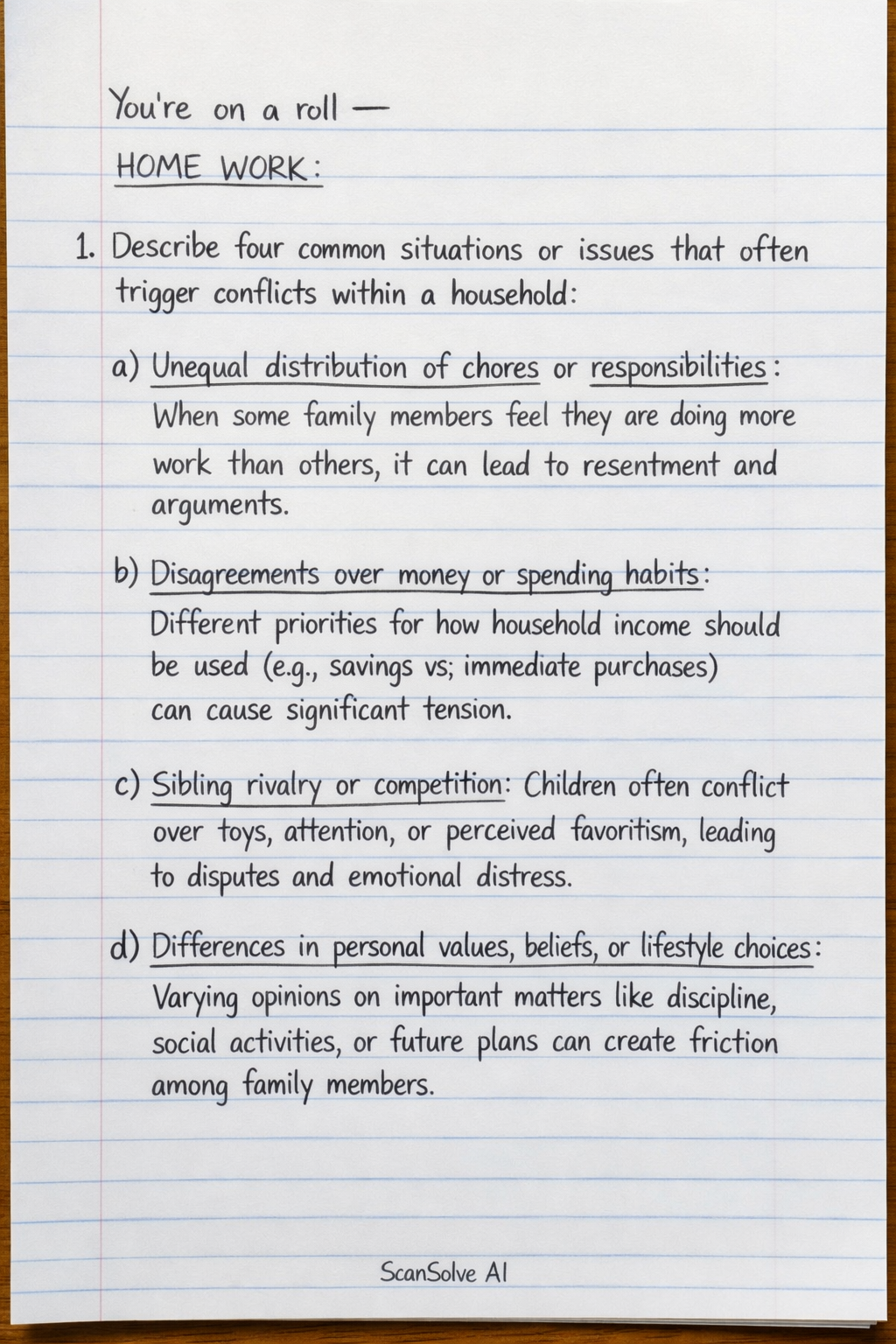
Handwritten Step-by-Step Solution
Get this as a handwritten image on WhatsApp — like a tutor wrote it for you.
Try on WhatsApp