
We read your photo as:
Explain how to enhance effective communication in resolving conflict with family, referencing emotions and non-verbal cues.
Psychology
ScanSolve AI Answer
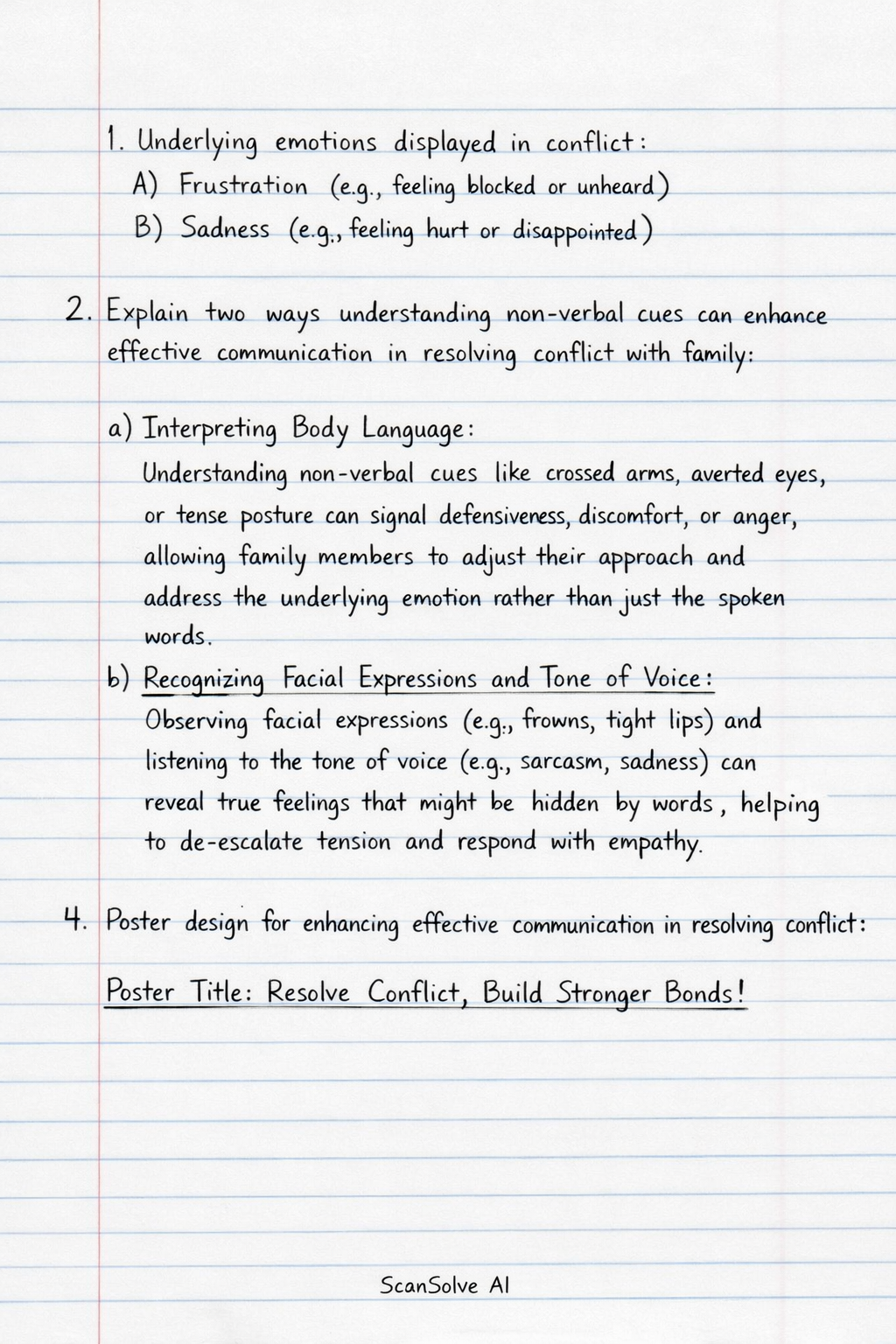
1. Underlying emotions displayed in conflict:
- A) Frustration (e.g., feeling blocked or unheard)
- B) Sadness (e.g., feeling hurt or disappointed)
2. Explain two ways understanding non-verbal cues can enhance effective communication in resolving conflict with family:
- a) Interpreting Body Language: Understanding non-verbal cues like crossed arms, averted eyes, or tense posture can signal defensiveness, discomfort, or anger, allowing family members to adjust their approach and address the underlying emotion rather than just the spoken words.
- b) Recognizing Facial Expressions and Tone of Voice: Observing facial expressions (e.g., frowns, tight lips) and listening to the tone of voice (e.g., sarcasm, sadness) can reveal true feelings that might be hidden by words, helping to de-escalate tension and respond with empathy.
4. Poster design for enhancing effective communication in resolving conflict:
Poster Title: Resolve Conflict, Build Stronger Bonds!
-
Strategy 1: Active Listening
- Explanation: Fully focus on what the other person is saying, both verbally and non-verbally, without interrupting or formulating a response. Show you're engaged through eye contact and nodding.
- Simple Illustration: An ear listening intently, with speech bubbles coming from another person, and a thought bubble above the listener showing understanding.
-
Strategy 2: Use "I" Statements
- Explanation: Express your feelings and needs using "I" statements (e.g., "I feel upset when...") instead of "You" statements (e.g., "You always make me upset..."). This avoids blame and encourages constructive dialogue.
- Simple Illustration: A person pointing to themselves (I) with a speech bubble containing "I feel..." and another person listening calmly.
-
Strategy 3: Seek Common Ground & Compromise
- Explanation: Identify areas of agreement and be willing to find a middle ground where everyone's needs are partially met. Focus on solutions that benefit the whole family.
- Simple Illustration: Two hands shaking in the middle, with two different paths merging into one, or a scale balancing two different items.
Was this helpful?
Still stuck on this one?
Ask a follow-up, and the answer starts from this question.
Got a different question?Ask your own question
More Psychology Questions
QWhat are some ways to improve family relationships during a misunderstanding?QOpen Communication: Encourage honest and respectful dialogue among family members, ensuring everyone…QExplain three benefits of using mediation to resolve conflict in a family.QWhat are the negative effects of poor family communication and how can empathy be shown to a child…QAnalyze the conflict between Sue and her mom regarding household chores, focusing on communication…
Handwritten Step-by-Step Solution
Get this as a handwritten image on WhatsApp — like a tutor wrote it for you.
Try on WhatsApp