This psychology problem is solved step by step below, with detailed explanations to help you understand the method and arrive at the correct answer.
Explain the following as used in the game of basketball: Three second rule, Five second rule, Ten second rule, Thirty second rule. Explain why Basketball is not a common game in primary schools in Kenya.
Psychology

ScanSolve AI Answer
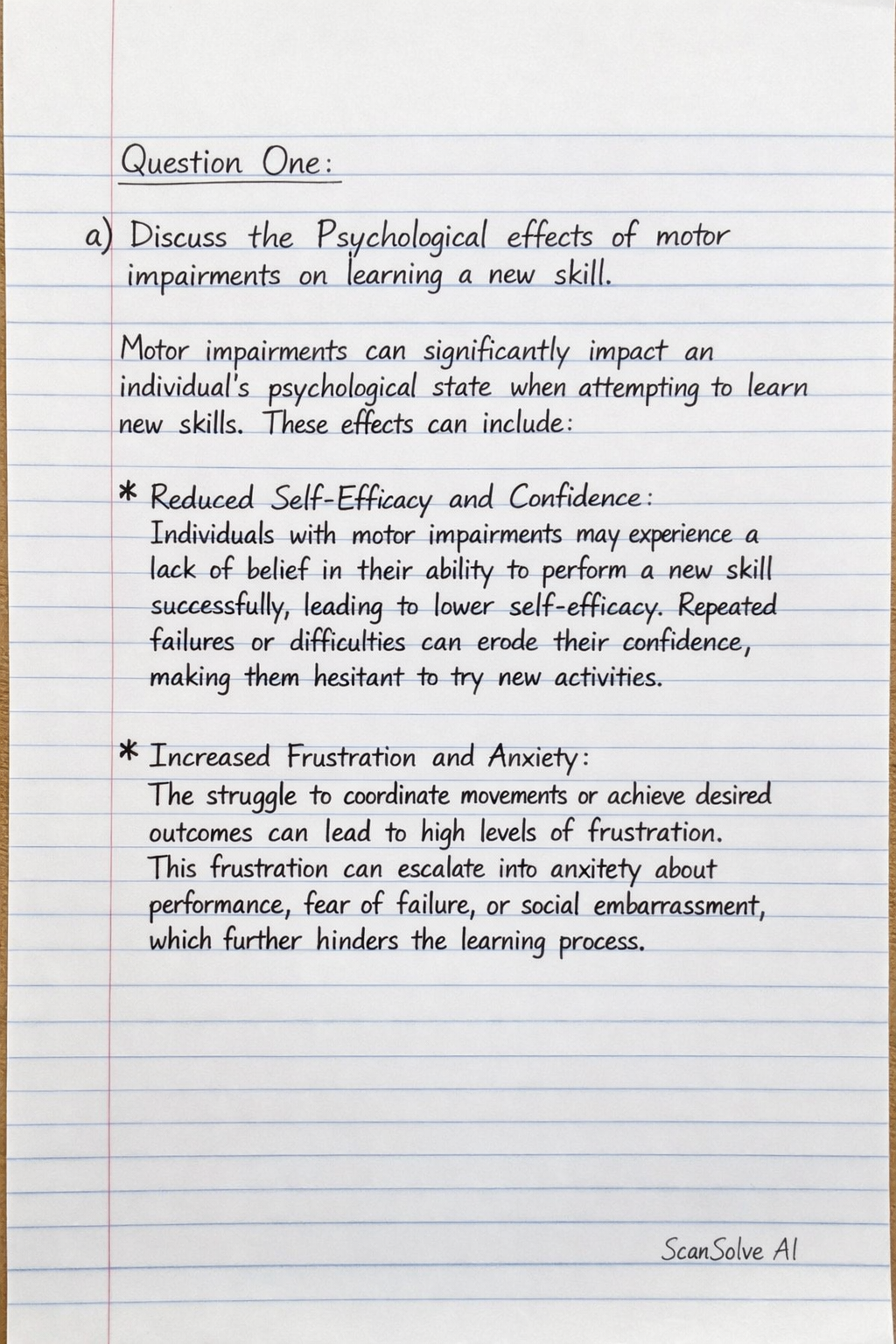
Question One:
a) Discuss the Psychological effects of motor impairments on learning a new skill.
Motor impairments can significantly impact an individual's psychological state when attempting to learn new skills. These effects can include:
- Reduced Self-Efficacy and Confidence: Individuals with motor impairments may experience a lack of belief in their ability to perform a new skill successfully, leading to lower self-efficacy. Repeated failures or difficulties can erode their confidence, making them hesitant to try new activities.
- Increased Frustration and Anxiety: The struggle to coordinate movements or achieve desired outcomes can lead to high levels of frustration. This frustration can escalate into anxiety about performance, fear of failure, or social embarrassment, which further hinders the learning process.
- Lower Motivation and Engagement: Persistent challenges and negative emotional experiences can decrease an individual's motivation to engage in skill-learning activities. They might withdraw from participation or show reduced effort, perceiving the task as too difficult or unrewarding.
- Negative Self-Perception and Body Image: Motor impairments can affect how individuals perceive their own physical capabilities and body. This can lead to a negative self-perception or distorted body image, impacting their overall mental well-being and willingness to expose themselves to situations where their motor skills are challenged.
- Learned Helplessness: If individuals consistently face insurmountable difficulties despite effort, they may develop learned helplessness, believing that their actions have no impact on the outcome. This can lead to passivity and a reluctance to attempt any new motor tasks.
Was this helpful?
Still stuck on this one?
Ask a follow-up, and the answer starts from this question.
Got a different question?Ask your own question
More Psychology Questions
QWhat is the rule of the Road in Kenya?QUsing the Principle of Inclusion-Exclusion, calculate the number of students who played all three ga…QDescribe each of the following games reserves in Ghana.QDiscuss four major educational changes that have taken place in Kenya since independence.Q[29/04, 5:52 pm] Dylan: By use of relevant examples from the education system in Kenya, examine ways…

Handwritten Step-by-Step Solution
Get this as a handwritten image on WhatsApp — like a tutor wrote it for you.
Try on WhatsAppScanSolve AI Answer
Question One: a) Discuss the Psychological effects of motor impairments on learning a new skill. Motor impairments can significantly impact an individual's psychological state when attempting to learn new skills. These effects can include: Reduced Self-Efficacy and Confidence: Individuals with motor impairments may experience a lack of belief in their ability to perform a new skill successfully, leading to lower self-efficacy*. Repeated failures or difficulties can erode their confidence, making them hesitant to try new activities. Increased Frustration and Anxiety: The struggle to coordinate movements or achieve desired outcomes can lead to high levels of frustration. This frustration can escalate into anxiety* about performance, fear of failure, or social embarrassment, which further hinders the learning process. Lower Motivation and Engagement: Persistent challenges and negative emotional experiences can decrease an individual's motivation* to engage in skill-learning activities. They might withdraw from participation or show reduced effort, perceiving the task as too difficult or unrewarding. Negative Self-Perception and Body Image: Motor impairments can affect how individuals perceive their own physical capabilities and body. This can lead to a negative self-perception or distorted body image*, impacting their overall mental well-being and willingness to expose themselves to situations where their motor skills are challenged. Learned Helplessness: If individuals consistently face insurmountable difficulties despite effort, they may develop learned helplessness*, believing that their actions have no impact on the outcome. This can lead to passivity and a reluctance to attempt any new motor tasks.