Grade 7 learners were discussing on types of maps used in Social studies. One of the learners described a type of map that shows physical features, buildings, roads and other infrastructures. The map described was A. Topographical map B. Atlas map C. Sketch D. Thematic map Learners were discussed.
This geography problem is solved step by step below, with detailed explanations to help you understand the method and arrive at the correct answer.
ScanSolve AI Answer
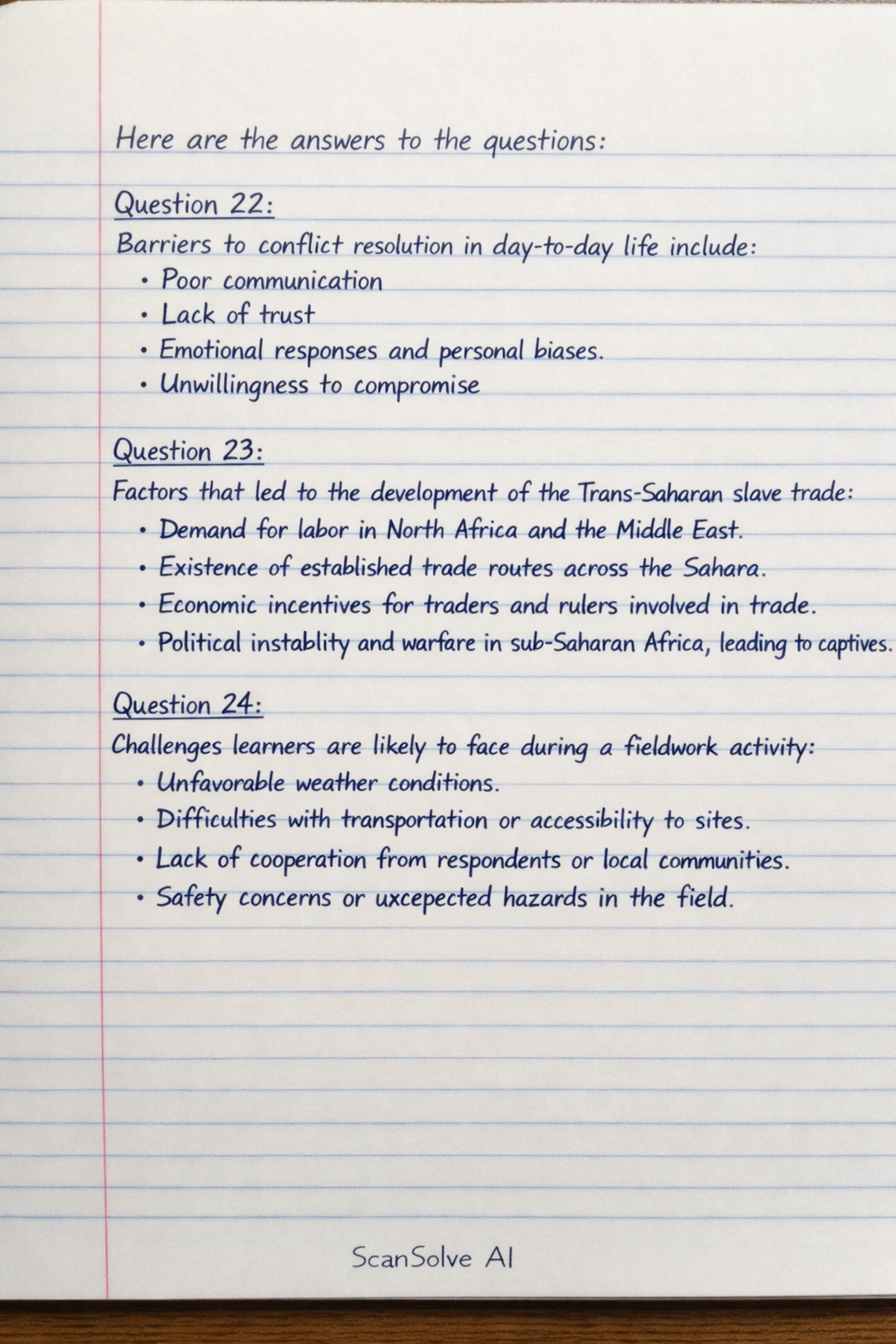
Here are the answers to the questions:
Question 22:
Barriers to conflict resolution in day-to-day life include:
Poor communication
Lack of trust
Emotional responses and personal biases
Unwillingness to compromise
Question 23:
Factors that led to the development of the Trans-Saharan slave trade:
Demand for labor in North Africa and the Middle East.
Existence of established trade routes across the Sahara.
Economic incentives for traders and rulers involved in the trade.
Political instability and warfare in sub-Saharan Africa, leading to captives.
Question 24:
Challenges learners are likely to face during a fieldwork activity:
Unfavorable weather conditions.
Difficulties with transportation or accessibility to sites.
Lack of cooperation from respondents or local communities.
Safety concerns or unexpected hazards in the field.
Question 25:
Factors that contributed to the presence of Europeans before colonization:
Search for new trade routes to Asia and valuable resources like gold and ivory.
Desire to spread Christianity through missionary activities.
Question 26:
Importance of entrepreneurial opportunities:
a)* Job creation: Entrepreneurs create new businesses, leading to employment opportunities for others.
b)* Economic growth: Entrepreneurial activities contribute to the overall economic development of a region or country.
c)* Innovation and problem-solving: Entrepreneurs often develop new products, services, and solutions to societal problems.
Question 27:
Changes that took place in human evolution:
a)* Bipedalism: The ability to walk upright on two legs.
b)* Increased brain size and complexity: Leading to enhanced cognitive abilities.
c)* Development of language: Complex communication skills.
d)* Tool-making and use: The ability to create and utilize tools for various tasks.
Question 28:
The question is incomplete. Please provide the full question for a complete answer.