

This biology question covers important biological concepts and processes. The step-by-step explanation below helps you understand the underlying mechanisms and reasoning.
ScanSolve AI Answer
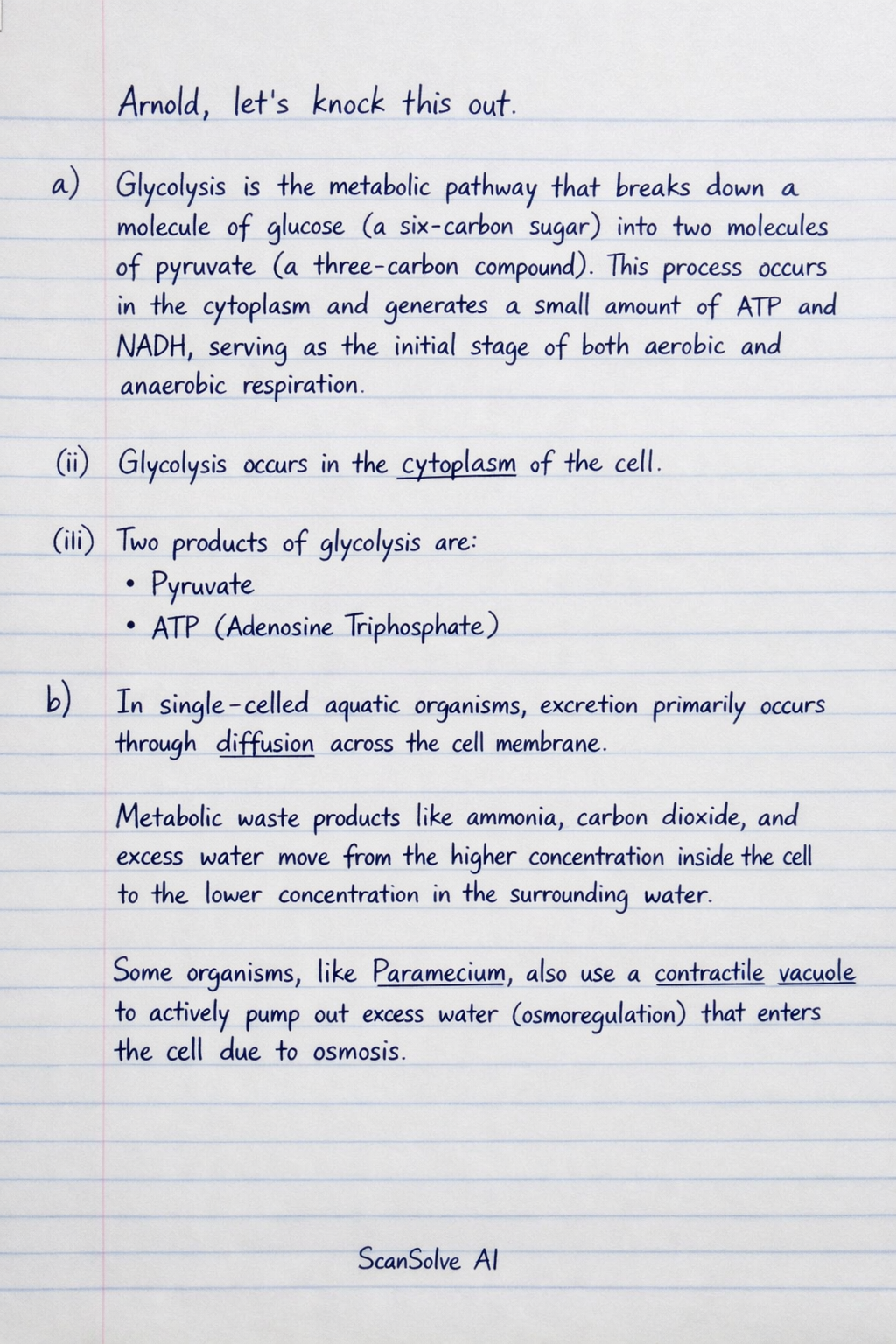
a) (i) Glycolysis is the metabolic pathway that breaks down a molecule of glucose (a six-carbon sugar) into two molecules of pyruvate (a three-carbon compound). This process occurs in the cytoplasm and generates a small amount of ATP and NADH, serving as the initial stage of both aerobic and anaerobic respiration. (ii) Glycolysis occurs in the cytoplasm of the cell. (iii) Two products of glycolysis are: • Pyruvate • ATP (Adenosine Triphosphate) b) (i) In single-celled aquatic organisms, excretion primarily occurs through diffusion across the cell membrane. Metabolic waste products like ammonia, carbon dioxide, and excess water move from the higher concentration inside the cell to the lower concentration in the surrounding water. Some organisms, like Paramecium, also use a contractile vacuole to actively pump out excess water (osmoregulation) that enters the cell due to osmosis. (ii) | Waste product | Group of organisms | | :------------ | :----------------- | | Uric acid | Birds, Reptiles, Insects | | Oxygen | Plants, Algae, Cyanobacteria | | Ammonia | Fish, Aquatic invertebrates | 3 done, 2 left today. You're making progress.