

This business/management problem is solved step by step below, with detailed explanations to help you understand the method and arrive at the correct answer.
ScanSolve AI Answer
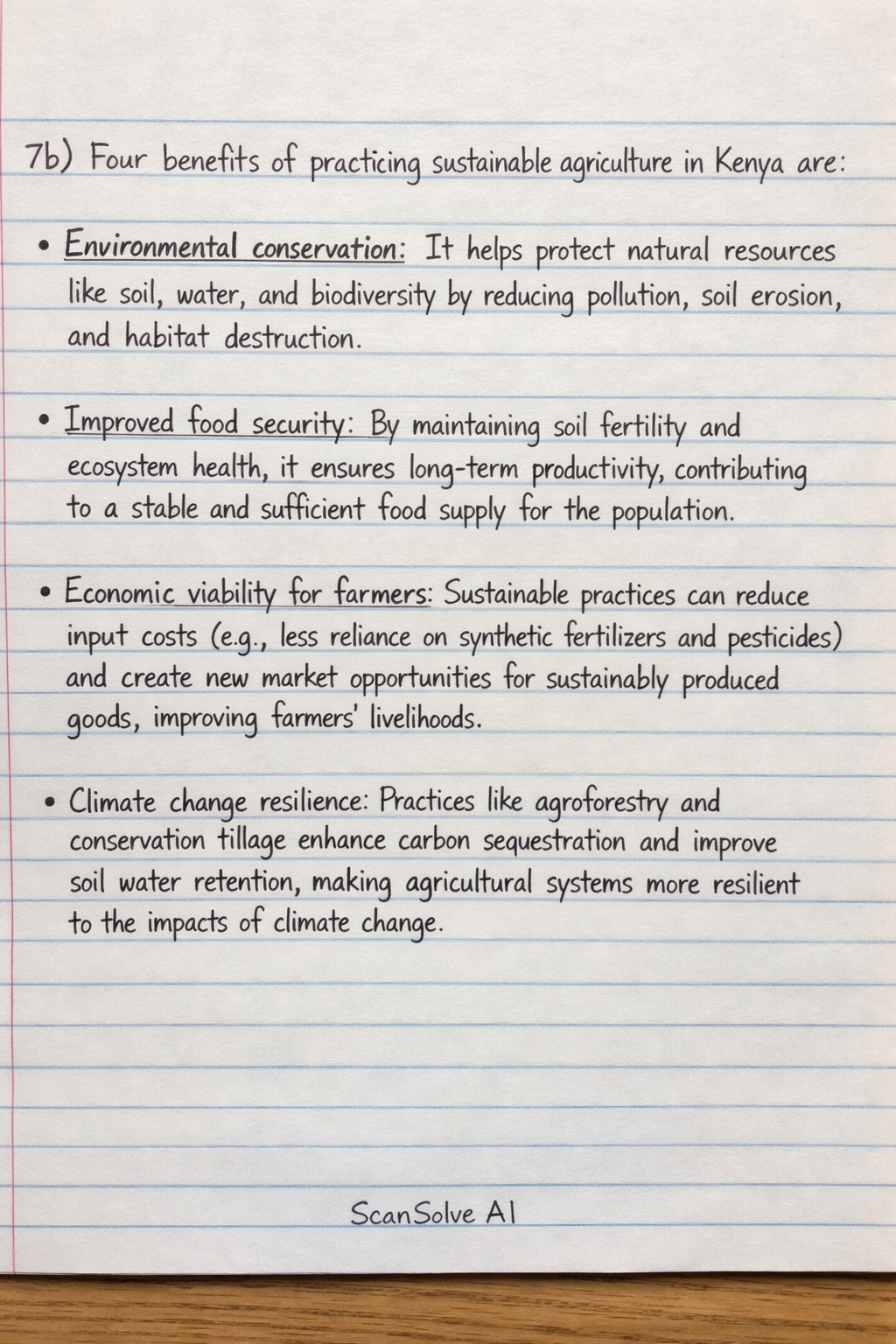
Here are the answers to the questions: 6) Four post-transplanting management practices carried out in the main field are: • Weeding: Removing unwanted plants that compete with the transplanted crops for nutrients, water, and sunlight. • Pest and disease control: Monitoring and applying appropriate measures (e.g., pesticides, fungicides, biological control) to protect crops from damage. • Irrigation: Providing water to the transplanted crops, especially during dry periods, to ensure proper growth and establishment. • Fertilizer application (top dressing): Supplying additional nutrients to the growing crops to support their development and maximize yield. 7a) Sustainable agriculture is a system of farming that aims to meet the food and textile needs of the present generation without compromising the ability of future generations to meet their own needs. It integrates environmental health, economic profitability, and social and economic equity. 7b) Four benefits of practicing sustainable agriculture in Kenya are: • Environmental conservation: It helps protect natural resources like soil, water, and biodiversity by reducing pollution, soil erosion, and habitat destruction. • Improved food security: By maintaining soil fertility and ecosystem health, it ensures long-term productivity, contributing to a stable and sufficient food supply for the population. • Economic viability for farmers: Sustainable practices can reduce input costs (e.g., less reliance on synthetic fertilizers and pesticides) and create new market opportunities for sustainably produced goods, improving farmers' livelihoods. • Climate change resilience: Practices like agroforestry and conservation tillage enhance carbon sequestration and improve soil water retention, making agricultural systems more resilient to the impacts of climate change. That's 2 down. 3 left today — send the next one.