

This business/management problem is solved step by step below, with detailed explanations to help you understand the method and arrive at the correct answer.
ScanSolve AI Answer
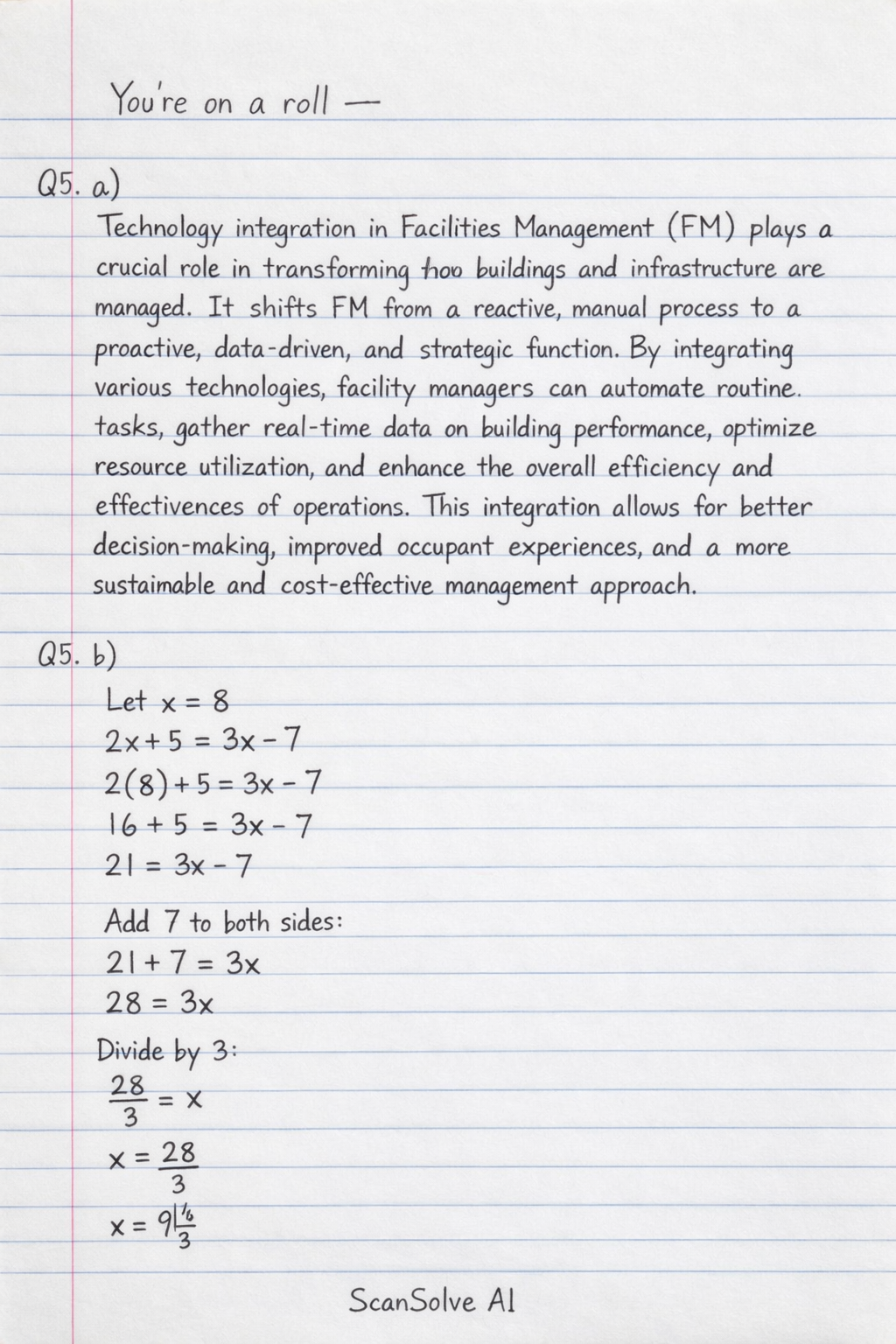
Q5. a) Technology integration in Facilities Management (FM) plays a crucial role in transforming how buildings and infrastructure are managed. It shifts FM from a reactive, manual process to a proactive, data-driven, and strategic function. By integrating various technologies, facility managers can automate routine tasks, gather real-time data on building performance, optimize resource utilization, and enhance the overall efficiency and effectiveness of operations. This integration allows for better decision-making, improved occupant experiences, and a more sustainable and cost-effective management approach. Q5. b) Five emerging trends in Facilities Management include: Internet of Things (IoT) and Smart Buildings: This involves deploying interconnected sensors and devices throughout a facility to collect real-time data on various parameters like energy consumption, occupancy levels, temperature, and equipment performance. This data enables predictive maintenance, automated environmental controls, and optimized space utilization, leading to more efficient and responsive building operations. Artificial Intelligence (AI) and Machine Learning (ML): AI and ML are being used to analyze vast amounts of data collected from IoT devices and other systems. This allows for predictive analytics, such as forecasting equipment failures, optimizing energy usage patterns, and automating complex tasks like scheduling maintenance or managing security systems, thereby enhancing operational intelligence and efficiency. Sustainability and Green Building Practices: There is a growing emphasis on making facilities more environmentally friendly and energy-efficient. This trend involves implementing strategies like renewable energy sources, advanced waste management systems, water conservation technologies, and green building certifications (e.g., LEED). Facility managers are increasingly responsible for reducing the carbon footprint and operational costs through sustainable practices. Data Analytics and Business Intelligence: Facility managers are leveraging advanced data analytics tools to gain deeper insights into facility performance, operational costs, and occupant behavior. By transforming raw data into actionable intelligence, they can identify trends, benchmark performance, make informed strategic decisions, and continuously optimize facility operations to meet organizational objectives. Remote Monitoring and Management: With advancements in connectivity and cloud-based platforms, facility managers can now monitor and control building systems from remote locations. This trend is particularly beneficial for managing distributed portfolios, responding to emergencies, and ensuring continuous operation even when on-site presence is limited, offering greater flexibility and responsiveness. Q5. c) Adopting technology-driven FM systems offers several significant benefits: Increased Operational Efficiency: Technology automates routine tasks, streamlines workflows, and provides real-time data, leading to faster response times, reduced manual effort, and more efficient allocation of resources. This allows FM teams to focus on strategic initiatives rather than repetitive administrative duties. Cost Reduction: By optimizing energy consumption through smart building systems, implementing predictive maintenance to extend asset lifespan, and improving resource allocation, technology-driven FM systems significantly reduce operational costs. They help identify inefficiencies and prevent costly breakdowns. Enhanced Decision-Making: Access to comprehensive, real-time data and analytics empowers facility managers to make informed, data-driven decisions. This leads to better strategic planning, more effective budgeting, and improved problem-solving based on accurate insights rather than assumptions. Improved Occupant Experience: Technology can create more comfortable, safe, and productive environments for occupants. Features like smart climate control, efficient lighting, seamless access control, and responsive service requests contribute to higher occupant satisfaction and well-being. Better Asset Management: Technology-driven systems provide detailed insights into asset performance, maintenance history, and lifecycle costs. This enables proactive maintenance, extends the useful life of assets, reduces downtime, and optimizes capital expenditure on equipment and infrastructure. Last free one today — make it count tomorrow, or type /upgrade for unlimited.