
We read your photo as:
Distinguish between health and safety in a plumbing workshop. List three PPEs and justify their use. Explain the safe working angle for a ladder.
ScanSolve AI Answer
a)
Health refers to the prevention of long-term physical or mental illness and general well-being of individuals, while safety focuses on preventing immediate injuries, accidents, and damage to persons or equipment.
- Health (persons): Concerns the absence of disease, physical or mental impairment, and the promotion of overall well-being.
- Safety (persons): Concerns the prevention of immediate physical harm, injuries, and accidents.
- Safety (equipment): Concerns the prevention of damage to machinery, tools, and other assets, ensuring they operate without causing harm or malfunction.
b)
Three personal protective equipment (PPE) recommended for a busy plumbing workshop are:
- Safety glasses/goggles: To protect eyes from splashes of water, chemicals, debris, and flying particles.
- Gloves: To protect hands from cuts, abrasions, chemicals, hot surfaces, and dirty materials.
- Steel-toed boots: To protect feet from falling objects, punctures, and crushing injuries.
c)
i)
The safe working angle for a ladder is typically based on the 4:1 rule, meaning for every 4 units of vertical height the ladder reaches, its base should be 1 unit away from the wall. This corresponds to an angle of approximately from the horizontal ground.
In the sketch, the ladder leans against the wall, forming an angle with the ground. For a safe setup, if the vertical height is 4 units, the horizontal distance from the wall to the ladder's base should be 1 unit.
ii)
Five major causes of accidents in workshops are:
- Lack of proper training: Workers who are not adequately trained on how to use tools, machinery, or follow safety procedures are more prone to making mistakes that lead to accidents.
- Poor housekeeping: Cluttered workspaces, spills, obstructions, and unorganized tools can lead to slips, trips, and falls, as well as creating fire hazards.
- Defective or poorly maintained equipment: Using faulty tools, machinery, or equipment that has not been regularly inspected or maintained can result in unexpected failures and injuries.
- Failure to follow safety procedures: Disregarding established safety rules, operating procedures, or lockout/tagout protocols can expose workers to unnecessary risks.
- Inadequate or incorrect use of PPE: Not wearing the appropriate personal protective equipment, or using it incorrectly, leaves workers vulnerable to hazards that could otherwise be mitigated.
Still stuck on this one?
Ask a follow-up, and the answer starts from this question.
More Business/Management Questions
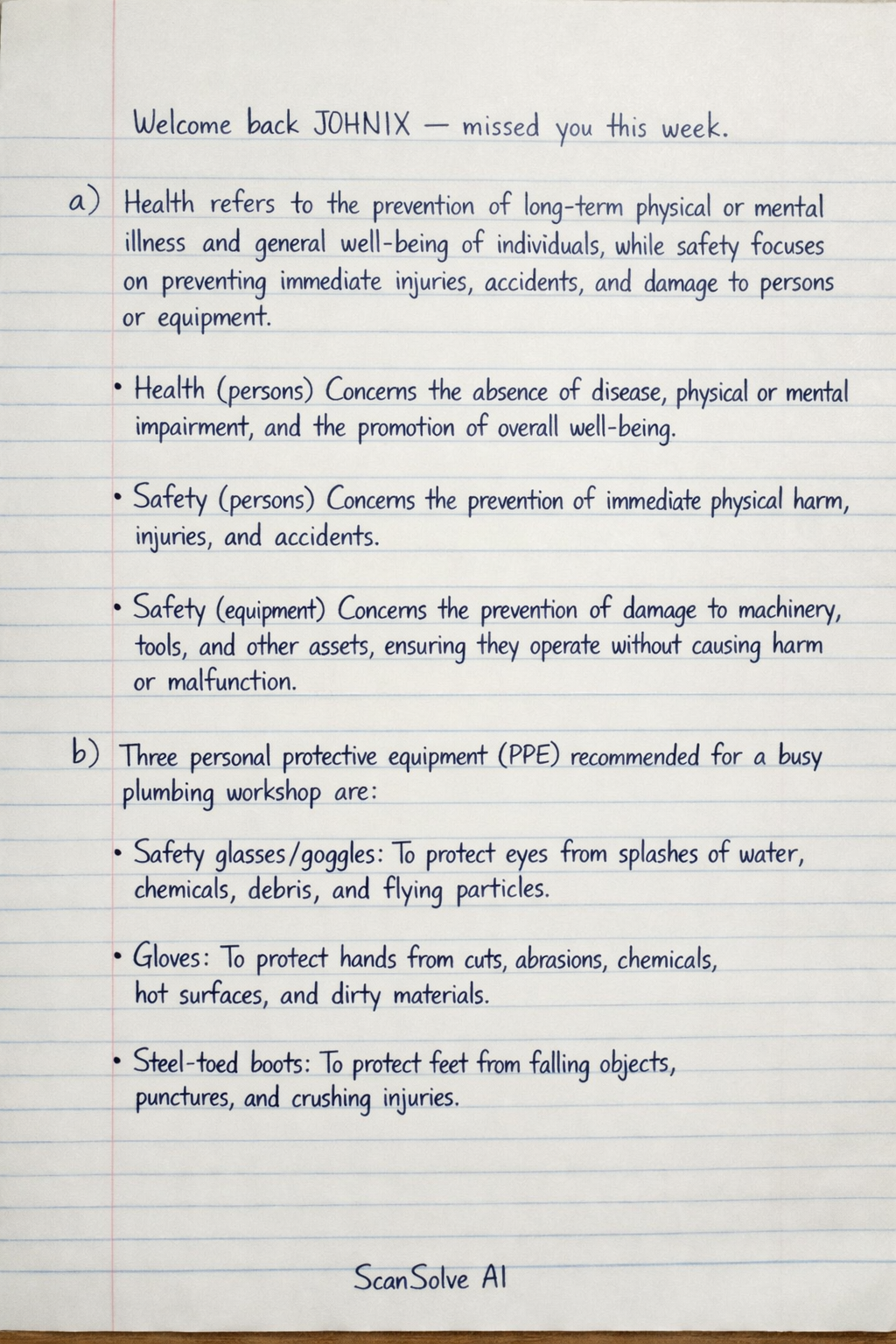
Handwritten Step-by-Step Solution
Get this as a handwritten image on WhatsApp — like a tutor wrote it for you.
Try on WhatsApp