
We read your photo as:
Explain the relationship between productivity, utilisation, and efficiency. Discuss the traditional view of utilisation vs. Lean manufacturing's perspective. Differentiate between effectiveness and ef
ScanSolve AI Answer
i. The connection between productivity, utilisation, and efficiency is that they are all measures of how well resources are managed to produce output. Productivity measures the output generated per unit of input. Utilisation refers to the extent to which a resource (like machinery or labor) is being used. Efficiency is about performing tasks with the least amount of waste, time, or effort. High utilisation can lead to high productivity, but only if the resources are being used efficiently to produce valuable output without waste.
ii. Traditionally, full utilisation was seen as key to maximum productivity because it meant resources were always active, theoretically producing more. However, the 'Lean manufacturing' philosophy places less emphasis on full utilisation because it prioritises eliminating waste and optimising flow. Full utilisation can lead to overproduction, excess inventory, and bottlenecks if not aligned with actual demand, all of which are considered waste in Lean. Lean focuses on producing only what is needed, when it is needed, even if it means some resources are not always 100% busy.
iii. The terms 'effectiveness' and 'efficiency' are distinct concepts. Effectiveness refers to doing the right things to achieve a desired outcome or goal. It's about whether the actions taken lead to the intended results. Efficiency, on the other hand, refers to doing things right, meaning performing tasks in the most economical way possible, with minimal waste of resources (time, money, materials). An effective process achieves its goal, while an efficient process achieves its goal using the fewest resources.
Still stuck on this one?
Ask a follow-up, and the answer starts from this question.
More Business/Management Questions
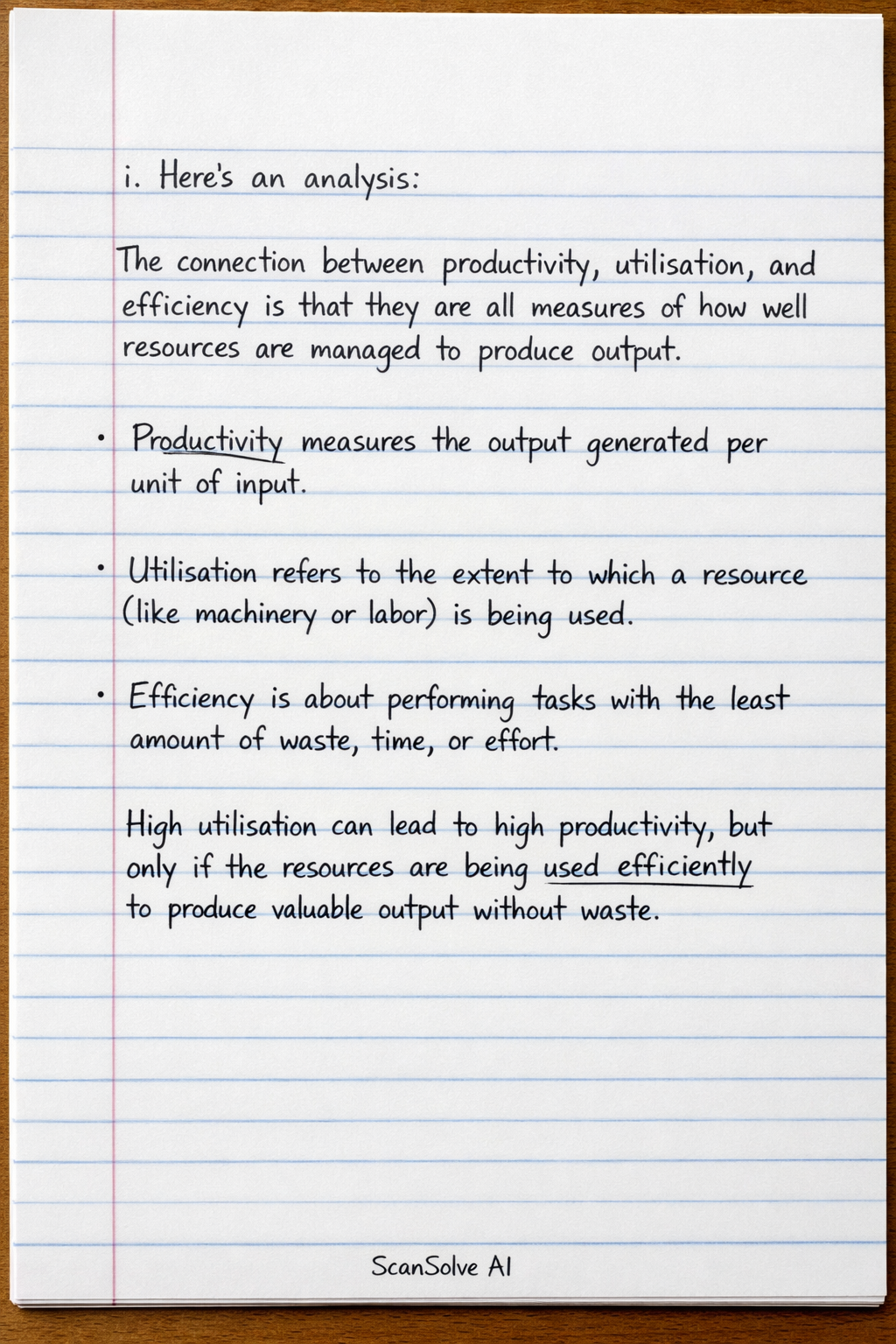
Handwritten Step-by-Step Solution
Get this as a handwritten image on WhatsApp — like a tutor wrote it for you.
Try on WhatsApp