
We read your photo as:
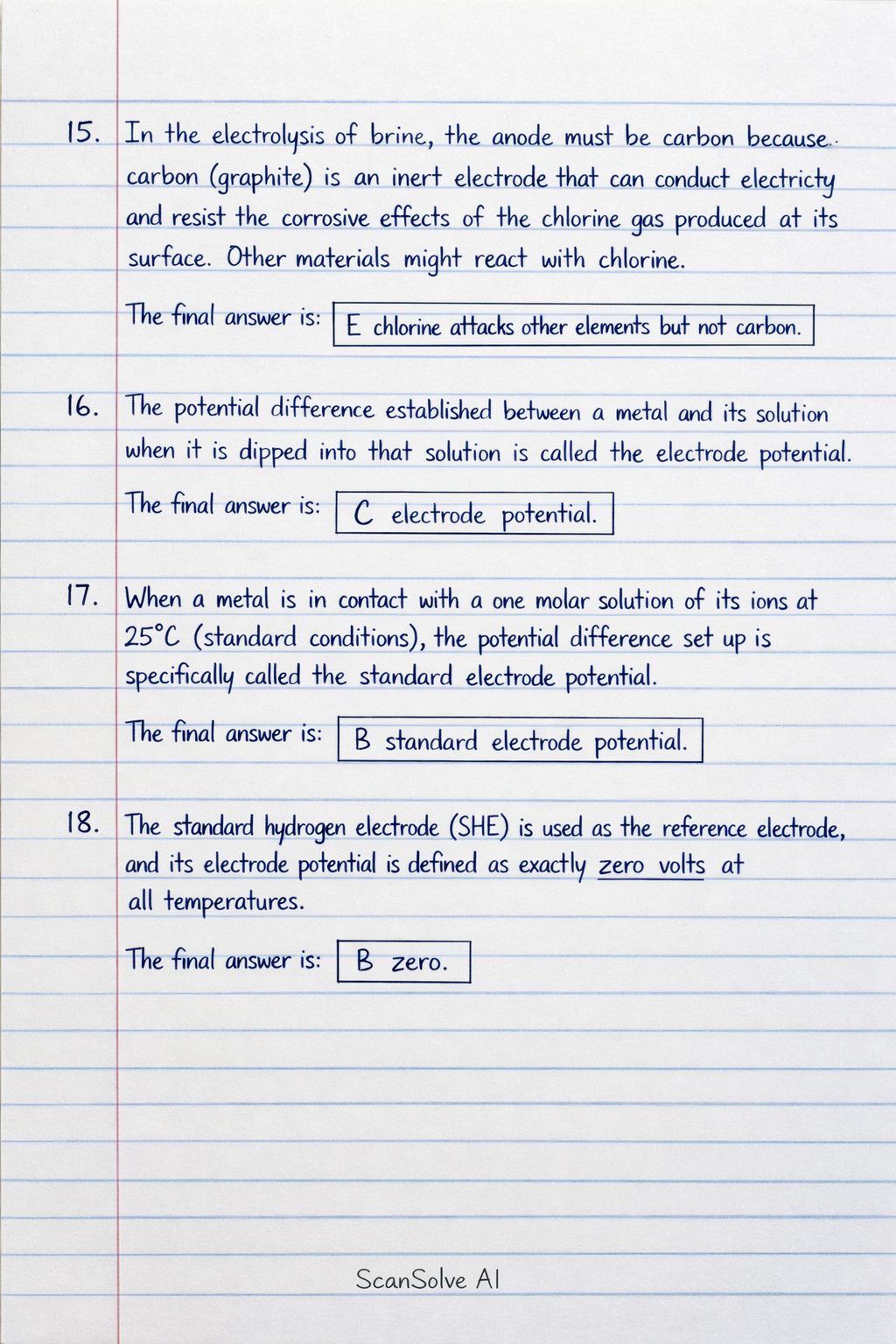
In the electrolysis of brine, the anode must be carbon because carbon (graphite) is an inert electrode that can conduct electricity and resist the corrosive effects of the chlorine gas produced at
Chemistry
ScanSolve AI Answer
- In the electrolysis of brine, the anode must be carbon because carbon (graphite) is an inert electrode that can conduct electricity and resist the corrosive effects of the chlorine gas produced at its surface. Other materials might react with chlorine.
The final answer is .
- The potential difference established between a metal and its solution when it is dipped into that solution is called the electrode potential.
The final answer is .
- When a metal is in contact with a one molar solution of its ions at (standard conditions), the potential difference set up is specifically called the standard electrode potential.
The final answer is .
- The standard hydrogen electrode (SHE) is used as the reference electrode, and its electrode potential is defined as exactly zero volts at all temperatures.
The final answer is .
Was this helpful?
Still stuck on this one?
Ask a follow-up, and the answer starts from this question.
Got a different question?Ask your own question
More Chemistry Questions
QWhat material is the anode made of and why? What precaution prevents chlorine and sodium from…QBrine is a concentrated aqueous solution of sodium chloride.QDescribe the electrolysis of concentrated sodium chloride solution using graphite electrodes…QA student sets up the apparatus to carry out the electrolysis of concentrated sodium chloride…QWhen molten Na Hydride (NaH) was electrolysed between inert electrodes, a gas was produced. (1F…
Handwritten Step-by-Step Solution
Get this as a handwritten image on WhatsApp — like a tutor wrote it for you.
Try on WhatsApp