
We read your photo as:
A student is given a scenario where chlorine gas is bubbled through a sodium bromide solution. Chlorine is stated to be more reactive than bromine. Which of the following statements accurately describ
ScanSolve AI Answer
The question describes a reaction where chlorine gas is bubbled through a solution of sodium bromide. It also states that chlorine is more reactive than bromine.
This is a single displacement reaction. In such reactions, a more reactive element displaces a less reactive element from its compound. Halogens follow a reactivity trend where reactivity decreases down the group. Chlorine is above bromine in the periodic table, making chlorine more reactive than bromine.
Therefore, chlorine will displace bromine from sodium bromide. The reaction is:
Let's evaluate the given statements:
- A. There will be no reaction. This is incorrect because chlorine is more reactive than bromine, so a reaction will occur.
- B. Bromine will be displaced by chlorine. This is correct. The more reactive chlorine displaces the less reactive bromine from sodium bromide.
- C. Chlorine will be displaced by bromine. This is incorrect. Bromine is less reactive than chlorine and cannot displace it.
- D. There will be no reaction as only metals take part in displacement reaction. This is incorrect. Non-metals, such as halogens, also undergo displacement reactions based on their reactivity.
The correct statement is B.
The final answer is .
Still stuck on this one?
Ask a follow-up, and the answer starts from this question.
More Chemistry Questions
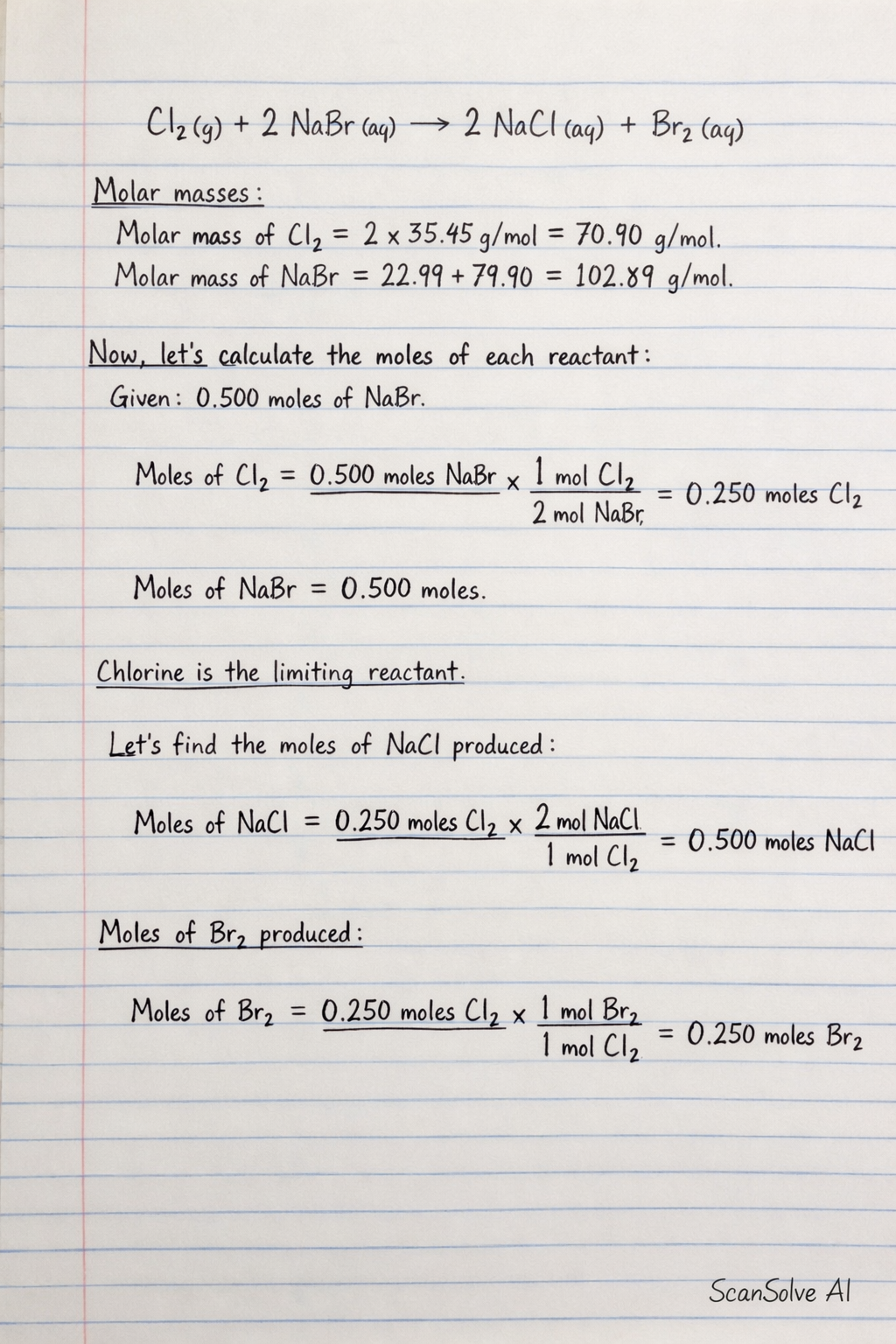
Handwritten Step-by-Step Solution
Get this as a handwritten image on WhatsApp — like a tutor wrote it for you.
Try on WhatsApp