
We read your photo as:
How can you test for the presence of sulfite and carbonate radicals in a sample?
ScanSolve AI Answer
Step-by-step solution
2 steps...
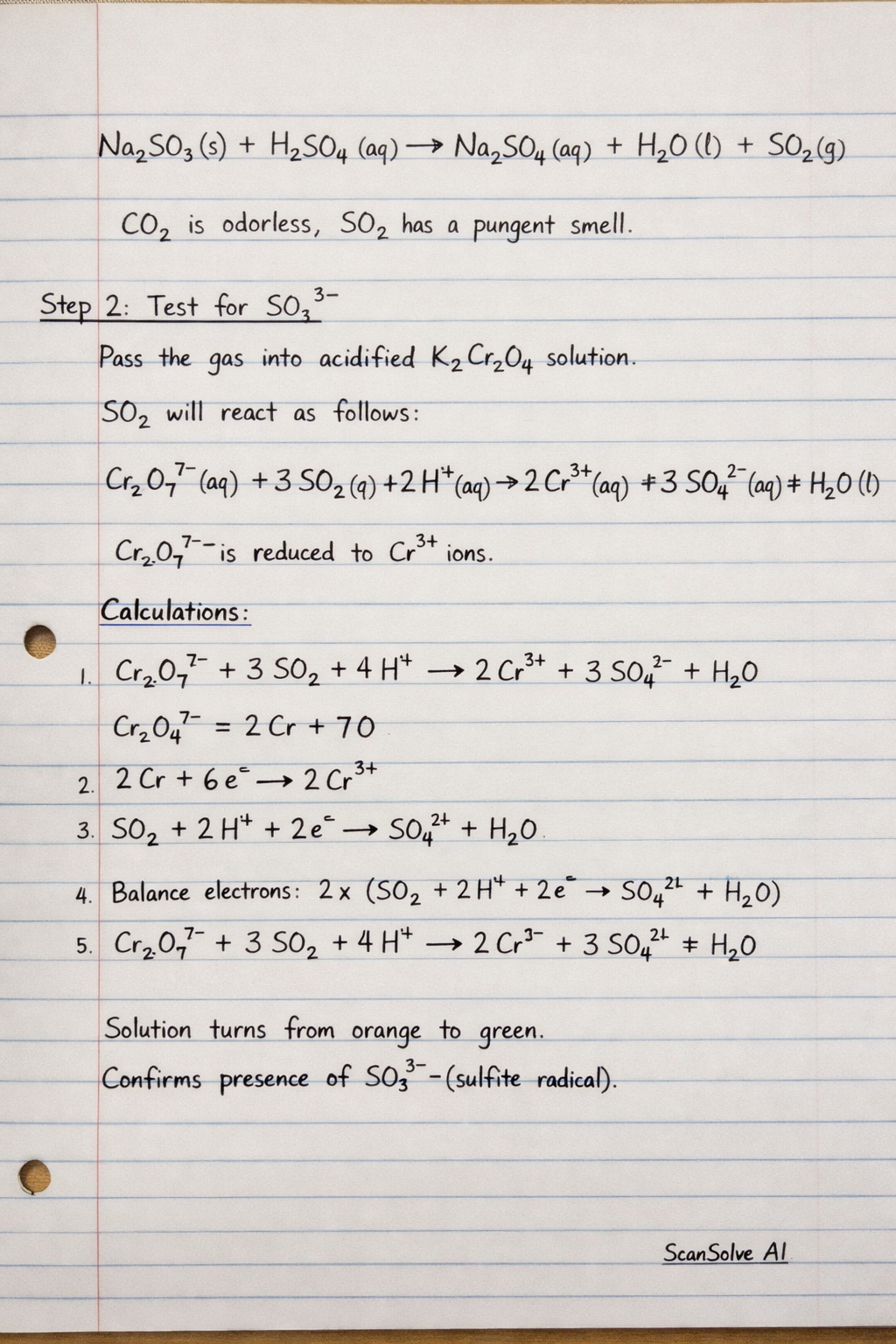
Both carbon dioxide () and sulfur dioxide () gases are evolved. is odorless, while has a pungent, suffocating smell.
To identify (sulfite radical), pass the evolved gas mixture through an acidified potassium dichromate () solution.
Sulfur dioxide () will reduce the orange dichromate solution to a green solution due to the formation of ions. Carbon dioxide () does not react with acidified potassium dichromate.
The change from orange to green confirms the presence of the sulfite radical ().
To identify (carbonate radical), pass the gas that emerges from the potassium dichromate solution (which now contains only , as has been removed) through limewater ( solution).
If is present, the limewater will turn milky due to the formation of insoluble calcium carbonate.
The milky precipitate confirms the presence of the carbonate radical ().
Still stuck on this one?
Ask a follow-up, and the answer starts from this question.
More Chemistry Questions
Handwritten Step-by-Step Solution
Get this as a handwritten image on WhatsApp — like a tutor wrote it for you.
Try on WhatsApp