
We read your photo as:
Describe how nitric acid and sulfuric acid are manufactured.
ScanSolve AI Answer
Step-by-step solution
5 stepsHere's a breakdown of the question about fertilizers:
a) i) Describe how each of these acids is manufactured.
Manufacture of Nitric Acid (Ostwald Process).
Ammonia is oxidized to nitrogen monoxide, which is then oxidized to nitrogen dioxide. Nitrogen dioxide is absorbed in water to form nitric acid.
Manufacture of Sulfuric Acid (Contact Process).
Sulfur is burned in air to produce sulfur dioxide. Sulfur dioxide is then oxidized to sulfur trioxide using a vanadium(V) oxide catalyst. Sulfur trioxide is absorbed in concentrated sulfuric acid to form oleum, which is then diluted with water to produce sulfuric acid.
a) ii) For each acid, choose one fertilizer and write an equation to show how it is formed from the corresponding acid.
Fertilizer from Nitric Acid.
Ammonium nitrate is a common fertilizer formed by the reaction of nitric acid with ammonia.
Fertilizer from Sulfuric Acid.
Ammonium sulfate is a common fertilizer formed by the reaction of sulfuric acid with ammonia.
c) What is the use of fertilizers?
Use of Fertilizers.
Fertilizers are used to replenish essential nutrients in the soil, such as nitrogen, phosphorus, and potassium. This helps to improve soil fertility and increase crop yields, leading to healthier and more abundant plant growth.
Still stuck on this one?
Ask a follow-up, and the answer starts from this question.
More Chemistry Questions
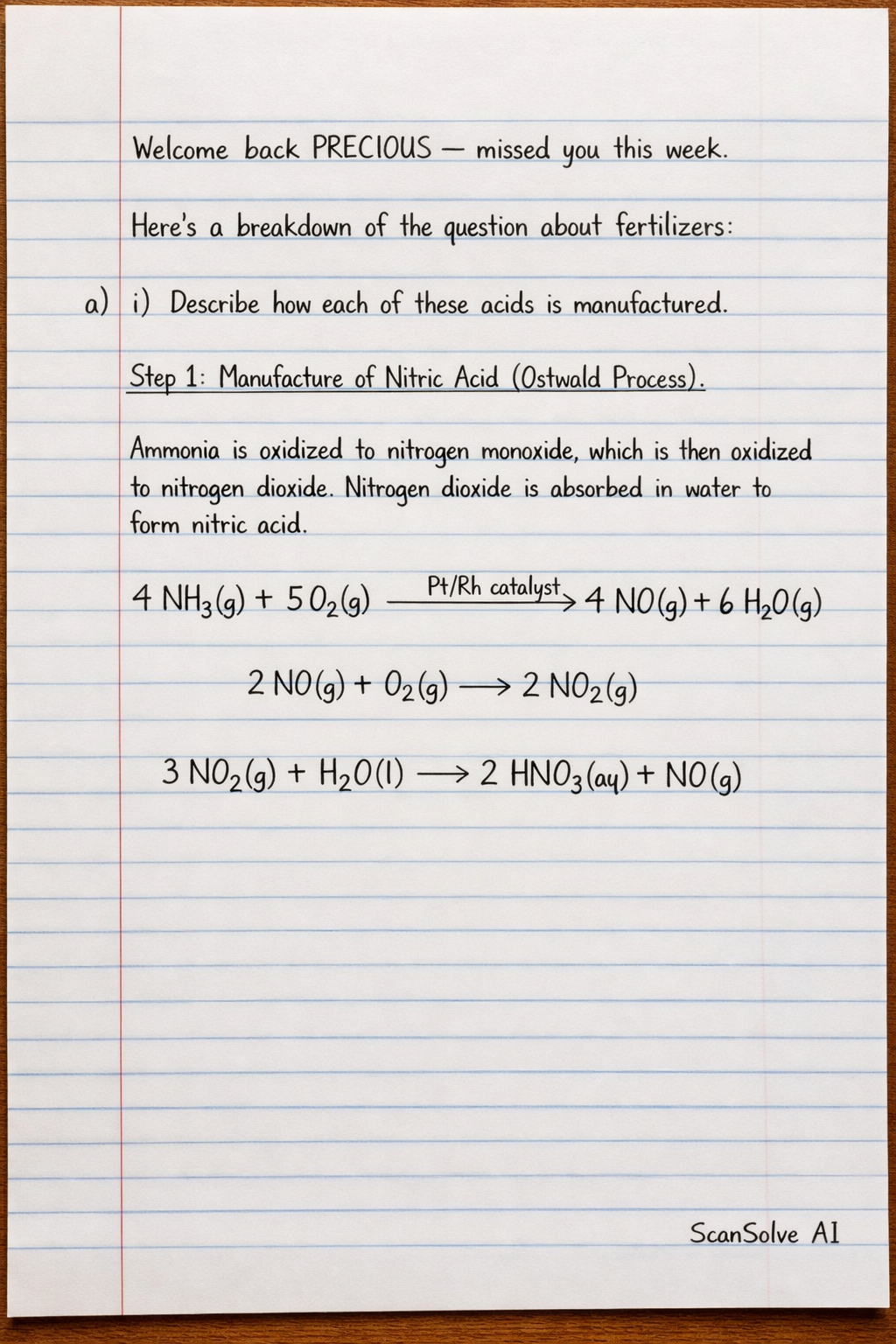
Handwritten Step-by-Step Solution
Get this as a handwritten image on WhatsApp — like a tutor wrote it for you.
Try on WhatsApp