
We read your photo as:
Explain the processes in the blast furnace for iron extraction. Include the role of hot air, separation of iron from slag, the reaction equation, why pig iron is unsuitable for bridges, galvanization,
ScanSolve AI Answer
Here are the answers to question 4, parts (c) through (i):
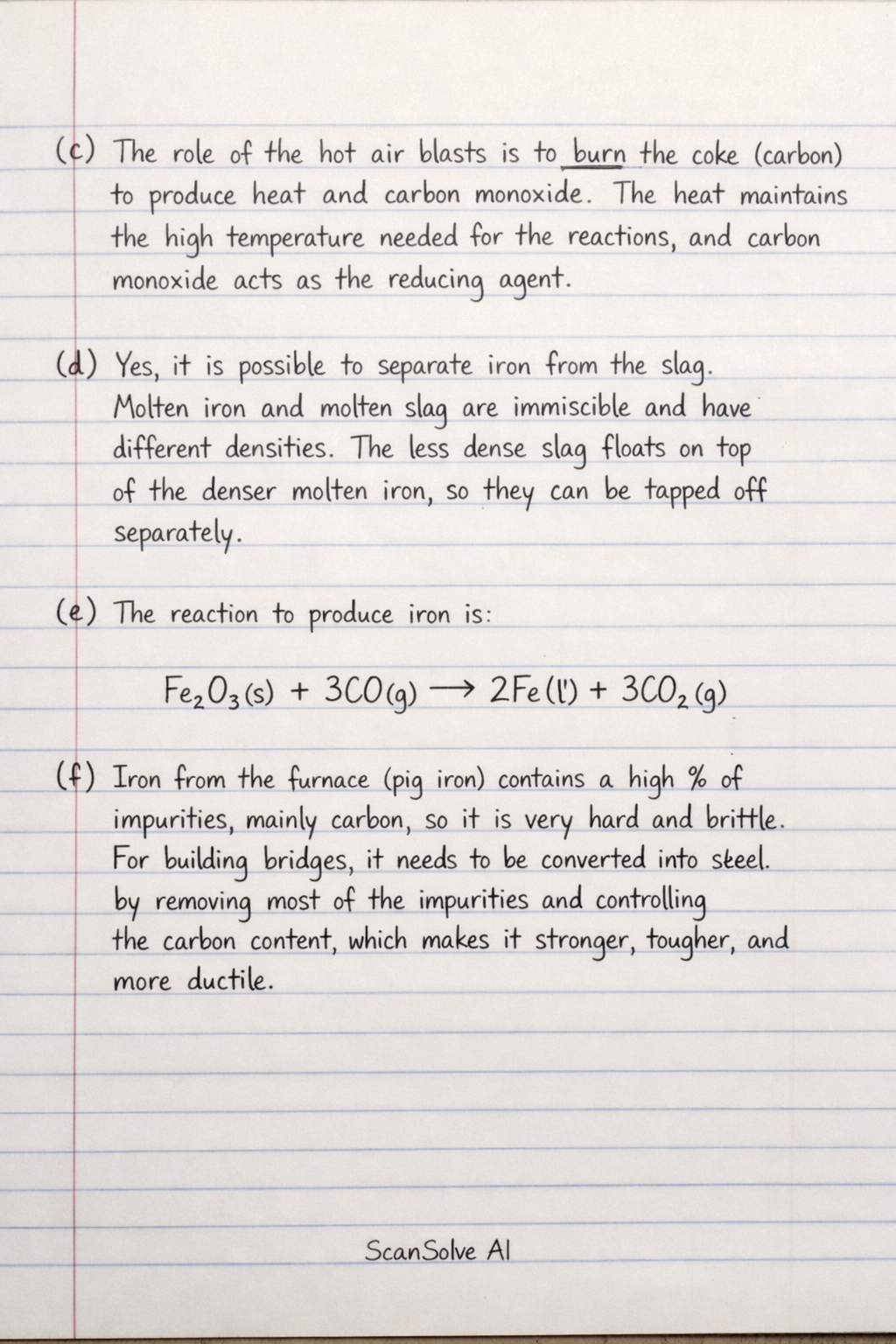
(c) The role of the hot air blasts in this process is to burn the coke (carbon) to produce heat and carbon monoxide. The heat maintains the high temperature required for the reactions, and carbon monoxide acts as the reducing agent.
(d) Yes, it is possible to separate iron from the slag. This is because molten iron and molten slag are immiscible and have different densities. The less dense slag floats on top of the denser molten iron, allowing them to be tapped off separately.
(e) The equation for the reaction that takes place to produce iron is:
(f) Iron obtained from the furnace (pig iron) contains a high percentage of impurities, mainly carbon, which makes it very hard and brittle. For building bridges, it needs to be converted into steel by removing most of these impurities and controlling the carbon content, which makes it stronger, tougher, and more ductile.
(g) Galvanized iron is iron or steel that has been coated with a protective layer of zinc.
(h) It is necessary to galvanize iron to prevent it from rusting (corrosion). The zinc coating acts as a physical barrier and also provides sacrificial protection.
(i) One environmental hazard associated with the extraction of iron is air pollution (e.g., release of carbon dioxide, sulfur dioxide, and dust particles) or generation of large amounts of solid waste (slag).
Still stuck on this one?
Ask a follow-up, and the answer starts from this question.
More Chemistry Questions
Handwritten Step-by-Step Solution
Get this as a handwritten image on WhatsApp — like a tutor wrote it for you.
Try on WhatsApp