
We read your photo as:
What is the factor of HCl in analytical chemistry and how is it determined?
ScanSolve AI Answer
Answer
The statement "Where F is the factor of the HCl as determined in experiment two above" defines F within the context of this experiment.
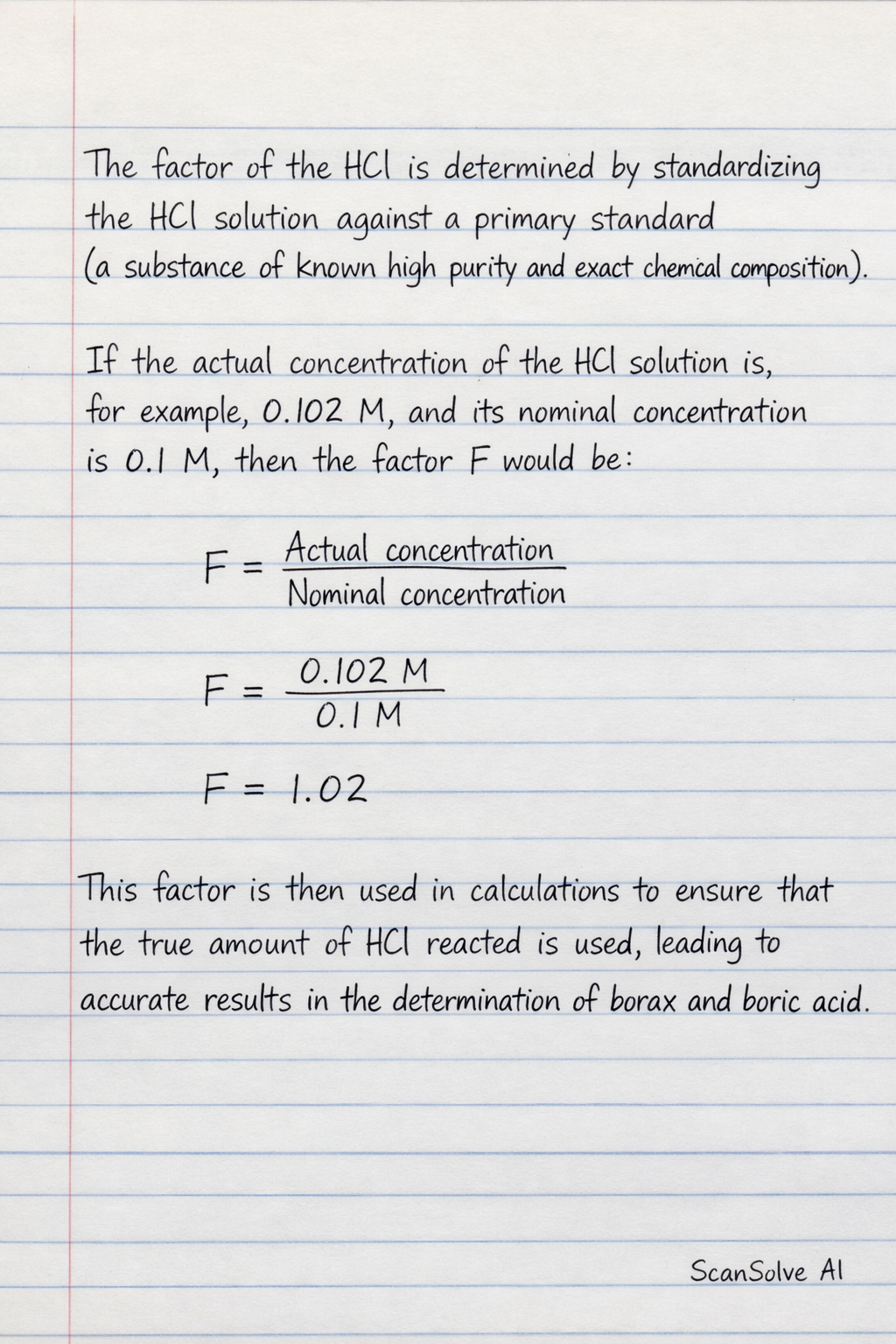
In analytical chemistry, the factor of the HCl (or any titrant) refers to a correction factor that accounts for the difference between the actual concentration of the hydrochloric acid solution and its nominal (stated or intended) concentration.
This factor is determined by standardizing the HCl solution against a primary standard (a substance of known high purity and exact chemical composition). If the actual concentration of the HCl solution is, for example, 0.102 M, and its nominal concentration is 0.1 M, then the factor F would be:
This factor is then used in calculations to ensure that the true amount of HCl reacted is used, leading to accurate results in the determination of borax and boric acid.
Still stuck on this one?
Ask a follow-up, and the answer starts from this question.
More Chemistry Questions
Handwritten Step-by-Step Solution
Get this as a handwritten image on WhatsApp — like a tutor wrote it for you.
Try on WhatsApp