The rate constant for a reaction depends upon each of the following, EXCEPT:

Chemistry
The rate constant for a reaction depends upon each of the following, EXCEPT:

ScanSolve AI Answer

Answer

(c) concentration of reactants

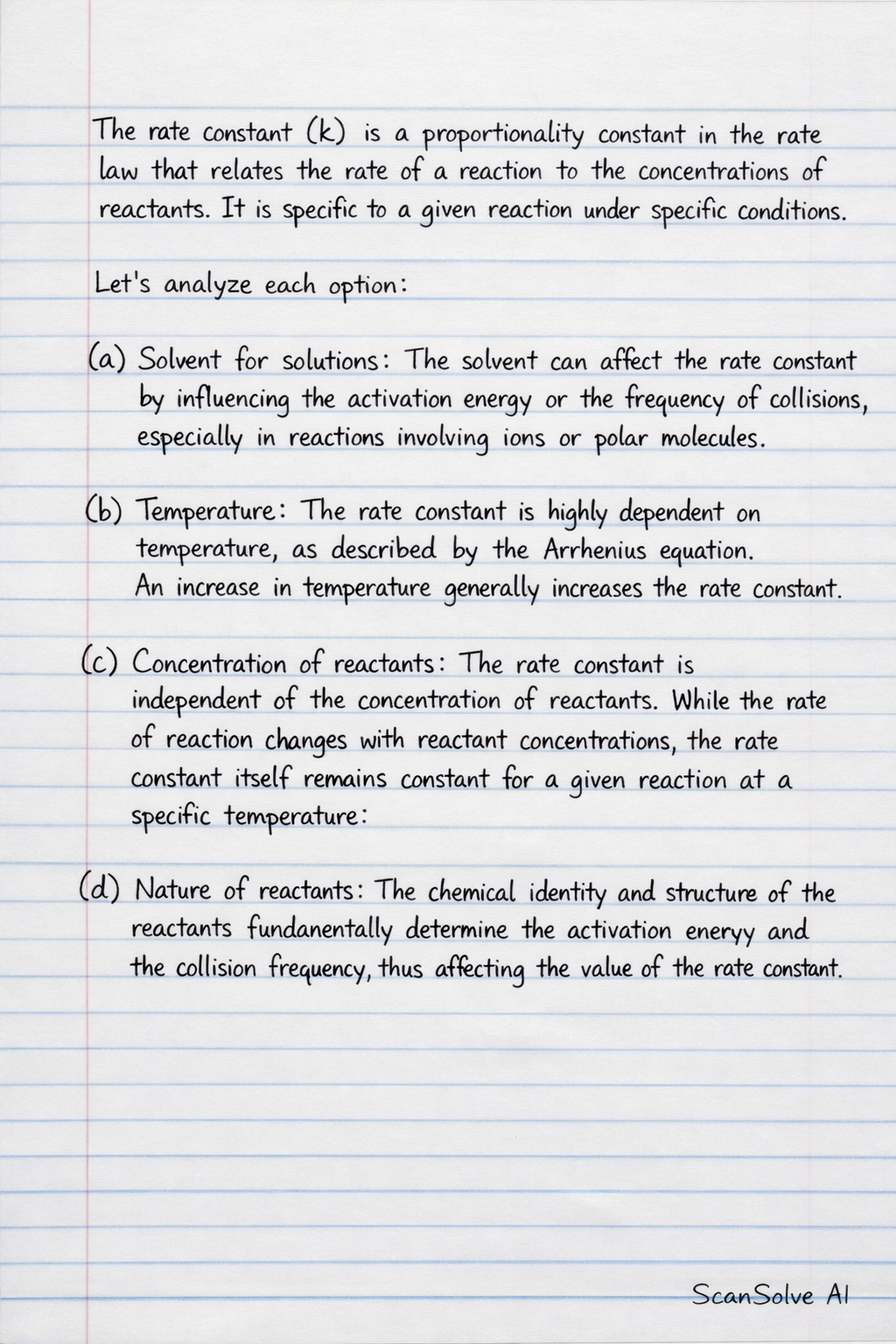
The rate constant (kk) is a proportionality constant in the rate law that relates the rate of a reaction to the concentrations of reactants. It is specific to a given reaction under specific conditions.

Let's analyze each option:

  • (a) solvent for solutions: The solvent can affect the rate constant by influencing the activation energy or the frequency of collisions, especially in reactions involving ions or polar molecules.
  • (b) temperature: The rate constant is highly dependent on temperature, as described by the Arrhenius equation. An increase in temperature generally increases the rate constant.
  • (c) concentration of reactants: The rate constant is independent of the concentration of reactants. While the rate of reaction changes with reactant concentrations, the rate constant itself remains constant for a given reaction at a specific temperature.
  • (d) nature of reactants: The chemical identity and structure of the reactants fundamentally determine the activation energy and the collision frequency, thus affecting the value of the rate constant.

Therefore, the rate constant does not depend on the concentration of reactants.

The final answer is (c)concentrationofreactants\boxed{(c) concentration of reactants}.

That's 2 down. 3 left today — send the next one.

Was this helpful?

Need help with your own homework?

Get instant step-by-step solutions to any question. Free to start.

Ask Your Question
Handwritten step-by-step solution preview

Handwritten Step-by-Step Solution

Get this as a handwritten image on WhatsApp — like a tutor wrote it for you.

Try on WhatsApp

Still have questions?

Quick Answer

The rate constant (k) is a proportionality constant in the rate law that relates the rate of a reaction to the concentrations of reactants.

The rate constant for a reaction depends upon each of the following, EXCEPT:
Chemistry

This chemistry question involves key chemical concepts and calculations. The detailed solution below walks through each step, from identifying the reaction type to computing the final answer.

ScanSolve AI Answer
The rate constant (k) is a proportionality constant in the rate law that relates the rate of a reaction to the concentrations of reactants. It is specific to a given reaction under specific conditions. Let's analyze each option: (a) solvent for solutions: The solvent can affect the rate constant by influencing the activation energy or the frequency of collisions, especially in reactions involving ions or polar molecules. (b) temperature: The rate constant is highly dependent on temperature, as described by the Arrhenius equation. An increase in temperature generally increases the rate constant. (c) concentration of reactants: The rate constant is independent of the concentration of reactants. While the rate of reaction changes with reactant concentrations, the rate constant* itself remains constant for a given reaction at a specific temperature. (d) nature of reactants: The chemical identity and structure of the reactants fundamentally determine the activation energy and the collision frequency, thus affecting the value of the rate constant. Therefore, the rate constant does not depend on the concentration of reactants. The final answer is (c) concentration of reactants. That's 2 down. 3 left today — send the next one.