

This computer science problem involves algorithmic thinking and programming concepts. The solution below explains the approach, logic, and implementation step by step.
ScanSolve AI Answer
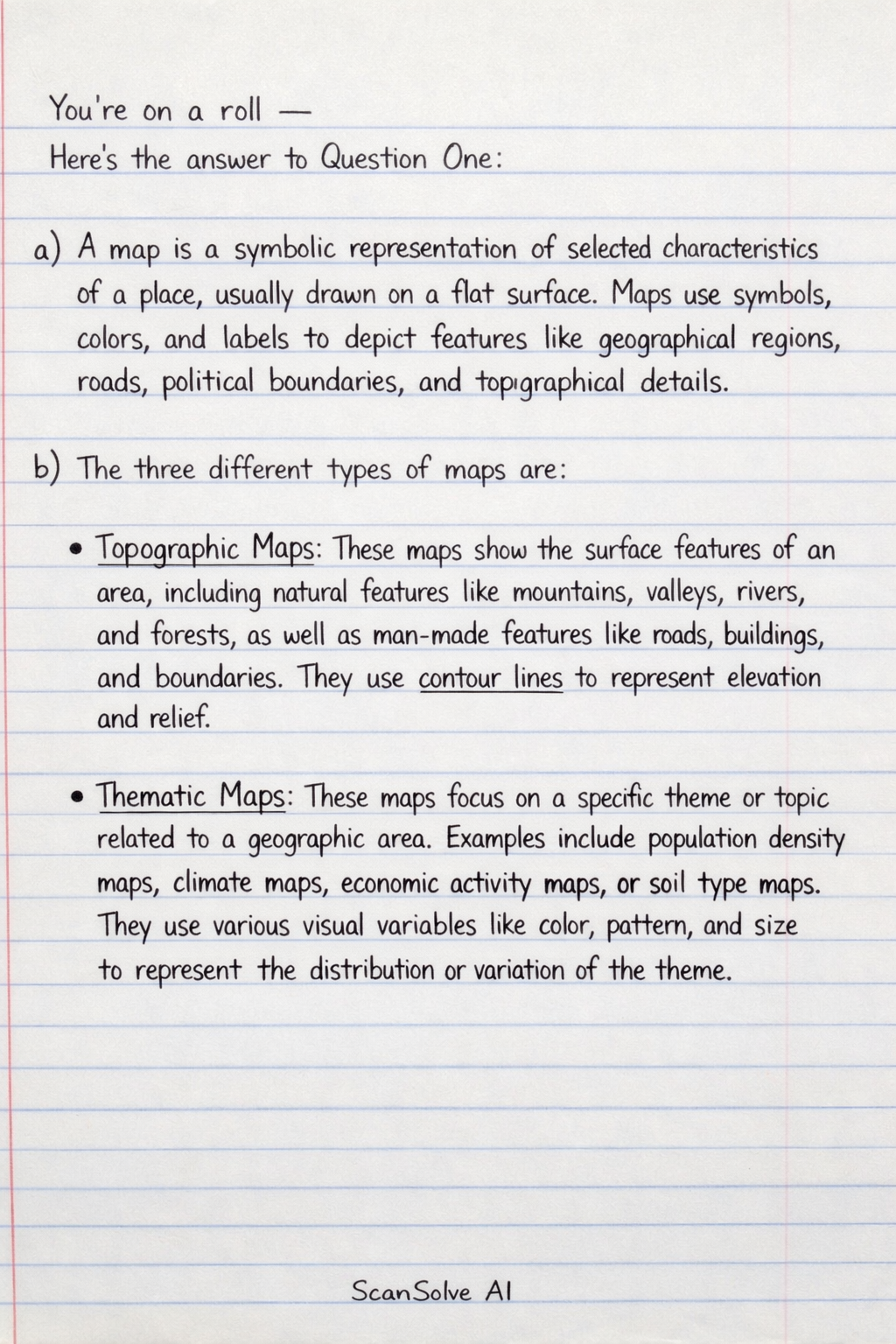
Here's the answer to Question One: a) A map is a symbolic representation of selected characteristics of a place, usually drawn on a flat surface. Maps use symbols, colors, and labels to depict features like geographical regions, roads, political boundaries, and topographical details. b) The three different types of maps are: • Topographic Maps: These maps show the surface features of an area, including natural features like mountains, valleys, rivers, and forests, as well as man-made features like roads, buildings, and boundaries. They use contour lines to represent elevation and relief. • Thematic Maps: These maps focus on a specific theme or topic related to a geographic area. Examples include population density maps, climate maps, economic activity maps, or soil type maps. They use various visual variables like color, pattern, and size to represent the distribution or variation of the theme. • Cadastral Maps: These maps show the boundaries and ownership of land parcels. They are primarily used for property management, land registration, and taxation purposes. They typically include details such as plot numbers, property lines, and sometimes the names of landowners. Send me the next one 📸