This computer science problem involves algorithmic thinking and programming concepts. The solution below explains the approach, logic, and implementation step by step.
Write the generation of the computer, their years, their future, their example, and technologies of those 3rd and 5th generations.
Computer Science

ScanSolve AI Answer
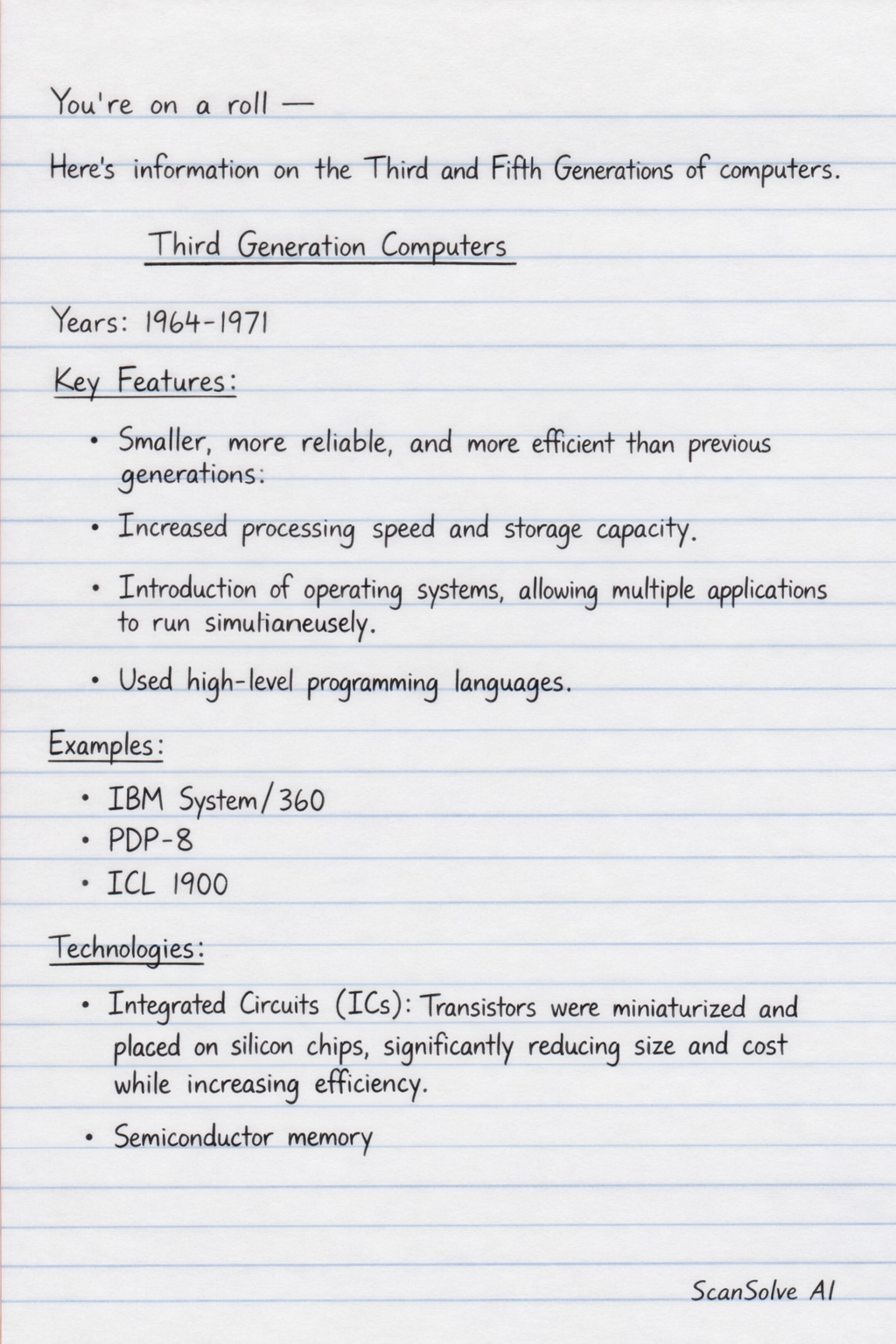
Here's information on the Third and Fifth Generations of computers.
Third Generation Computers
- Years: 1964-1971
- Key Features:
- Smaller, more reliable, and more efficient than previous generations.
- Increased processing speed and storage capacity.
- Introduction of operating systems, allowing multiple applications to run simultaneously.
- Used high-level programming languages.
- Examples:
- IBM System/360
- PDP-8
- ICL 1900
- Technologies:
- Integrated Circuits (ICs): Transistors were miniaturized and placed on silicon chips, significantly reducing size and cost while increasing efficiency.
- Semiconductor memory
Fifth Generation Computers
- Years: 1980s-Present (and beyond)
- Key Features:
- Focus on Artificial Intelligence (AI), parallel processing, and superconductors.
- Aims to make computers think and reason like humans.
- Development of natural language processing and expert systems.
- Advancements in multimedia and virtual reality.
- Examples:
- Robotics
- Smartphones with AI assistants (e.g., Siri, Google Assistant)
- AI-powered medical diagnostic systems
- Quantum computers (emerging)
- Technologies:
- Artificial Intelligence (AI): Includes machine learning, deep learning, neural networks.
- Parallel Processing: Using multiple processors to execute tasks simultaneously.
- Superconductors: For faster processing speeds with minimal energy loss.
- Ultra Large Scale Integration (ULSI): Further miniaturization of integrated circuits.
- Natural Language Processing (NLP).
Drop the next question 📸
Was this helpful?
Need help with your own homework?
Get instant step-by-step solutions to any question. Free to start.
Ask Your Question
Handwritten Step-by-Step Solution
Get this as a handwritten image on WhatsApp — like a tutor wrote it for you.
Try on WhatsAppMore Computer Science Questions
Still have questions?
Quick Answer
Here's information on the Third and Fifth Generations of computers. Third Generation Computers Years: 1964-1971 Key Features: Smaller, more reliable, and more efficient than previous generations.
ScanSolve AI Answer
Here's information on the Third and Fifth Generations of computers. Third Generation Computers Years: 1964-1971 Key Features: Smaller, more reliable, and more efficient than previous generations. Increased processing speed and storage capacity. Introduction of operating systems, allowing multiple applications to run simultaneously. Used high-level programming languages. Examples: IBM System/360* PDP-8* ICL 1900* Technologies: Integrated Circuits (ICs)*: Transistors were miniaturized and placed on silicon chips, significantly reducing size and cost while increasing efficiency. Semiconductor memory* Fifth Generation Computers Years: 1980s-Present (and beyond) Key Features: Focus on Artificial Intelligence (AI), parallel processing, and superconductors*. Aims to make computers think and reason like humans. Development of natural language processing and expert systems*. Advancements in multimedia and virtual reality*. Examples: Robotics* Smartphones with AI assistants (e.g., Siri, Google Assistant)* AI-powered medical diagnostic systems* Quantum computers (emerging)* Technologies: Artificial Intelligence (AI)*: Includes machine learning, deep learning, neural networks. Parallel Processing*: Using multiple processors to execute tasks simultaneously. Superconductors*: For faster processing speeds with minimal energy loss. Ultra Large Scale Integration (ULSI)*: Further miniaturization of integrated circuits. Natural Language Processing (NLP)*. Drop the next question 📸