
We read your photo as:
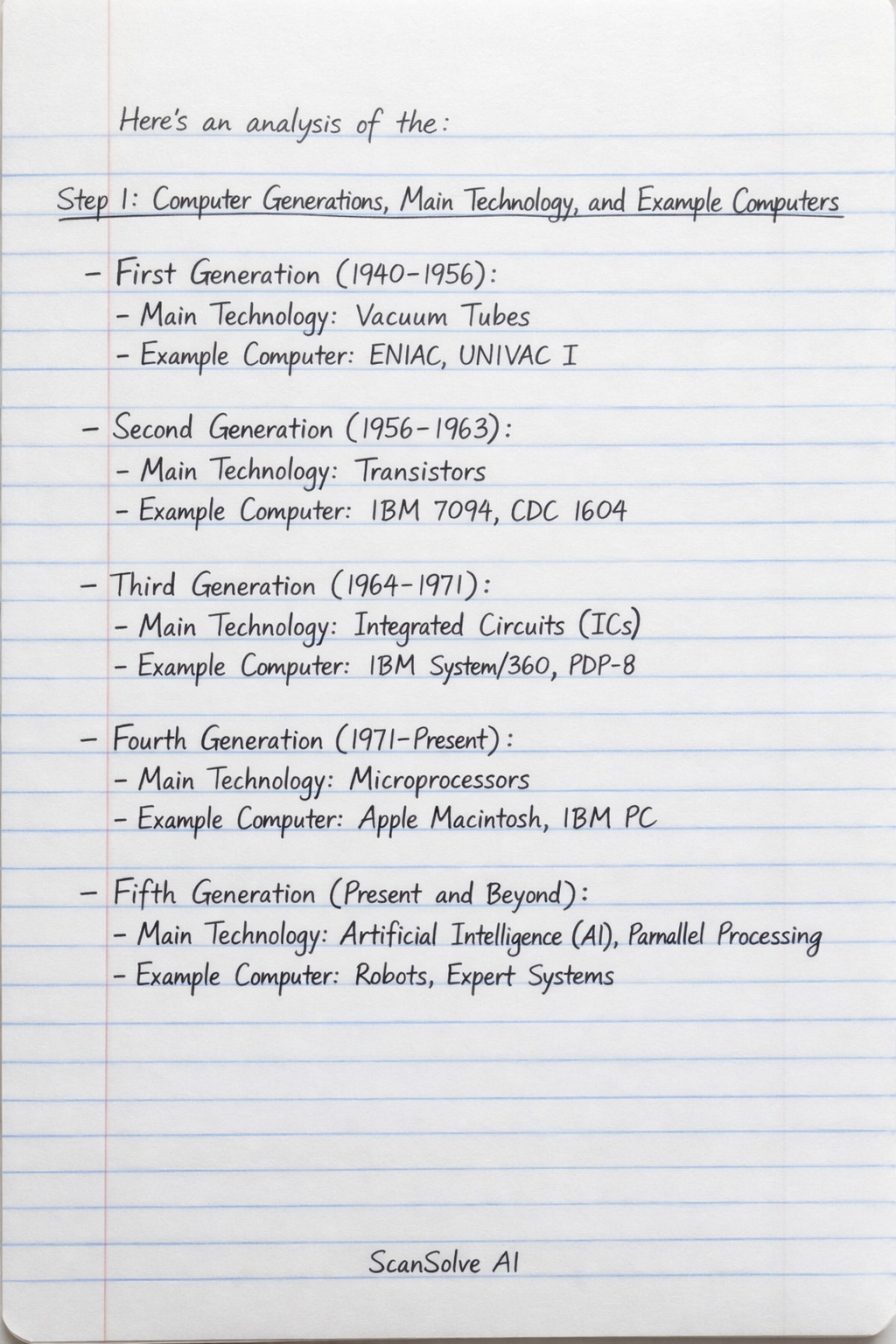
Computer Generations, Main Technology, and Example Computers
ScanSolve AI Answer
Step-by-step solution
5 stepsComputer Generations, Main Technology, and Example Computers
- First Generation (1940-1956):
- Main Technology: Vacuum Tubes
- Example Computer: ENIAC, UNIVAC I
- Second Generation (1956-1963):
- Main Technology: Transistors
- Example Computer: IBM 7094, CDC 1604
- Third Generation (1964-1971):
- Main Technology: Integrated Circuits (ICs)
- Example Computer: IBM System/360, PDP-8
- Fourth Generation (1971-Present):
- Main Technology: Microprocessors
- Example Computer: Apple Macintosh, IBM PC
- Fifth Generation (Present and Beyond):
- Main Technology: Artificial Intelligence (AI), Parallel Processing
- Example Computer: Robots, Expert Systems
- First Generation (1940-1956):
What is the Internet?
The Internet is a global system of interconnected computer networks that uses the standard Internet Protocol Suite (TCP/IP) to serve billions of users worldwide. It is a network of networks that consists of private, public, academic, business, and government networks of local to global scope, linked by a broad array of electronic, wireless, and optical networking technologies.
What is an Email?
Email (electronic mail) is a method of exchanging digital messages between people using electronic devices. It allows users to send and receive messages, often including attachments like documents or images, over the Internet.
Write 5 Cyber Safety Rules
- Use strong, unique passwords for all accounts.
- Be cautious of suspicious links or attachments in emails and messages.
- Keep your software and operating system updated to patch security vulnerabilities.
- Use antivirus software and a firewall to protect against malware.
- Be mindful of the information you share online and adjust privacy settings on social media.
Why should we use cyber safety rules?
We should use cyber safety rules to protect our personal information, devices, and online identity from cyber threats such as hacking, malware, phishing, and identity theft. Following these rules helps maintain privacy, security, and a safe online experience.
Still stuck on this one?
Ask a follow-up, and the answer starts from this question.
More Computer Science Questions
Handwritten Step-by-Step Solution
Get this as a handwritten image on WhatsApp — like a tutor wrote it for you.
Try on WhatsApp