4th generation of Computer

Computer Science
4th generation of Computer

ScanSolve AI Answer

Here's information on the Fourth Generation of computers.

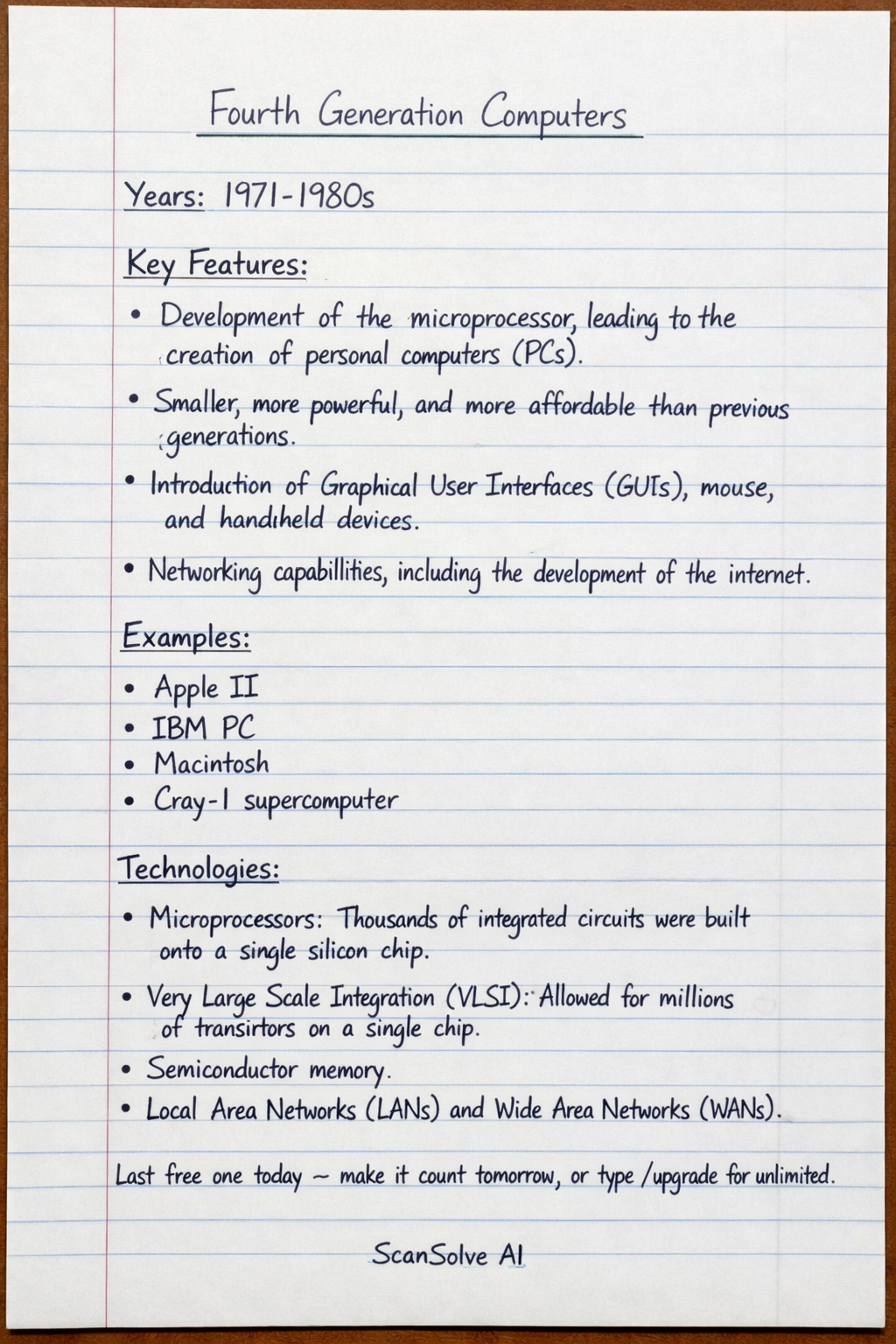
Fourth Generation Computers

  • Years: 1971-1980s
  • Key Features:
    • Development of the microprocessor, leading to the creation of personal computers (PCs).
    • Smaller, more powerful, and more affordable than previous generations.
    • Introduction of Graphical User Interfaces (GUIs), mouse, and handheld devices.
    • Networking capabilities, including the development of the internet.
  • Examples:
    • Apple II
    • IBM PC
    • Macintosh
    • Cray-1 supercomputer
  • Technologies:
    • Microprocessors: Thousands of integrated circuits were built onto a single silicon chip.
    • Very Large Scale Integration (VLSI): Allowed for millions of transistors on a single chip.
    • Semiconductor memory
    • Local Area Networks (LANs) and Wide Area Networks (WANs).

Last free one today — make it count tomorrow, or type /upgrade for unlimited.

Was this helpful?

Need help with your own homework?

Get instant step-by-step solutions to any question. Free to start.

Ask Your Question
Handwritten step-by-step solution preview

Handwritten Step-by-Step Solution

Get this as a handwritten image on WhatsApp — like a tutor wrote it for you.

Try on WhatsApp

Still have questions?

Quick Answer

Here's information on the Fourth Generation of computers. Fourth Generation Computers Years: 1971-1980s Key Features: Development of the microprocessor*, leading to the creation of personal computers (PCs).

4th generation of Computer
Computer Science

This computer science problem involves algorithmic thinking and programming concepts. The solution below explains the approach, logic, and implementation step by step.

ScanSolve AI Answer
Here's information on the Fourth Generation of computers. Fourth Generation Computers Years: 1971-1980s Key Features: Development of the microprocessor*, leading to the creation of personal computers (PCs). Smaller, more powerful, and more affordable than previous generations. Introduction of Graphical User Interfaces (GUIs), mouse, and handheld devices*. Networking capabilities, including the development of the internet. Examples: Apple II* IBM PC* Macintosh* Cray-1 supercomputer* Technologies: Microprocessors*: Thousands of integrated circuits were built onto a single silicon chip. Very Large Scale Integration (VLSI)*: Allowed for millions of transistors on a single chip. Semiconductor memory* Local Area Networks (LANs) and Wide Area Networks (WANs)*. Last free one today — make it count tomorrow, or type /upgrade for unlimited.