
We read your photo as:
Calculate the cost of units in the first tariff block.
ScanSolve AI Answer
Step-by-step solution
5 stepsHere's how to solve the problem:
2.1.2 (a) Show that the meter reading after purchase is CORRECT, rounded to the nearest whole number.
Calculate the cost of units in the first tariff block.
The initial meter reading is . The first tariff block is at .
The remaining units in the first block that can be purchased are:The cost for these is:
Calculate the remaining money and units purchased in the second tariff block.
Lebogang purchased worth of electricity. The money remaining after the first block purchase is:
The tariff for the second block () is .
The units purchased with the remaining money are:Calculate the total kWh purchased.
Total kWh purchased = Units from first block + Units from second block
Calculate the meter reading after the purchase.
The new meter reading is the initial reading plus the total kWh purchased:
Round the calculated meter reading and compare it to the given reading.
The calculated meter reading is . Rounded to the nearest whole number, this is .
The meter reading after purchase shown in Table 3 is . Rounded to the nearest whole number, this is also .
Since both values round to the same whole number, the meter reading after purchase is indeed correct.
Still stuck on this one?
Ask a follow-up, and the answer starts from this question.
More Economics Questions
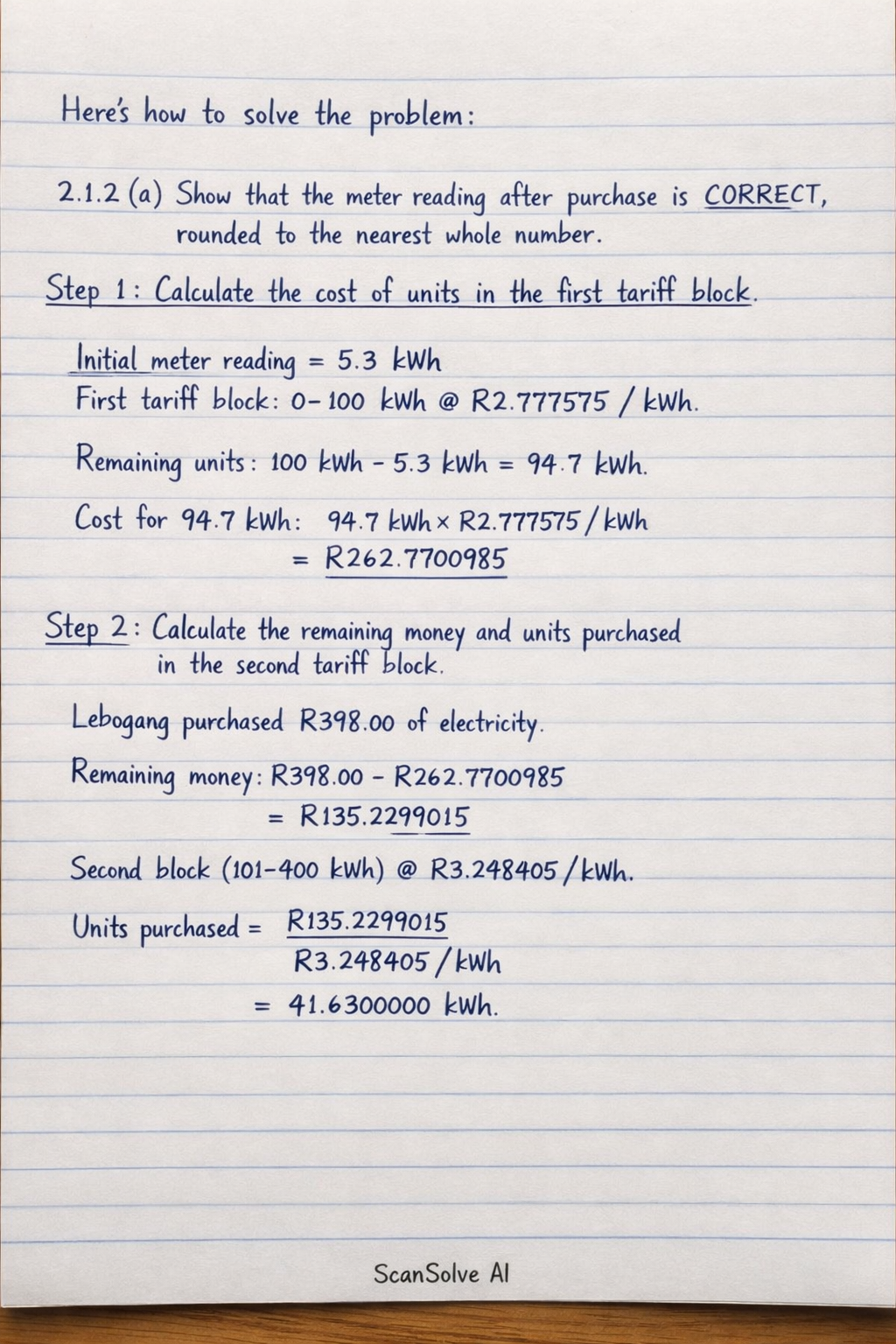
Handwritten Step-by-Step Solution
Get this as a handwritten image on WhatsApp — like a tutor wrote it for you.
Try on WhatsApp