
This geography problem is solved step by step below, with detailed explanations to help you understand the method and arrive at the correct answer.
ScanSolve AI Answer
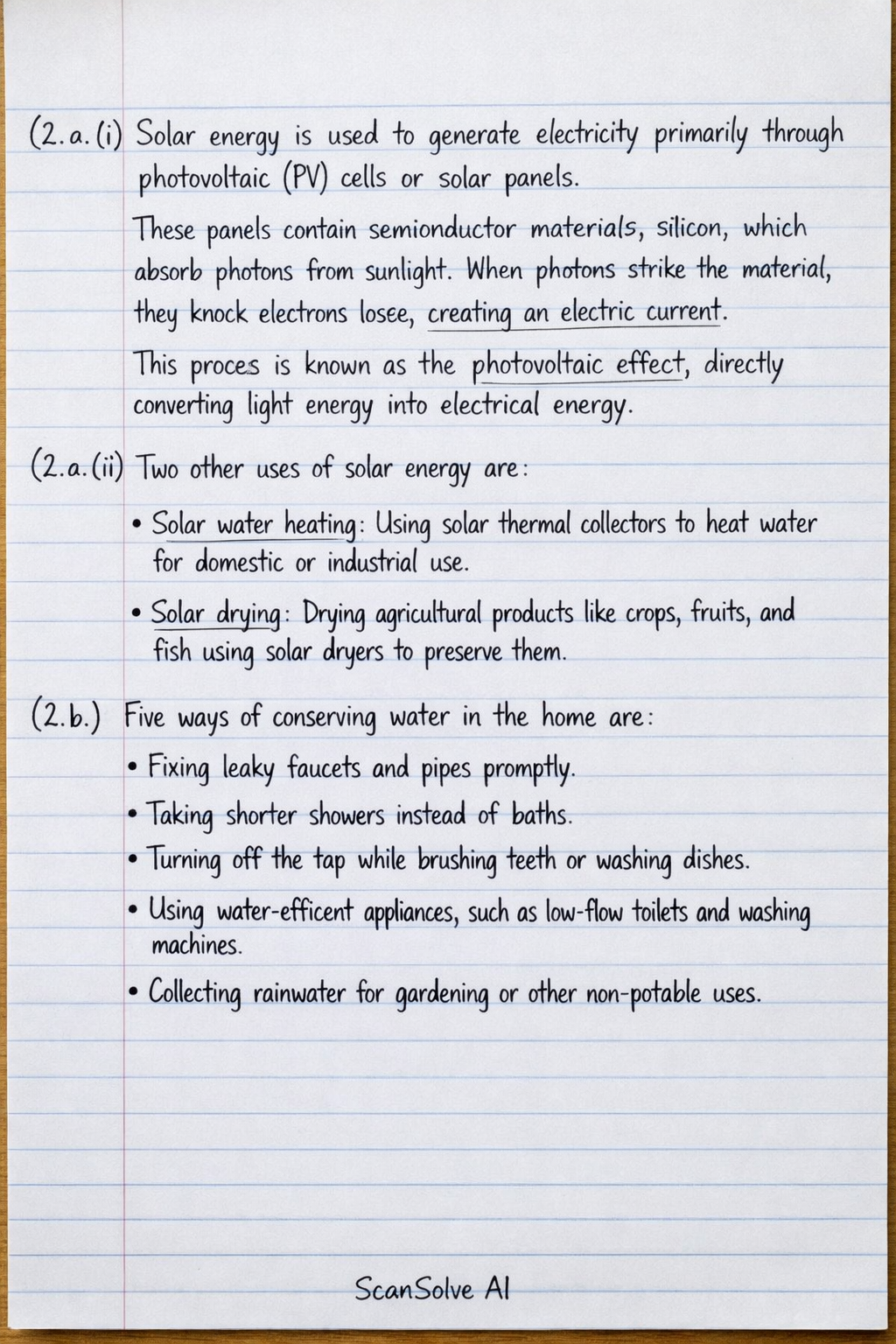
You're on a roll — 2. a. (i) Solar energy is used to generate electricity primarily through photovoltaic (PV) cells or solar panels. These panels contain semiconductor materials, typically silicon, which absorb photons from sunlight. When photons strike the material, they knock electrons loose, creating an electric current. This process is known as the photovoltaic effect, directly converting light energy into electrical energy. 2. a. (ii) Two other uses of solar energy are: Solar water heating*: Using solar thermal collectors to heat water for domestic or industrial use. Solar drying*: Drying agricultural products like crops, fruits, and fish using solar dryers to preserve them. 2. b. Five ways of conserving water in the home are: Fixing leaky faucets and pipes promptly. Taking shorter showers instead of baths. Turning off the tap while brushing teeth or washing dishes. Using water-efficient appliances, such as low-flow toilets and washing machines. Collecting rainwater for gardening or other non-potable uses. 2. c. (i) Three management practices that ensure high yield in maize production are: Proper spacing* of plants. Timely application of fertilizers*. Effective pest and disease control*. 2. c. (ii) Proper spacing* ensures that each maize plant has adequate access to sunlight, water, and nutrients from the soil, reducing competition and allowing for optimal growth and ear development. Timely application of fertilizers* provides essential nutrients like nitrogen, phosphorus, and potassium at critical growth stages, which are vital for healthy plant development, strong stalks, and the formation of large, well-filled cobs, directly contributing to higher yields. 2. d. (i) Two effects of air masses on the environment are: They bring significant changes in temperature*, leading to either warming or cooling trends depending on whether the air mass is tropical or polar. They influence precipitation patterns*, causing rainfall, snow, or dry conditions as they move over different regions and interact with local topography. 2. d. (ii) Three ways by which global warming can be reduced are: Transitioning to renewable energy sources* such as solar, wind, and hydroelectric power to reduce reliance on fossil fuels. Improving energy efficiency* in homes, industries, and transportation through better insulation, efficient appliances, and public transport. Implementing afforestation and reforestation programs* to increase the number of trees, which absorb carbon dioxide from the atmosphere. What's next?