
We read your photo as:
What are the key geographical features and their impact on the development of early African civilizations?
ScanSolve AI Answer
Answer
-
The correct answer is B. The Nile River was the lifeblood of ancient Egyptian civilization, providing water for irrigation, fertile soil through its annual floods, and a means of transportation.
-
The correct answer is C. The vast Sahara Desert made large-scale agriculture and dense settlements difficult, leading many early African societies to adopt nomadic lifestyles and establish trade routes that connected oases.
-
The correct answer is B. The Ethiopian Highlands are characterized by fertile volcanic soils and consistent rainfall, which made them highly suitable for crop cultivation and supported the development of early agricultural kingdoms.
-
The correct answer is C. The Swahili Coast served as a crucial link for Indian Ocean trade, connecting East African societies with merchants from the Arabian Peninsula, India, and beyond.
-
The correct answer is B. Coastal cities like Kilwa thrived by actively participating in the Indian Ocean trade network, exchanging valuable African resources such as ivory, gold, and enslaved people for imported goods like textiles and pottery.
-
The correct answer is B. The primary impact of the Nile River's annual flooding was the deposition of nutrient-rich silt, which naturally fertilized the land and enabled intensive agriculture, forming the basis of ancient Egyptian civilization.
-
Geographical features significantly influenced trade networks in early Africa. Major rivers like the Nile and Niger served as natural highways, facilitating the movement of goods and people. Deserts, such as the Sahara, acted as barriers but also shaped specific trade routes, like the trans-Saharan trade, which relied on oases. Coastlines, particularly the Swahili Coast, enabled extensive maritime trade, connecting African societies to the Indian Ocean world. These features determined where trade routes developed, what goods were exchanged, and how societies interacted.
Try one yourself
A new problem that tests the same skill.
Still stuck on this one?
Ask a follow-up, and the answer starts from this question.
More History Questions
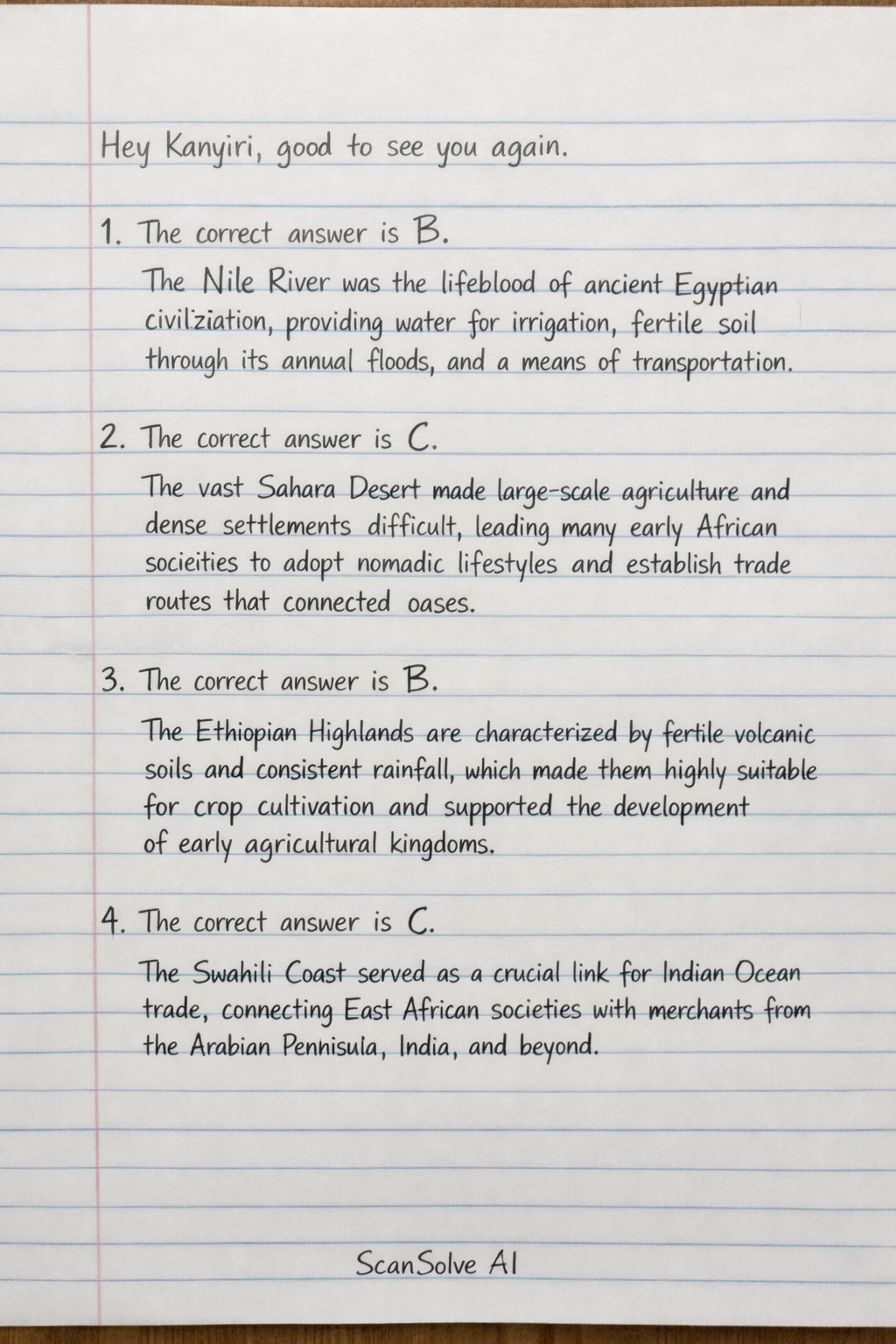
Handwritten Step-by-Step Solution
Get this as a handwritten image on WhatsApp — like a tutor wrote it for you.
Try on WhatsApp