

This law problem is solved step by step below, with detailed explanations to help you understand the method and arrive at the correct answer.
ScanSolve AI Answer
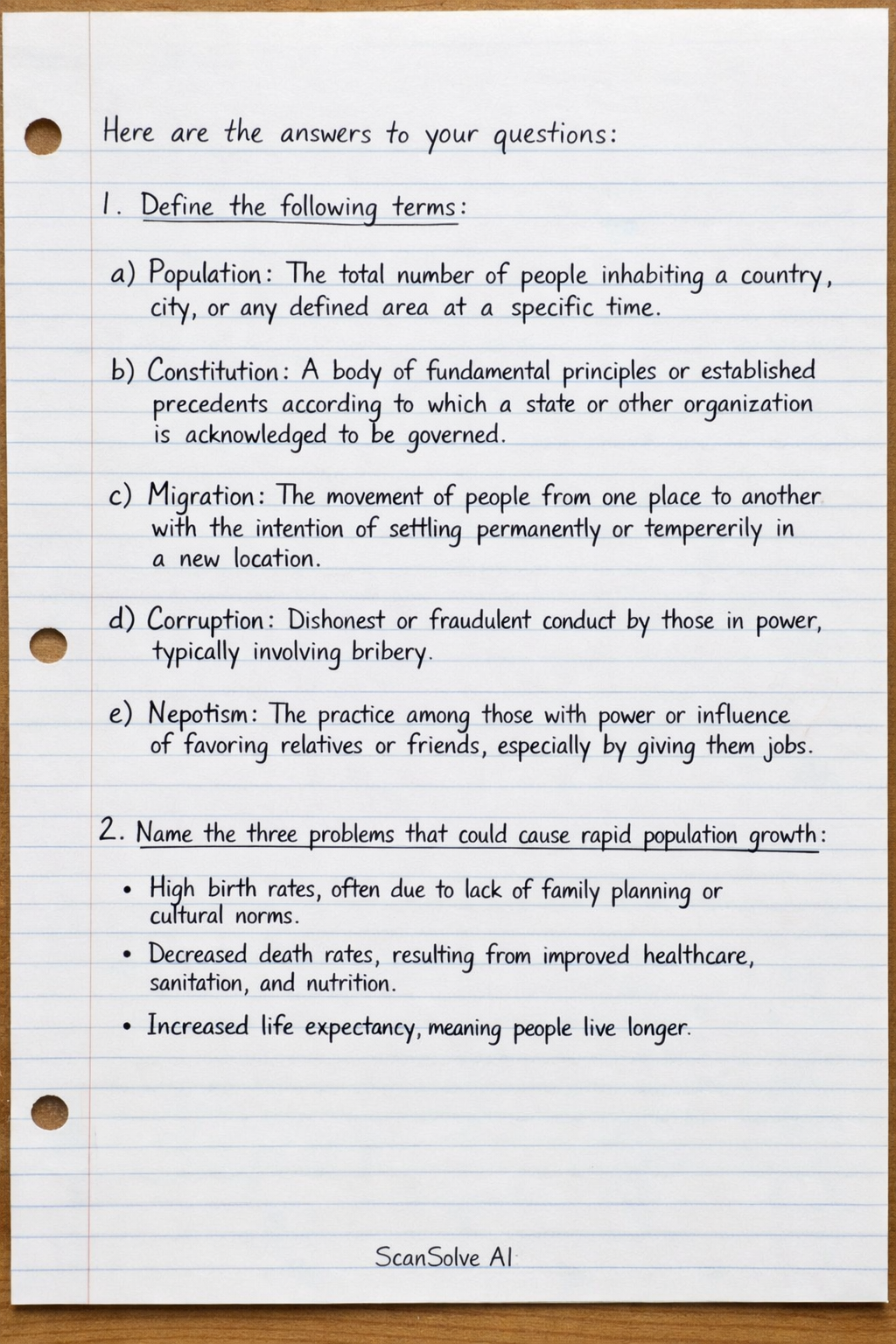
Here are the answers to your questions: 1. Define the following terms: a) Population: The total number of people inhabiting a country, city, or any defined area at a specific time. b) Constitution: A body of fundamental principles or established precedents according to which a state or other organization is acknowledged to be governed. c) Migration: The movement of people from one place to another with the intention of settling permanently or temporarily in a new location. d) Corruption: Dishonest or fraudulent conduct by those in power, typically involving bribery. e) Nepotism: The practice among those with power or influence of favoring relatives or friends, especially by giving them jobs. 2. Name the three problems that could cause rapid population growth: • High birth rates, often due to lack of family planning or cultural norms. • Decreased death rates, resulting from improved healthcare, sanitation, and nutrition. • Increased life expectancy, meaning people live longer. 3. Name two effects of population growth: • Increased pressure on natural resources such as food, water, and land. • Strain on social services and infrastructure, including housing, education, and healthcare. 4. What is the difference between petty corruption and grand corruption? Use an example to illustrate this difference: Petty corruption involves small sums of money or minor favors, typically occurring at lower levels of public service when individuals interact with bureaucrats to obtain permits, licenses, or basic services. Grand corruption involves large sums of money and occurs at the highest levels of government, often involving senior officials who manipulate policies, institutions, and resource allocation for personal gain. Example: Petty Corruption: A citizen pays a small bribe to a traffic police officer to avoid a minor traffic fine. Grand Corruption: A government minister accepts a large kickback from a construction company in exchange for awarding them a multi-million dollar public infrastructure contract.