
Differentiate between population and sample in Statistics?
Mathematics
ScanSolve AI Answer
A population in statistics is the complete set of all possible observations, individuals, or items that share a common characteristic and are relevant to a particular study. It is the entire group about which conclusions are to be drawn.
A sample is a subset of the population that is selected for observation and analysis. It is a smaller, representative group chosen from the population, and data collected from the sample is used to make inferences or generalizations about the entire population.
Was this helpful?
Still stuck on this one?
Ask a follow-up, and the answer starts from this question.
Got a different question?Ask your own question
More Mathematics Questions
QDefine statistical inference, explaining the relationship between sample and population in this…QI. What is a sample? How does a sample differ from the accessible population? ii. Why should a…QBiology Discuss population studies by sampling methods and factors affecting populationQTo determine if a sample is representative, we need to compare the proportion of its characteristics…QExplain the meaning of the form population
Browse by topic:Statistics
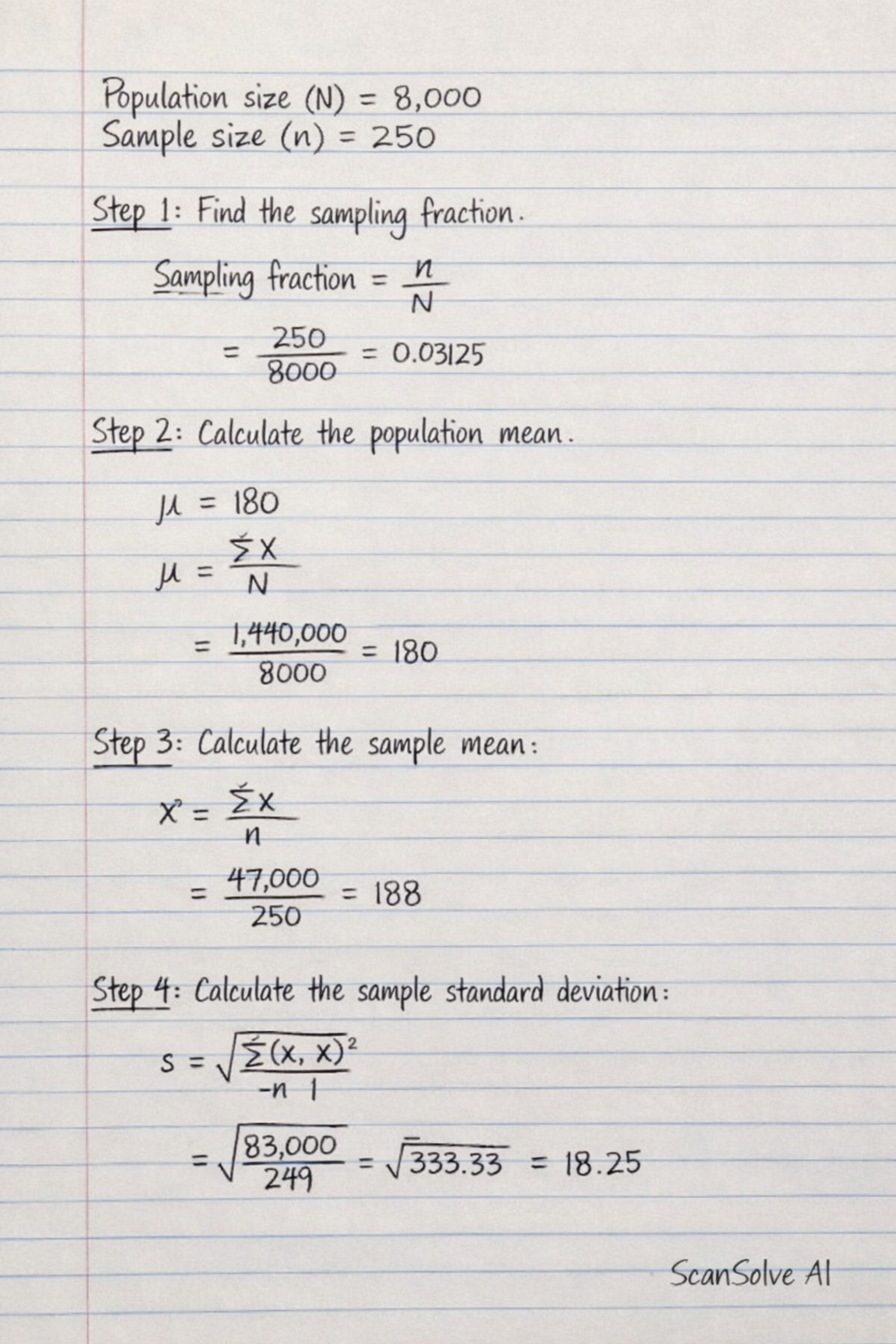
Handwritten Step-by-Step Solution
Get this as a handwritten image on WhatsApp — like a tutor wrote it for you.
Try on WhatsApp