
We read your photo as:
Look at the graph in Figure 7.27 and answer the questions. 1 State the altitude of the highest point the cyclist climbed to during the cycle.
ScanSolve AI Answer
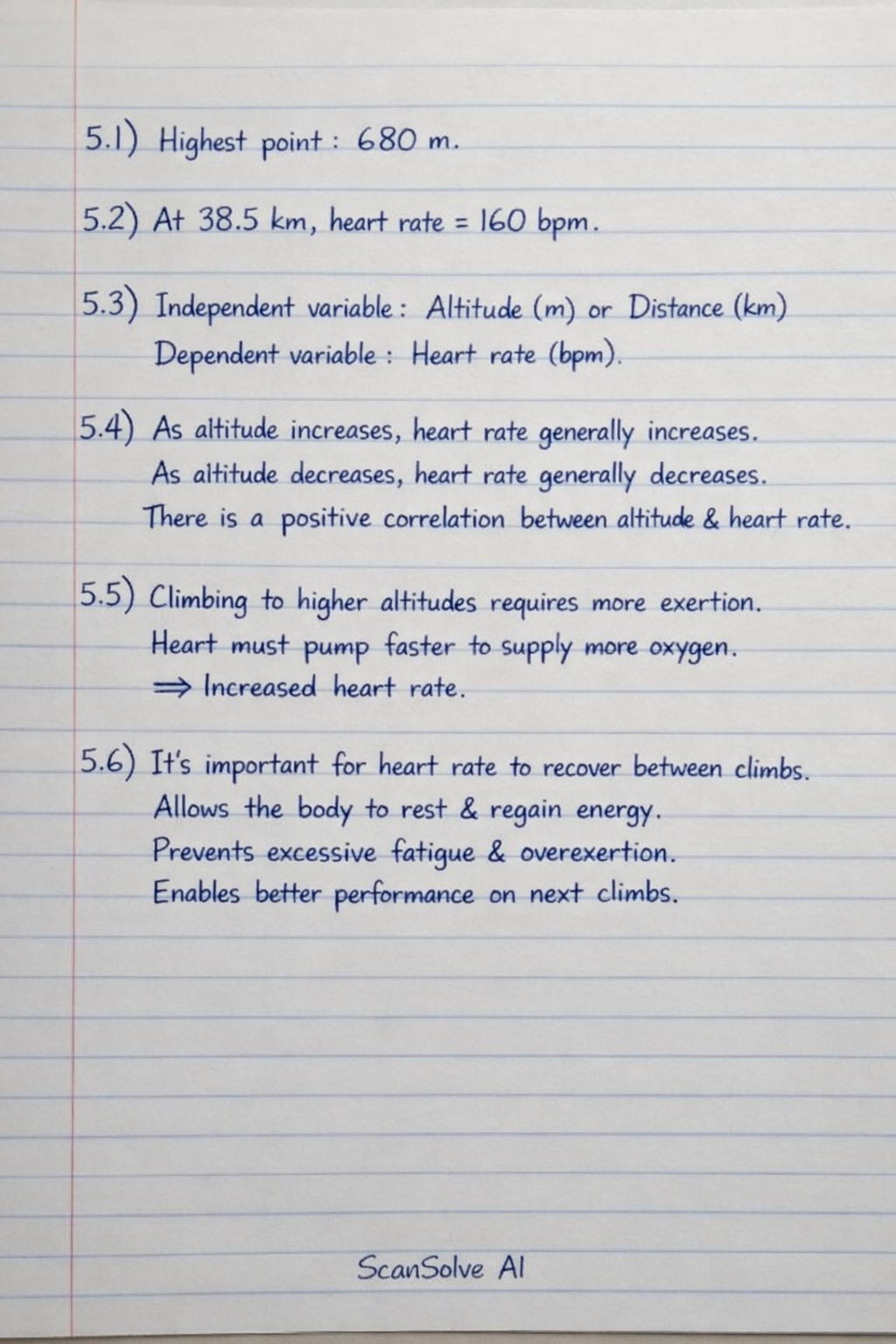
5.1) The highest point the cyclist climbed to is approximately 680 m.
5.2) At the highest point of altitude (around 38.5 km), the cyclist's heart rate was approximately 160 bpm.
5.3)
- Independent variable: Altitude (m) or Distance (km)
- Dependent variable: Heart rate (bpm)
5.4) As the altitude increases (during climbs), the cyclist's heart rate generally increases. Conversely, as the altitude decreases (during descents), the heart rate generally decreases. There is a positive correlation between altitude and heart rate.
5.5) This relationship exists because climbing to higher altitudes requires more physical exertion. To meet the increased demand for oxygen by the working muscles, the heart has to pump faster, leading to an increased heart rate.
5.6) It is important for the cyclist's heart rate to recover between climbs to allow the body to rest and replenish energy stores. This prevents excessive fatigue, reduces the risk of overexertion, and enables the cyclist to maintain performance and effort during subsequent climbs.
Still stuck on this one?
Ask a follow-up, and the answer starts from this question.
More Mathematics Questions
Handwritten Step-by-Step Solution
Get this as a handwritten image on WhatsApp — like a tutor wrote it for you.
Try on WhatsApp