
We read your photo as:
4b) Mean arterial blood pressure
Physics
ScanSolve AI Answer
Here is the answer to question 4b from the Physiology section:
4b) Mean arterial blood pressure
Mean arterial pressure (MAP) is the average arterial pressure during a single cardiac cycle. It is considered a better indicator of perfusion to vital organs than systolic blood pressure.
The formula for calculating MAP is:
Alternatively, since Pulse Pressure (PP) is defined as Systolic Pressure - Diastolic Pressure, the formula can be written as:
A normal MAP is typically between and .
Was this helpful?
Still stuck on this one?
Ask a follow-up, and the answer starts from this question.
Got a different question?Ask your own question
More Physics Questions
Q• Non-Invasive Blood Pressure (NIBP): 118/70 mmHg (Mean Arterial Pressure (MAP) 86)QDiscuss the long term arterial blood pressure of a physiological man in physiologyQGiven that the systolic blood pressure is normally distributed with:QDiscuss the long term arterial blood pressure of a physiological man in physiology I want it in…QIdentify the given blood pressure (Bp) readings and determine the differences between consecutive…
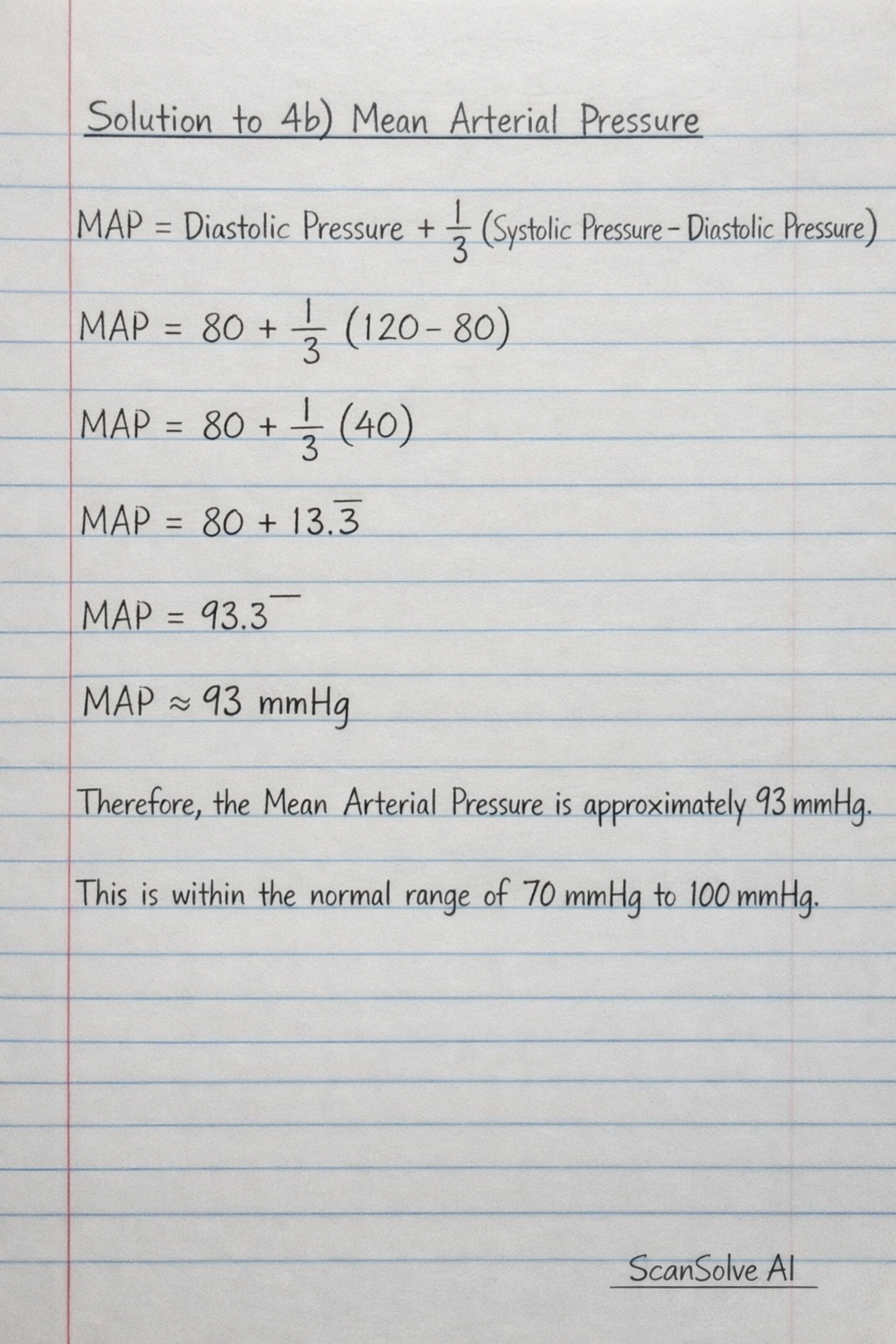
Handwritten Step-by-Step Solution
Get this as a handwritten image on WhatsApp — like a tutor wrote it for you.
Try on WhatsApp