
We read your photo as:
Carbohydrates: Provide the body with its primary source of energy*. They are broken down into glucose, which fuels cells, tissues, and organs.
Physics
ScanSolve AI Answer
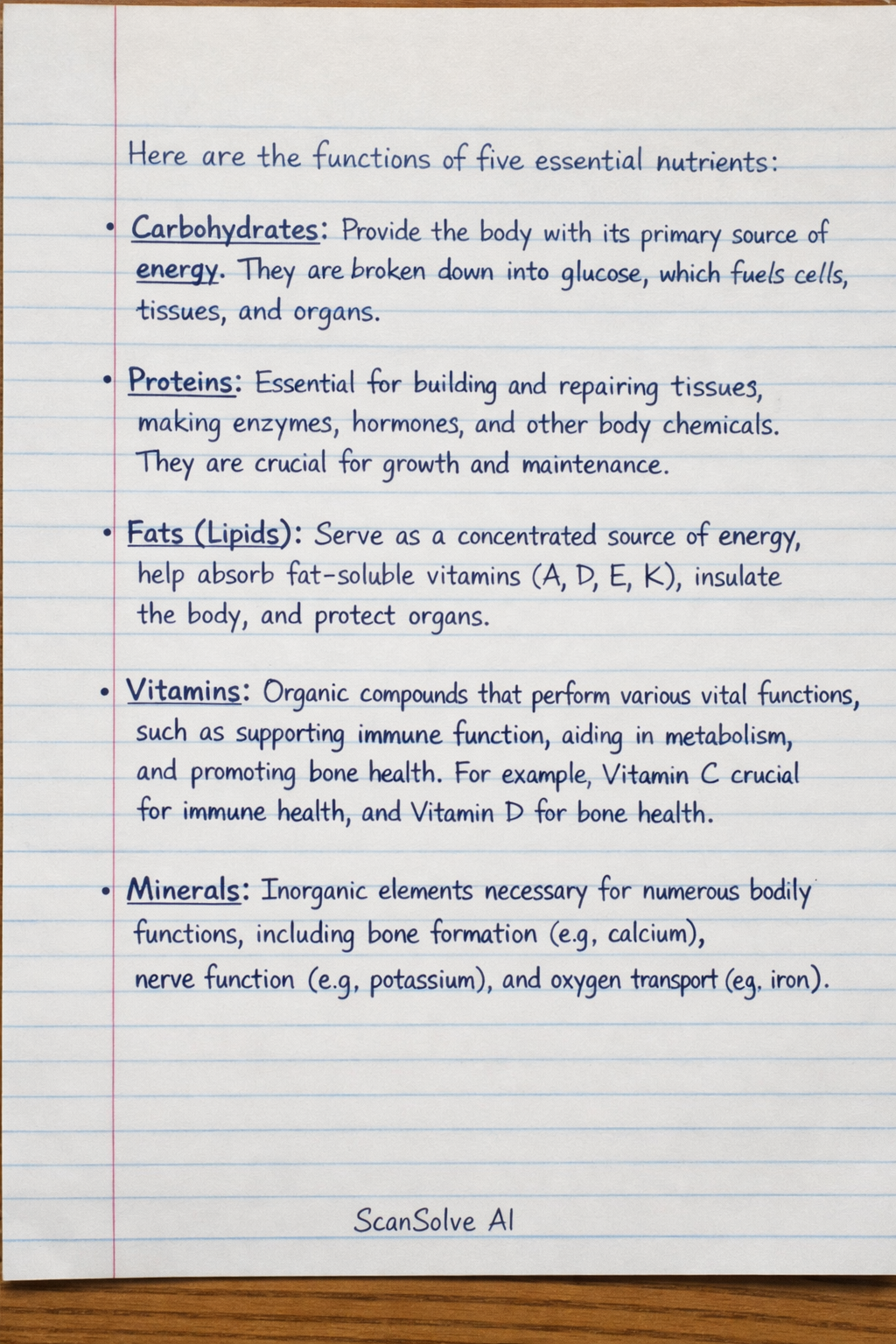
Here are the functions of five essential nutrients:
- Carbohydrates: Provide the body with its primary source of energy. They are broken down into glucose, which fuels cells, tissues, and organs.
- Proteins: Essential for building and repairing tissues, making enzymes, hormones, and other body chemicals. They are crucial for growth and maintenance.
- Fats (Lipids): Serve as a concentrated source of energy, help absorb fat-soluble vitamins (A, D, E, K), insulate the body, and protect organs.
- Vitamins: Organic compounds that perform various vital functions, such as supporting immune function, aiding in metabolism, and promoting bone health. For example, Vitamin C is crucial for immune health, and Vitamin D for bone health.
- Minerals: Inorganic elements necessary for numerous bodily functions, including bone formation (e.g., calcium), nerve function (e.g., potassium), and oxygen transport (e.g., iron).
Was this helpful?
Still stuck on this one?
Ask a follow-up, and the answer starts from this question.
Got a different question?Ask your own question
More Physics Questions
QCarbohydrates: Play the role of providing energy needed for physical activity throughout the day…QWhat are the main functions of carbohydrates in the human body and in biological systems?QThe Concept of ATP ATP, or Adenosine Triphosphate, acts as the primary energy currency of every…QIdentify the organ and hormones involved in blood glucose regulation, and explain the process of…Q2.1) The general energy carrier in all living cells is Adenosine Triphosphate (ATP).
Handwritten Step-by-Step Solution
Get this as a handwritten image on WhatsApp — like a tutor wrote it for you.
Try on WhatsApp