
We read your photo as:
परमाणु में इलेक्ट्रॉन को नाभिक के चारों ओर घूमने के लिए आवश्यक अभिकेंद्रीय बल (centripetal force) नाभिक द्वारा इलेक्ट्रॉन पर लगाए गए किस बल से प्राप्त होता है?
Physics
ScanSolve AI Answer
Answer
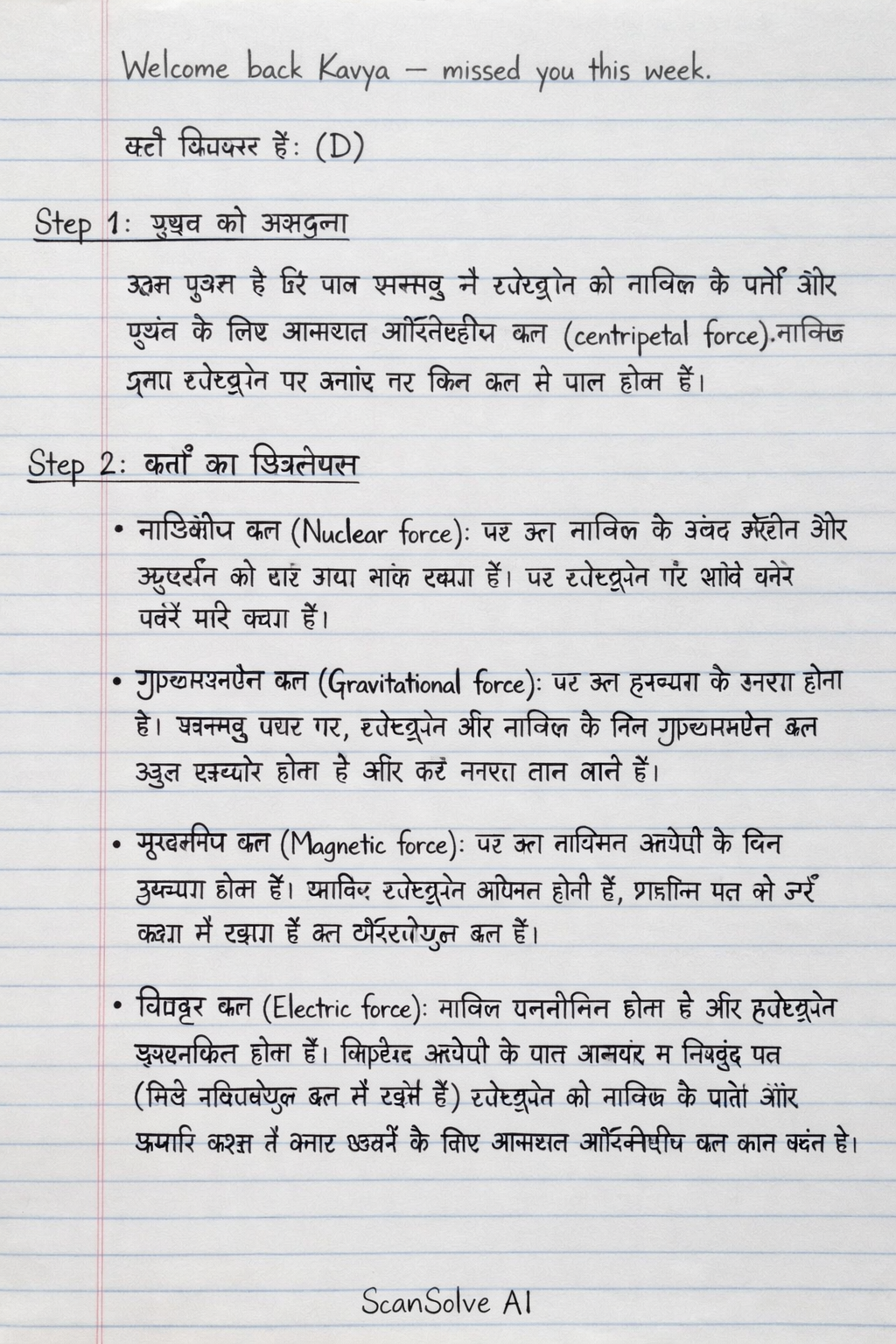
सही विकल्प है: (D)
Step-by-step solution
3 stepsप्रश्न को समझना
प्रश्न पूछता है कि एक परमाणु में इलेक्ट्रॉन को नाभिक के चारों ओर घूमने के लिए आवश्यक अभिकेंद्रीय बल (centripetal force) नाभिक द्वारा इलेक्ट्रॉन पर लगाए गए किस बल से प्राप्त होता है।
बलों का विश्लेषण
- नाभिकीय बल (Nuclear force): यह बल नाभिक के अंदर प्रोटॉन और न्यूट्रॉन को एक साथ बांधे रखता है। यह इलेक्ट्रॉन पर सीधे कार्य नहीं करता है।
- गुरुत्वाकर्षण बल (Gravitational force): यह बल द्रव्यमान के कारण होता है। परमाणु स्तर पर, इलेक्ट्रॉन और नाभिक के बीच गुरुत्वाकर्षण बल बहुत कमजोर होता है और इसे नगण्य माना जाता है।
- चुंबकीय बल (Magnetic force): यह बल गतिमान आवेशों के बीच उत्पन्न होता है। जबकि इलेक्ट्रॉन गतिमान होते हैं, प्राथमिक बल जो उन्हें कक्षा में रखता है वह स्थिरवैद्युत बल है।
- विद्युत बल (Electric force): नाभिक धनावेशित होता है और इलेक्ट्रॉन ऋणावेशित होते हैं। विपरीत आवेशों के बीच आकर्षण का विद्युत बल (जिसे स्थिरवैद्युत बल भी कहते हैं) इलेक्ट्रॉन को नाभिक के चारों ओर उसकी कक्षा में बनाए रखने के लिए आवश्यक अभिकेंद्रीय बल प्रदान करता है।
सही विकल्प का चयन
इलेक्ट्रॉन और नाभिक के बीच का विद्युत बल ही इलेक्ट्रॉन को नाभिक के चारों ओर घूमने के लिए आवश्यक अभिकेंद्रीय बल प्रदान करता है।
अतः, सही विकल्प है:
(D) विद्युत बल
Was this helpful?
Still stuck on this one?
Ask a follow-up, and the answer starts from this question.
Got a different question?Ask your own question
More Physics Questions
Qएक इलेक्ट्रॉन एवं एक प्रोटॉन के लिए स्थिरवैद्युत बल एवं गुरुत्वाकर्षण बल के परिमाण का अनुपात क्या…Qएक कण पर लगने वाला केंद्रीय बल F = −k/r2 है। कण की कुल ऊर्जा क्या होगी यदि यह r त्रिज्या के क्षैतिज…Qप्रारंभिक आवेशों और बल का उपयोग करके (k)/(r2) का मान ज्ञात करें।QA centripetal force 25N acts on a body of mass 0.5kg tied to a string of length 1.5m and wheeled…Qएक प्रोटॉन और एक इलेक्ट्रॉन को एक समान विद्युत क्षेत्र में रखा गया है। उन पर लगने वाले बल और त्वरण…
Browse by topic:Mechanics
Handwritten Step-by-Step Solution
Get this as a handwritten image on WhatsApp — like a tutor wrote it for you.
Try on WhatsApp