Distinguish between fungal diseases and non-communicable diseases. List two examples each of fungal and non-communicable diseases. State two ways of preventing non-communicable diseases.

Biology
Distinguish between fungal diseases and non-communicable diseases. List two examples each of fungal and non-communicable diseases. State two ways of preventing non-communicable diseases.

ScanSolve AI Answer

6 steps

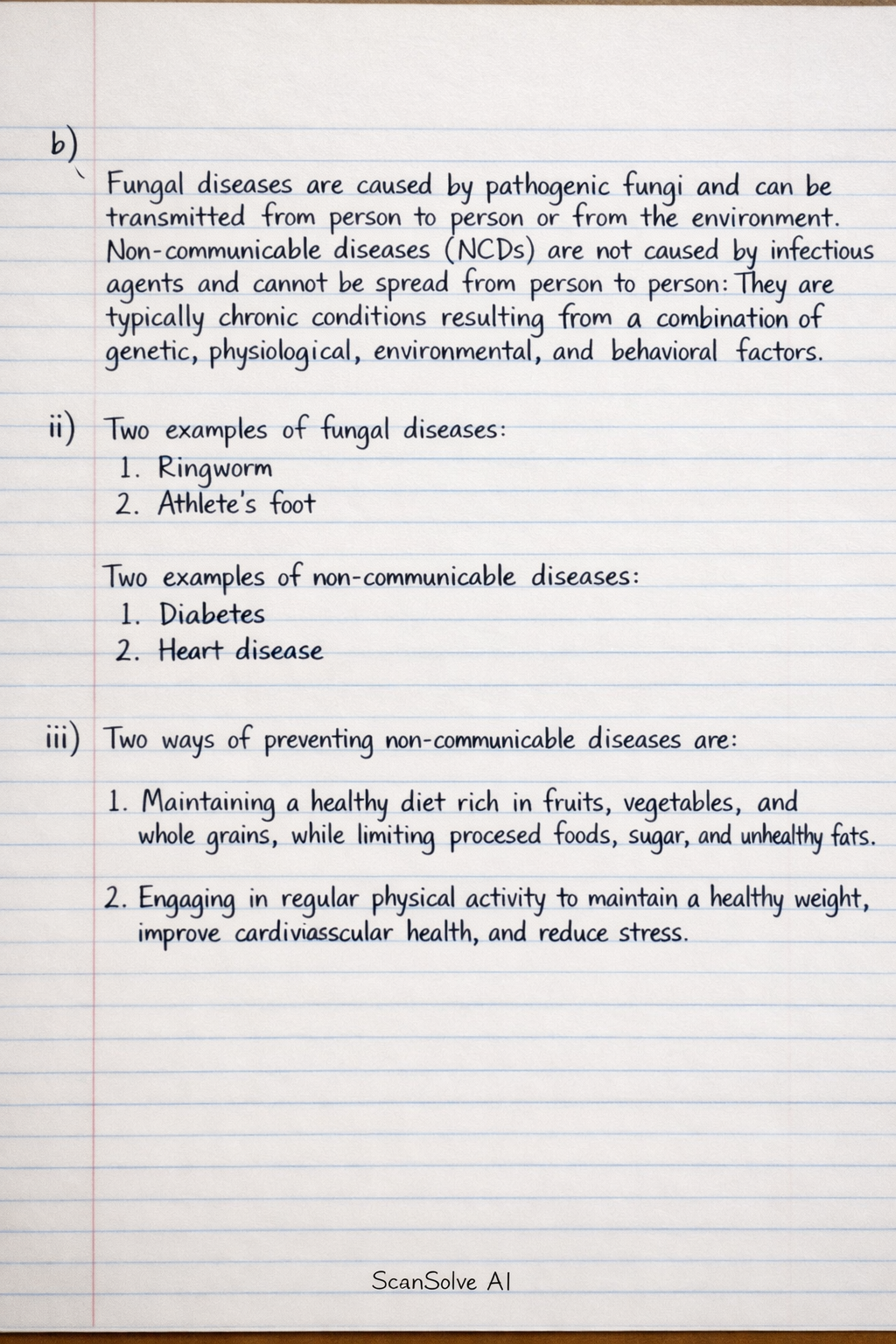
b) i) Fungal diseases are caused by pathogenic fungi and can often be transmitted from person to person or from the environment. Non-communicable diseases (NCDs) are not caused by infectious agents and cannot be spread from person to person; they are typically chronic conditions resulting from a combination of genetic, physiological, environmental, and behavioral factors.

ii) • Two examples of fungal diseases:

  1. Ringworm
  2. Athlete's foot

• Two examples of non-communicable diseases:

  1. Diabetes
  2. Heart disease

iii) Two ways of preventing non-communicable diseases are:

  1. Maintaining a healthy diet rich in fruits, vegetables, and whole grains, while limiting processed foods, sugar, and unhealthy fats.
  2. Engaging in regular physical activity to maintain a healthy weight, improve cardiovascular health, and reduce stress.
Was this helpful?

Need help with your own homework?

Get instant step-by-step solutions to any question. Free to start.

Ask Your Question
Handwritten step-by-step solution preview

Handwritten Step-by-Step Solution

Get this as a handwritten image on WhatsApp — like a tutor wrote it for you.

Try on WhatsApp

Still have questions?

Quick Answer
  1. b) i) Fungal diseases are caused by pathogenic fungi and can often be transmitted from person to person or from the environment.
  2. ii) • Two examples of fungal diseases: 1.
  3. Athlete's foot • Two examples of non-communicable diseases: 1.
  4. Heart disease iii) Two ways of preventing non-communicable diseases are: 1.
Distinguish between fungal diseases and non-communicable diseases. List two examples each of fungal and non-communicable diseases. State two ways of preventing non-communicable diseases.
Biology

This biology question covers important biological concepts and processes. The step-by-step explanation below helps you understand the underlying mechanisms and reasoning.

ScanSolve AI Answer
b) i) Fungal diseases are caused by pathogenic fungi and can often be transmitted from person to person or from the environment. Non-communicable diseases (NCDs) are not caused by infectious agents and cannot be spread from person to person; they are typically chronic conditions resulting from a combination of genetic, physiological, environmental, and behavioral factors. ii) • Two examples of fungal diseases: 1. Ringworm 2. Athlete's foot • Two examples of non-communicable diseases: 1. Diabetes 2. Heart disease iii) Two ways of preventing non-communicable diseases are: 1. Maintaining a healthy diet rich in fruits, vegetables, and whole grains, while limiting processed foods, sugar, and unhealthy fats. 2. Engaging in regular physical activity to maintain a healthy weight, improve cardiovascular health, and reduce stress.