INTEGRATED SCIENCE FOR BECE CANDIDATES Section B (Answer all questions) Questions 1–10 1. (a) Define science. (b) State three branches of science. (c) Give one example of each branch. 2. (a) Define matter. (b) State the three states of matter. (c) Give two characteristics of each state. 3. (a) What is energy? (b) List four forms of energy. (c) State two uses of solar energy. 4. (a) Define force. (b) State two types of forces. (c) Give one example of each type. 5. (a) What is photosynthesis? (b) State the raw materials needed for photosynthesis. (c) Write the word equation for photosynthesis. 6. (a) Define respiration. (b) State two types of respiration. (c) Give one difference between them. 7. (a) What is the human circulatory system? (b) Name the main organs involved. (c) State two functions of blood. 8. (a) Define ecosystem. (b) State two components of an ecosystem. (c) Give two examples of ecosystems 9. (a) What is electricity? (b) Name two sources of electricity. (c) State two safety precautions when using electricity 10. (a) Define soil. (b) State three types of soil. (c) Give one use of each type.
This physics problem tests your understanding of fundamental physical laws and their applications. The step-by-step solution below breaks down the problem using relevant equations and physical reasoning.
ScanSolve AI Answer
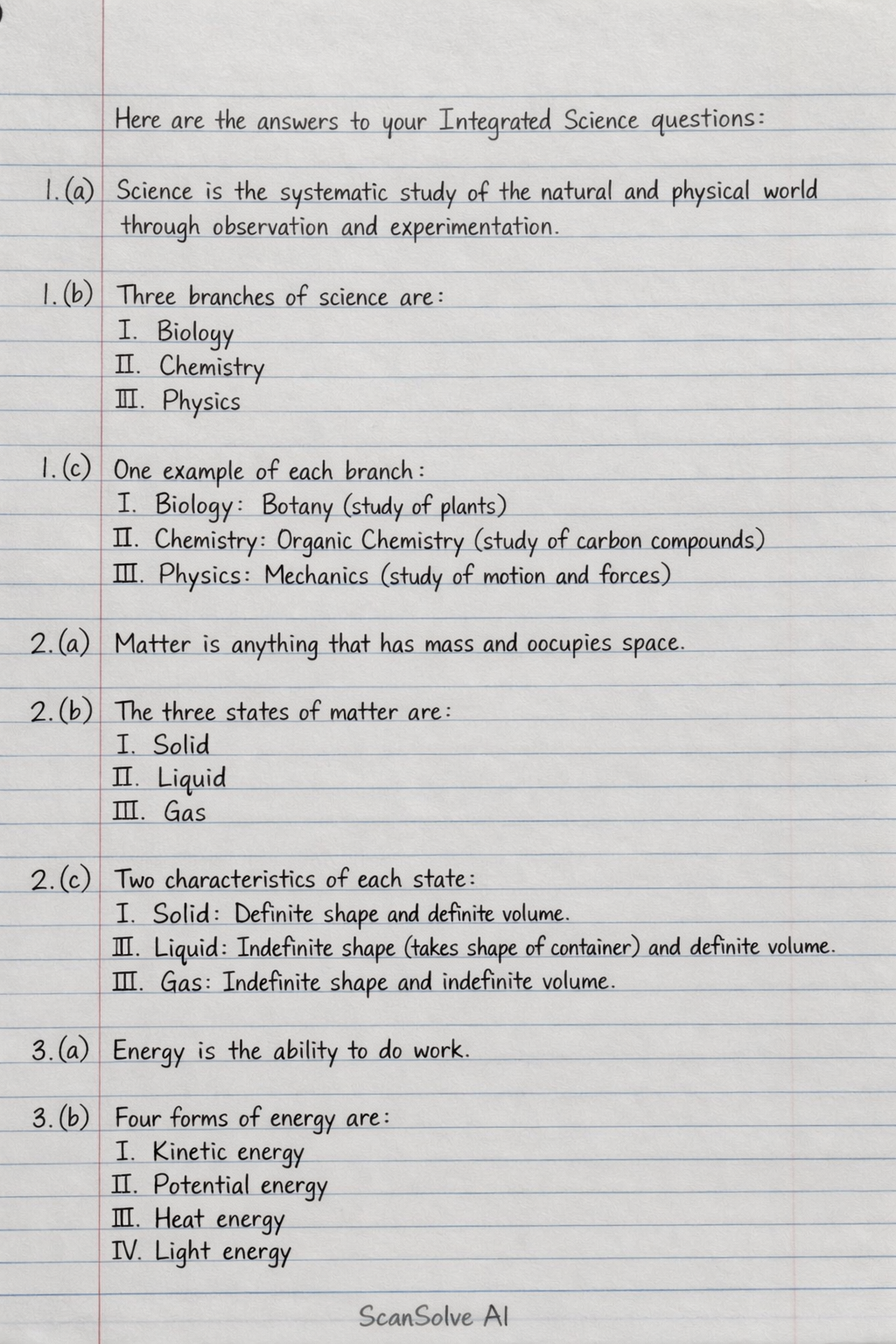
Here are the answers to your Integrated Science questions:
1. (a)
Science is the systematic study of the natural and physical world through observation and experimentation.
1. (b)
Three branches of science are:
I. Biology
II. Chemistry
III. Physics
1. (c)
One example of each branch:
I. Biology: Botany (study of plants)
II. Chemistry: Organic Chemistry (study of carbon compounds)
III. Physics: Mechanics (study of motion and forces)
2. (a)
Matter is anything that has mass and occupies space.
2. (b)
The three states of matter are:
I. Solid
II. Liquid
III. Gas
2. (c)
Two characteristics of each state:
I. Solid: Definite shape and definite volume.
II. Liquid: Indefinite shape (takes shape of container) and definite volume.
III. Gas: Indefinite shape and indefinite volume.
3. (a)
Energy is the ability to do work.
3. (b)
Four forms of energy are:
I. Kinetic energy
II. Potential energy
III. Heat energy
IV. Light energy
3. (c)
Two uses of solar energy:
I. Generating electricity (solar panels)
II. Heating water (solar water heaters)
4. (a)
Force is a push or a pull that can change the motion or shape of an object.
4. (b)
Two types of forces are:
I. Contact forces
II. Non-contact forces
4. (c)
One example of each type:
I. Contact force: Friction
II. Non-contact force: Gravity
5. (a)
Photosynthesis is the process by which green plants use sunlight to synthesize foods from carbon dioxide and water.
5. (b)
The raw materials needed for photosynthesis are:
I. Carbon dioxide
II. Water
III. Sunlight (as energy)
IV. Chlorophyll (as pigment)
5. (c)
The word equation for photosynthesis:
$$ \text{Carbon dioxide} + \text{Water} \xrightarrow{\text{Sunlight, Chlorophyll}} \text{Glucose} + \text{Oxygen} $$
6. (a)
Respiration is the process by which living organisms release energy from food molecules.
6. (b)
Two types of respiration are:
I. Aerobic respiration
II. Anaerobic respiration
6. (c)
One difference between them:
Aerobic respiration requires oxygen, while anaerobic respiration does not require oxygen.
7. (a)
The human circulatory system is a network of blood vessels, blood, and the heart that transports nutrients, oxygen, hormones, and waste products throughout the body.
7. (b)
The main organs involved are:
I. Heart
II. Blood vessels (arteries, veins, capillaries)
III. Blood
7. (c)
Two functions of blood:
I. Transports oxygen from the lungs to the body tissues.
II. Transports nutrients from the digestive system to the body cells.
8. (a)
An ecosystem is a community of living organisms (biotic components) interacting with their non-living environment (abiotic components).
8. (b)
Two components of an ecosystem are:
I. Biotic components (living organisms)
II. Abiotic components (non-living factors)
8. (c)
Two examples of ecosystems:
I. Forest ecosystem
II. Pond ecosystem
9. (a)
Electricity is a form of energy resulting from the existence and flow of charged particles, typically electrons.
9. (b)
Two sources of electricity:
I. Thermal power plants (burning fossil fuels)
II. Hydroelectric power plants (using water flow)
9. (c)
Two safety precautions when using electricity:
I. Avoid touching bare wires or damaged electrical cords.
II. Do not use electrical appliances with wet hands or near water.
10. (a)
Soil is the loose surface material of the Earth in which plants grow, consisting of inorganic and organic materials, water, and air.
10. (b)
Three types of soil are:
I. Sandy soil
II. Clay soil
III. Loamy soil
10. (c)
One use of each type:
I. Sandy soil: Good for drainage and suitable for crops like carrots and potatoes.
II. Clay soil: Good for water retention and used in pottery and brick making.
III. Loamy soil: Ideal for most agricultural crops due to balanced water retention and drainage.
Last free one today — make it count tomorrow, or type /upgrade for unlimited.
INTEGRATED SCIENCE FOR BECE CANDIDATES Section B (Answer all questions) Questions 1–10 1. (a) Define science. (b) State three branches of science. (c) Give one example of each branch. 2. (a) Define matter. (b) State the three states of matter. (c) Give two characteristics of each state. 3. (a) What is energy? (b) List four forms of energy. (c) State two uses of solar energy. 4. (a) Define force. (b) State two types of forces. (c) Give one example of each type. 5. (a) What is photosynthesis? (b) State the raw materials needed for photosynthesis. (c) Write the word equation for photosynthesis. 6. (a) Define respiration. (b) State two types of respiration. (c) Give one difference between them. 7. (a) What is the human circulatory system? (b) Name the main organs involved. (c) State two functions of blood. 8. (a) Define ecosystem. (b) State two components of an ecosystem. (c) Give two examples of ecosystems 9. (a) What is electricity? (b) Name two sources of electricity. (c) State two safety precautions when using electricity 10. (a) Define soil. (b) State three types of soil. (c) Give one use of each type.
|Physics
ScanSolve AI Answer
Here are the answers to your Integrated Science questions:
1. (a)
Science is the systematic study of the natural and physical world through observation and experimentation.
1. (b)
Three branches of science are:
I. Biology
II. Chemistry
III. Physics
1. (c)
One example of each branch:
I. Biology: Botany (study of plants)
II. Chemistry: Organic Chemistry (study of carbon compounds)
III. Physics: Mechanics (study of motion and forces)
2. (a)
Matter is anything that has mass and occupies space.
2. (b)
The three states of matter are:
I. Solid
II. Liquid
III. Gas
2. (c)
Two characteristics of each state:
I. Solid: Definite shape and definite volume.
II. Liquid: Indefinite shape (takes shape of container) and definite volume.
III. Gas: Indefinite shape and indefinite volume.
3. (a)
Energy is the ability to do work.
3. (b)
Four forms of energy are:
I. Kinetic energy
II. Potential energy
III. Heat energy
IV. Light energy
3. (c)
Two uses of solar energy:
I. Generating electricity (solar panels)
II. Heating water (solar water heaters)
4. (a)
Force is a push or a pull that can change the motion or shape of an object.
4. (b)
Two types of forces are:
I. Contact forces
II. Non-contact forces
4. (c)
One example of each type:
I. Contact force: Friction
II. Non-contact force: Gravity
5. (a)
Photosynthesis is the process by which green plants use sunlight to synthesize foods from carbon dioxide and water.
5. (b)
The raw materials needed for photosynthesis are:
I. Carbon dioxide
II. Water
III. Sunlight (as energy)
IV. Chlorophyll (as pigment)
5. (c)
The word equation for photosynthesis:
Carbondioxide+WaterSunlight,ChlorophyllGlucose+Oxygen
6. (a)
Respiration is the process by which living organisms release energy from food molecules.
6. (b)
Two types of respiration are:
I. Aerobic respiration
II. Anaerobic respiration
6. (c)
One difference between them:
Aerobic respiration requires oxygen, while anaerobic respiration does not require oxygen.
7. (a)
The human circulatory system is a network of blood vessels, blood, and the heart that transports nutrients, oxygen, hormones, and waste products throughout the body.
7. (b)
The main organs involved are:
I. Heart
II. Blood vessels (arteries, veins, capillaries)
III. Blood
7. (c)
Two functions of blood:
I. Transports oxygen from the lungs to the body tissues.
II. Transports nutrients from the digestive system to the body cells.
8. (a)
An ecosystem is a community of living organisms (biotic components) interacting with their non-living environment (abiotic components).
8. (b)
Two components of an ecosystem are:
I. Biotic components (living organisms)
II. Abiotic components (non-living factors)
8. (c)
Two examples of ecosystems:
I. Forest ecosystem
II. Pond ecosystem
9. (a)
Electricity is a form of energy resulting from the existence and flow of charged particles, typically electrons.
9. (b)
Two sources of electricity:
I. Thermal power plants (burning fossil fuels)
II. Hydroelectric power plants (using water flow)
9. (c)
Two safety precautions when using electricity:
I. Avoid touching bare wires or damaged electrical cords.
II. Do not use electrical appliances with wet hands or near water.
10. (a)
Soil is the loose surface material of the Earth in which plants grow, consisting of inorganic and organic materials, water, and air.
10. (b)
Three types of soil are:
I. Sandy soil
II. Clay soil
III. Loamy soil
10. (c)
One use of each type:
I. Sandy soil: Good for drainage and suitable for crops like carrots and potatoes.
II. Clay soil: Good for water retention and used in pottery and brick making.
III. Loamy soil: Ideal for most agricultural crops due to balanced water retention and drainage.
Last free one today — make it count tomorrow, or type /upgrade for unlimited.
Need help with your own homework?
Get instant step-by-step solutions to any question. Free to start.