
We read your photo as:
Define area and its SI unit. Explain why water forms a concave meniscus and describe how a siphon works.
ScanSolve AI Answer
Step-by-step solution
3 steps1. a) Area is the measure of the extent of a surface or the amount of space a two-dimensional shape covers.
1. b) The SI unit of area is the square metre ().
2. Water forms a concave meniscus in a glass tube because the adhesive forces between water molecules and the glass molecules are stronger than the cohesive forces between the water molecules themselves. This causes the water to climb up the sides of the glass tube.
3. The process shown is a siphon.
The tube is initially filled with water, creating a continuous column of liquid.
The water in the longer arm (leading to the lower container) has a greater weight and exerts more pressure than the water in the shorter arm (in the upper tank).
This pressure difference, combined with atmospheric pressure acting on both surfaces, causes the water to flow from the higher tank, over the bend, and down into the lower container.
The flow continues as long as the water level in the upper tank is higher than the outlet of the tube in the lower container.
Still stuck on this one?
Ask a follow-up, and the answer starts from this question.
More Physics Questions
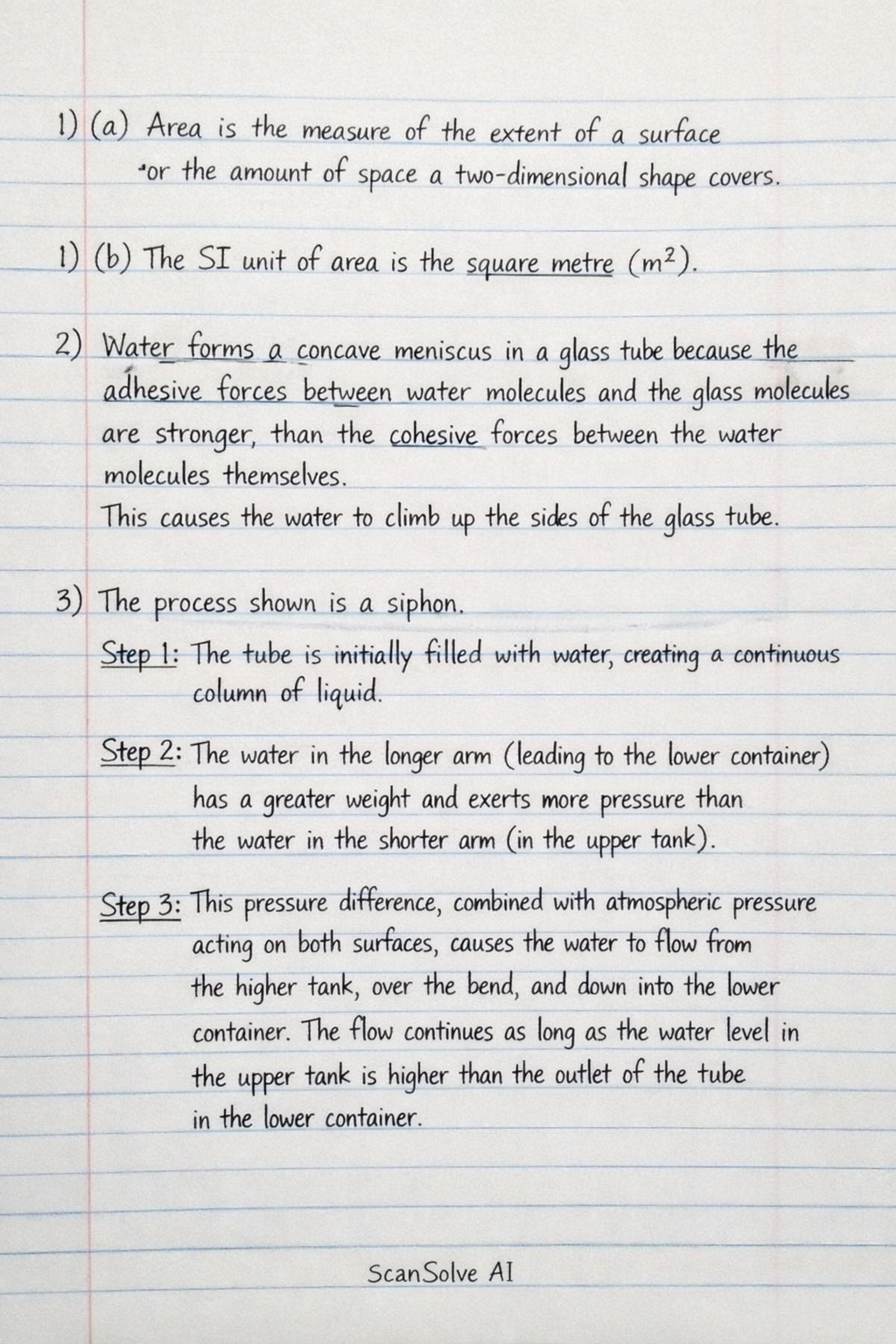
Handwritten Step-by-Step Solution
Get this as a handwritten image on WhatsApp — like a tutor wrote it for you.
Try on WhatsApp