
We read your photo as:
The potential difference between the ends of a uniform conductor in a circuit is V. If J is the current density in the conductor and I and A are its length and area of cross section respectively, then the resistivity ρ of its material is
ScanSolve AI Answer
Answer
स्टेप 1: ओम के नियम के अनुसार, विभवांतर () धारा () और प्रतिरोध () का गुणनफल होता है:
स्टेप 2: प्रतिरोध () को चालक की प्रतिरोधकता (), लंबाई () और अनुप्रस्थ काट के क्षेत्रफल () के पदों में व्यक्त किया जा सकता है:
स्टेप 3: धारा घनत्व () को धारा () और अनुप्रस्थ काट के क्षेत्रफल () के अनुपात के रूप में परिभाषित किया जाता है:
इससे धारा () को इस प्रकार लिखा जा सकता है:
स्टेप 4: अब, और के मानों को ओम के नियम के समीकरण में प्रतिस्थापित करें:
अनुप्रस्थ काट का क्षेत्रफल () ऊपर और नीचे कट जाएगा:
स्टेप 5: प्रतिरोधकता () के लिए समीकरण को पुनर्व्यवस्थित करें:
यह विकल्प (c) से मेल खाता है।
अतः, प्रतिरोधकता है:
Try one yourself
A new problem that tests the same skill.
Still stuck on this one?
Ask a follow-up, and the answer starts from this question.
More Physics Questions
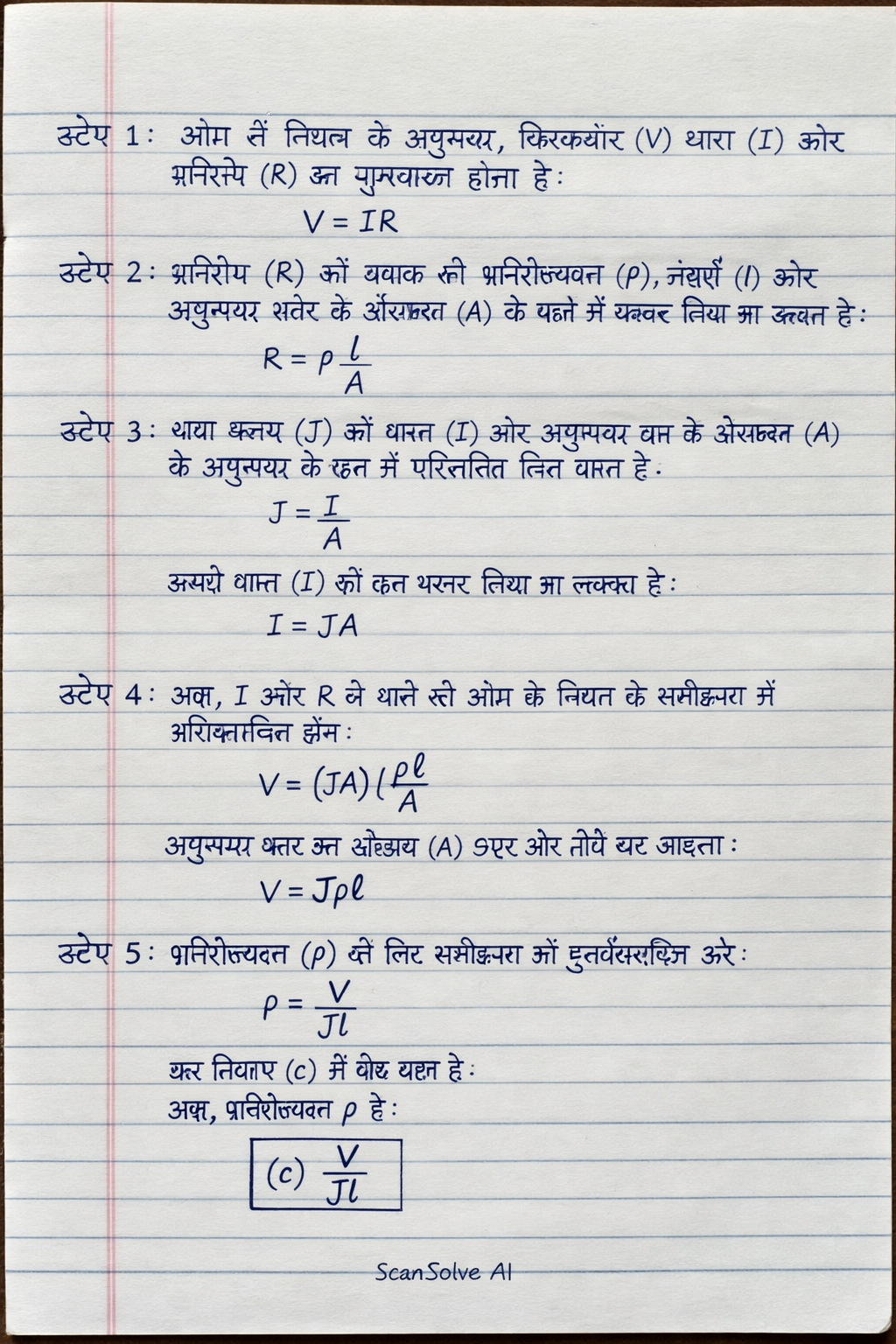
Handwritten Step-by-Step Solution
Get this as a handwritten image on WhatsApp — like a tutor wrote it for you.
Try on WhatsApp