
We read your photo as:
State two specific design changes to increase the strength of an electromagnet and explain how a salvage yard crane uses one.
ScanSolve AI Answer
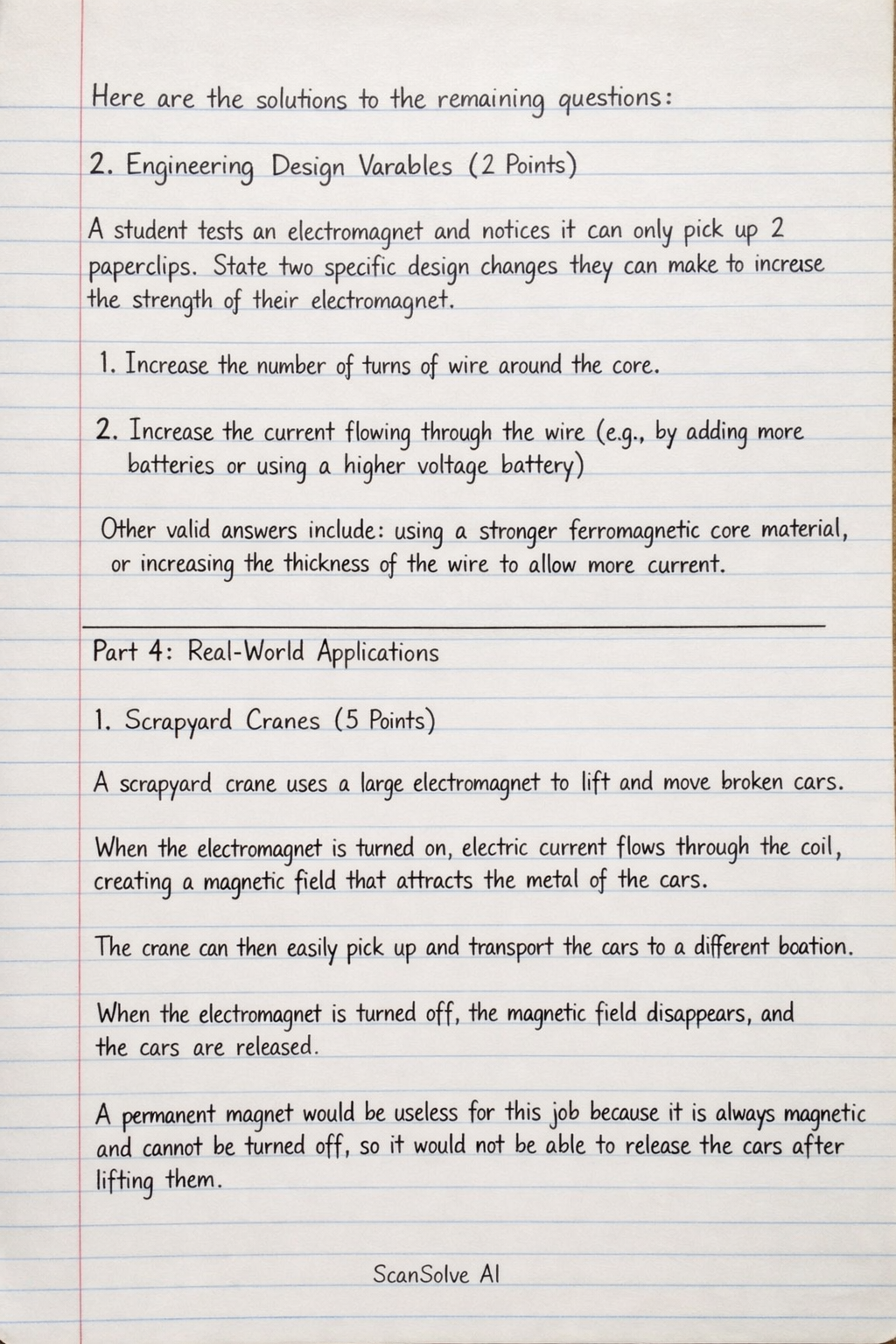
Here are the solutions to the remaining questions:
2. Engineering Design Variables (2 Points)
A student tests an electromagnet and notices it can only pick up 2 paperclips. State two specific design changes they can make to increase the strength of their electromagnet.
- Increase the number of turns of wire around the core.
- Increase the current flowing through the wire (e.g., by adding more batteries or using a higher voltage battery).
- Other valid answers include: using a stronger ferromagnetic core material, or increasing the thickness of the wire to allow more current.
Part 4: Real-World Applications
1. Scrapyard Cranes (5 Points)
Explain how a salvage yard crane uses an electromagnet to move broken cars from one side of a yard to the other. Why would a permanent magnet be useless for this specific job?
A salvage yard crane uses a large electromagnet to pick up and move heavy metal objects like broken cars. When the crane operator wants to pick up a car, they turn on the electric current to the electromagnet, which creates a strong magnetic field, attracting and lifting the car. To release the car, the operator simply turns off the electric current, causing the electromagnet to lose its magnetism and drop the car. A permanent magnet would be useless because its magnetic field cannot be turned off, making it impossible to release the car once it has been picked up.
2. Everyday Household Items (2 Points)
List two items found inside a modern home or school that rely on electromagnets to function.
- Electric doorbell
- Loudspeakers/Headphones
- Other valid answers include: electric motors (in appliances like blenders, washing machines, fans), hard drives, MRI machines (in hospitals/schools for medical training), circuit breakers, relays.
Still stuck on this one?
Ask a follow-up, and the answer starts from this question.
More Physics Questions
Handwritten Step-by-Step Solution
Get this as a handwritten image on WhatsApp — like a tutor wrote it for you.
Try on WhatsApp