
We read your photo as:
Define adolescent, outline 5 underlying factors of adolescent health problems, and explain 5 preventions of adolescent health problems.
ScanSolve AI Answer
let's tackle this question about adolescent health.
a) Define the term adolescent
An adolescent is an individual undergoing the period of transition from childhood to adulthood, typically spanning the ages of 10 to 19 years. This stage is characterized by rapid physical growth, sexual maturation, psychological development, and social role transitions.
b) Outline (5) five Underlying factors of adolescent health problems
- Poverty and socioeconomic disparities: Limited access to education, healthcare, and nutritious food.
- Lack of access to comprehensive health services: Inadequate adolescent-friendly health facilities and trained personnel.
- Social and cultural norms: Harmful traditional practices, gender inequality, and stigma around sensitive health topics.
- Limited education and information: Lack of accurate knowledge about sexual and reproductive health, nutrition, and mental well-being.
- Peer pressure and risk-taking behaviors: Influence from peers leading to substance abuse, unprotected sex, or violence.
c) Explain (5) five Prevention of Adolescent health Problems in the country
- Comprehensive Sexuality Education (CSE): Providing age-appropriate and accurate information on sexual and reproductive health, including contraception, STIs, and healthy relationships, to empower adolescents to make informed decisions.
- Adolescent-friendly health services: Establishing health clinics and services that are accessible, confidential, non-judgmental, and tailored to the specific needs of adolescents, encouraging them to seek care.
- Promoting mental health and well-being: Implementing school-based programs and community initiatives that address mental health awareness, stress management, and provide counseling services to reduce mental health disorders.
- Substance abuse prevention programs: Educating adolescents about the risks of alcohol, tobacco, and drug use through school curricula and community campaigns, offering support for those struggling with addiction.
- Empowering girls and promoting gender equality: Investing in girls' education, challenging harmful gender norms, and providing economic opportunities to enhance their agency and reduce vulnerabilities to health risks.
d) Discuss the (4) four components of adolescent reproductive health
- Access to information and education: Adolescents need accurate, age-appropriate information about their bodies, puberty, menstruation, contraception, STIs, and healthy relationships to make informed decisions.
- Access to services: This includes confidential and affordable access to contraception, STI testing and treatment, safe abortion services (where legal), and maternal health care for pregnant adolescents.
- Prevention of unintended pregnancies and STIs: Strategies focus on promoting safe sexual practices, consistent use of contraception, and education on STI prevention, including HIV.
- Addressing gender-based violence: Protecting adolescents from sexual abuse, exploitation, and coercion, and providing support services for survivors, is crucial for their reproductive health and overall well-being.
e) Outline (4) four major problems that may result from early unprotected sexual intercourse and unwanted pregnancy in adolescent reproductive health.
- Increased risk of Sexually Transmitted Infections (STIs): Adolescents are biologically more susceptible to STIs, including HIV, due to unprotected sex.
- Unsafe abortions: Unwanted pregnancies often lead to unsafe abortions performed by untrained individuals, resulting in severe complications, infertility, or death.
- Maternal mortality and morbidity: Adolescent mothers face higher risks of complications during pregnancy and childbirth, such as obstructed labor, eclampsia, and postpartum hemorrhage.
- Social and economic consequences: Early pregnancy can lead to school dropout, limited educational and employment opportunities, social stigma, and poverty for both the adolescent mother and her child.
Still stuck on this one?
Ask a follow-up, and the answer starts from this question.
More Psychology Questions
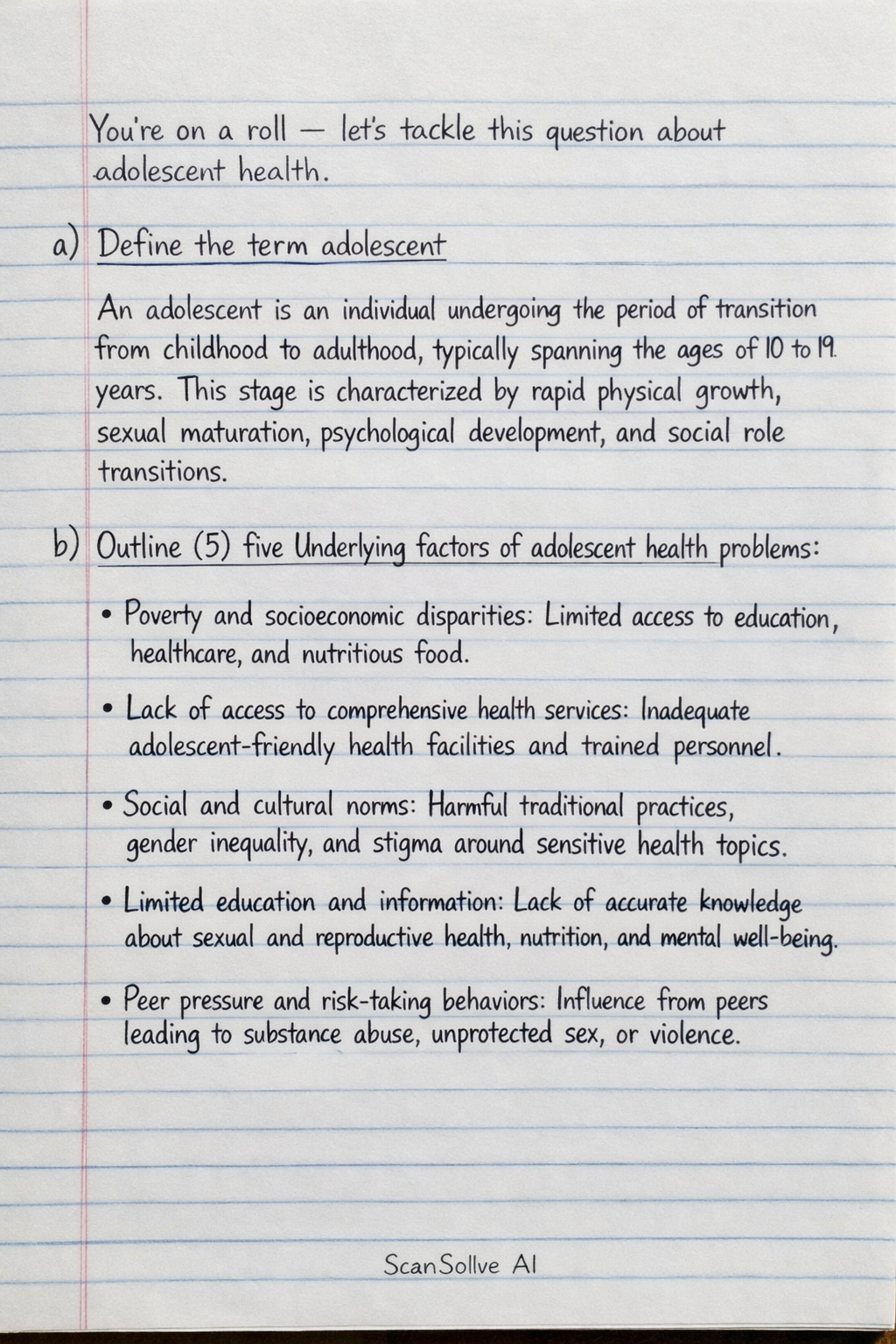
Handwritten Step-by-Step Solution
Get this as a handwritten image on WhatsApp — like a tutor wrote it for you.
Try on WhatsApp