
Social Studies. Confirmed 💯💯💯👇 Explain five situations under which the right of the individual can be lawfully curtailed. a. Explain the concept of personality. b. Identify four benefits of self - identity to the individual a. Describe briefly " constitutional law. b. Suggest four challenges confronting democratic governance in Ghana. Examine five extents civic education can help reduce behavior in the Ghanaian society.
ScanSolve AI Answer
-
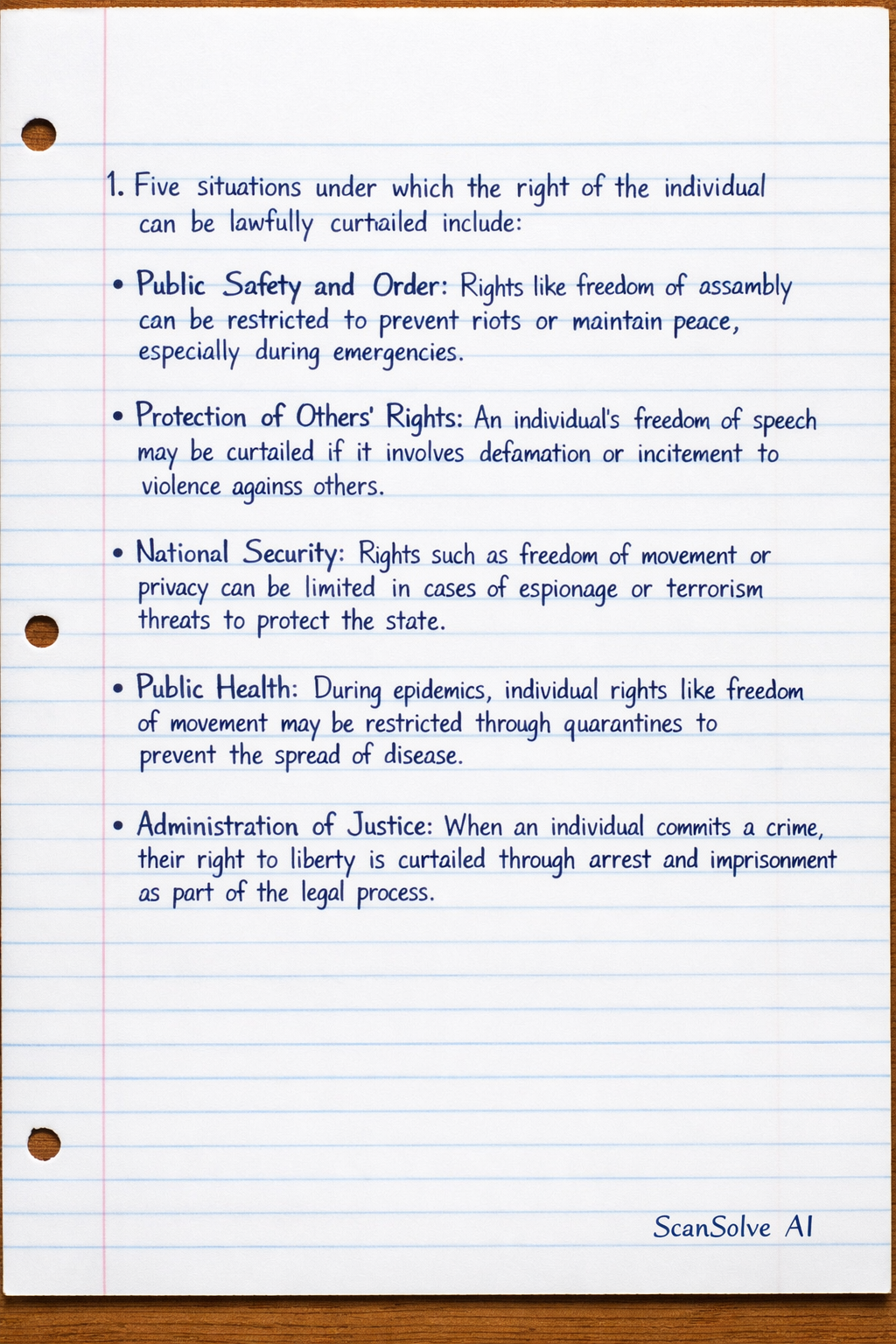
Five situations under which the right of the individual can be lawfully curtailed include:
- Public Safety and Order: Rights like freedom of assembly can be restricted to prevent riots or maintain peace, especially during emergencies.
- Protection of Others' Rights: An individual's freedom of speech may be curtailed if it involves defamation or incitement to violence against others.
- National Security: Rights such as freedom of movement or privacy can be limited in cases of espionage or terrorism threats to protect the state.
- Public Health: During epidemics, individual rights like freedom of movement may be restricted through quarantines to prevent the spread of disease.
- Administration of Justice: When an individual commits a crime, their right to liberty is curtailed through arrest and imprisonment as part of the legal process.
-
a. The concept of personality refers to the characteristic patterns of thoughts, feelings, and behaviors that make a person unique. It encompasses an individual's distinctive qualities, traits, and temperament that are relatively stable over time and across different situations.
b. Four benefits of self-identity to the individual are:
- It provides a clear sense of purpose and direction, guiding an individual's choices and actions.
- It fosters increased self-esteem and confidence, as individuals understand and value their unique qualities.
- It enables better decision-making, as choices align with one's core values and beliefs.
- It promotes resilience, helping individuals navigate challenges by providing a stable sense of self.
-
a. Constitutional law is a body of law that defines the role, powers, and structure of different entities within a state, namely the executive, the legislature, and the judiciary. It also establishes the fundamental rights and duties of citizens and outlines the relationship between the state and its people.
b. Four challenges confronting democratic governance in Ghana include:
- Corruption: The misuse of public office for private gain undermines public trust and diverts resources from development.
- Youth Unemployment: High rates of unemployment among young people can lead to social unrest and disaffection with the democratic system.
- Political Polarization: Deep divisions along political or ethnic lines can hinder consensus-building and effective governance.
- Weak Institutions: Inadequate capacity or independence of state institutions can impede the rule of law and accountability.
-
Five extents civic education can help reduce negative behavior in Ghanaian society:
- Promoting the Rule of Law: Civic education teaches citizens about laws and their importance, fostering respect for legal frameworks and reducing lawlessness and impunity.
- Fostering Responsible Citizenship: It educates individuals on their duties and responsibilities, encouraging active participation in community development and discouraging anti-social acts.
- Instilling Moral and Ethical Values: Civic education reinforces principles like honesty, integrity, and respect, which can curb behaviors such as corruption, fraud, and disrespect for elders.
- Encouraging Tolerance and Unity: By teaching about diversity and mutual respect, it helps reduce tribalism, discrimination, and conflict, promoting peaceful coexistence.
- Developing Critical Thinking: It equips citizens to analyze information and make informed decisions, making them less susceptible to manipulation or engaging in harmful activities like vigilantism or electoral violence.
Still stuck on this one?
Ask a follow-up, and the answer starts from this question.
More Psychology Questions
Handwritten Step-by-Step Solution
Get this as a handwritten image on WhatsApp — like a tutor wrote it for you.
Try on WhatsApp