
We read your photo as:
In a cross between two individuals with genotypes for haemophilia X^HX^h x X^HY, the chances of having a haemophilic son is
ScanSolve AI Answer
Step-by-step solution
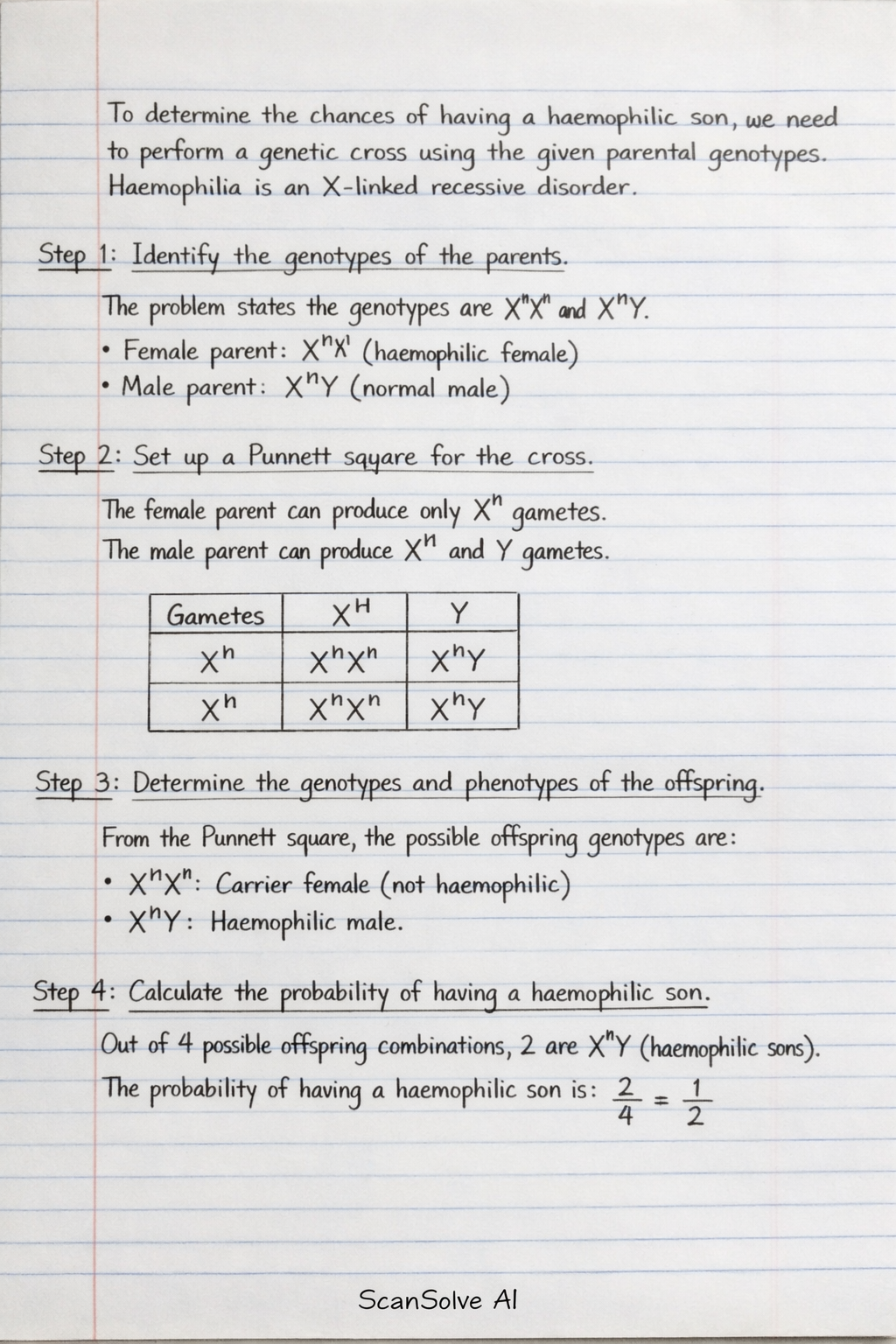
5 stepsTo determine the chances of having a haemophilic son, we need to perform a genetic cross using the given parental genotypes. Haemophilia is an X-linked recessive disorder.
Identify the genotypes of the parents.
The problem states the genotypes are and .
- Female parent: (haemophilic female)
- Male parent: (normal male)
Set up a Punnett square for the cross.
The female parent can produce only gametes.
The male parent can produce and gametes.Determine the genotypes and phenotypes of the offspring.
From the Punnett square, the possible offspring genotypes are:
- : Carrier female (not haemophilic)
- : Haemophilic male
Calculate the probability of having a haemophilic son.
Out of 4 possible offspring combinations, 2 are (haemophilic sons).
The probability of having a haemophilic son is .Convert the probability to a percentage.
The chances of having a haemophilic son are 50%.
The final answer is .
Still stuck on this one?
Ask a follow-up, and the answer starts from this question.
More Biology Questions
Handwritten Step-by-Step Solution
Get this as a handwritten image on WhatsApp — like a tutor wrote it for you.
Try on WhatsApp