
We read your photo as:
Flour extraction rate refers to the percentage by weight of flour obtained from a given weight of grain (e.g., wheat). For example, an 80% extraction rate means 80 kg of flour is produced from 100 k
Mathematics
ScanSolve AI Answer
c)
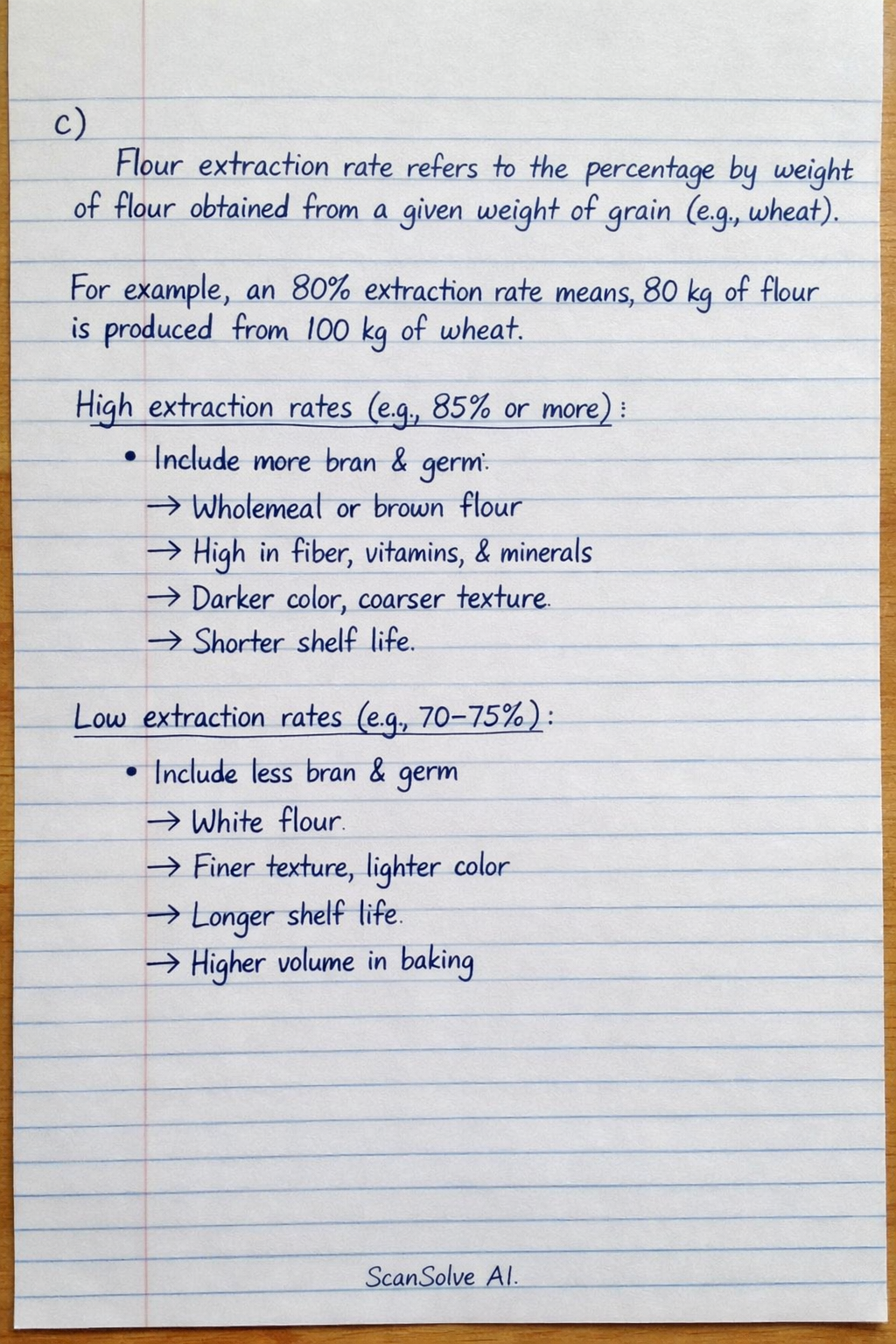
Flour extraction rate refers to the percentage by weight of flour obtained from a given weight of grain (e.g., wheat). For example, an 80% extraction rate means 80 kg of flour is produced from 100 kg of wheat.
Its significance to flour quality is substantial:
- High extraction rates (e.g., 85% or more) mean more of the outer layers of the grain (bran and germ) are included in the flour. This results in wholemeal or brown flour, which is richer in fiber, vitamins, and minerals, offering higher nutritional value. However, it can lead to a darker color, coarser texture, and potentially a shorter shelf life due to the fats in the germ.
- Low extraction rates (e.g., 70-75%) mean less of the bran and germ are included, primarily consisting of the starchy endosperm. This produces white flour, which has a finer texture, lighter color, and longer shelf life. While it has lower fiber and nutrient content, it often yields baked goods with a lighter texture and higher volume, which is preferred for certain products like white bread and cakes.
Was this helpful?
Still stuck on this one?
Ask a follow-up, and the answer starts from this question.
Got a different question?Ask your own question
More Mathematics Questions
Handwritten Step-by-Step Solution
Get this as a handwritten image on WhatsApp — like a tutor wrote it for you.
Try on WhatsApp