

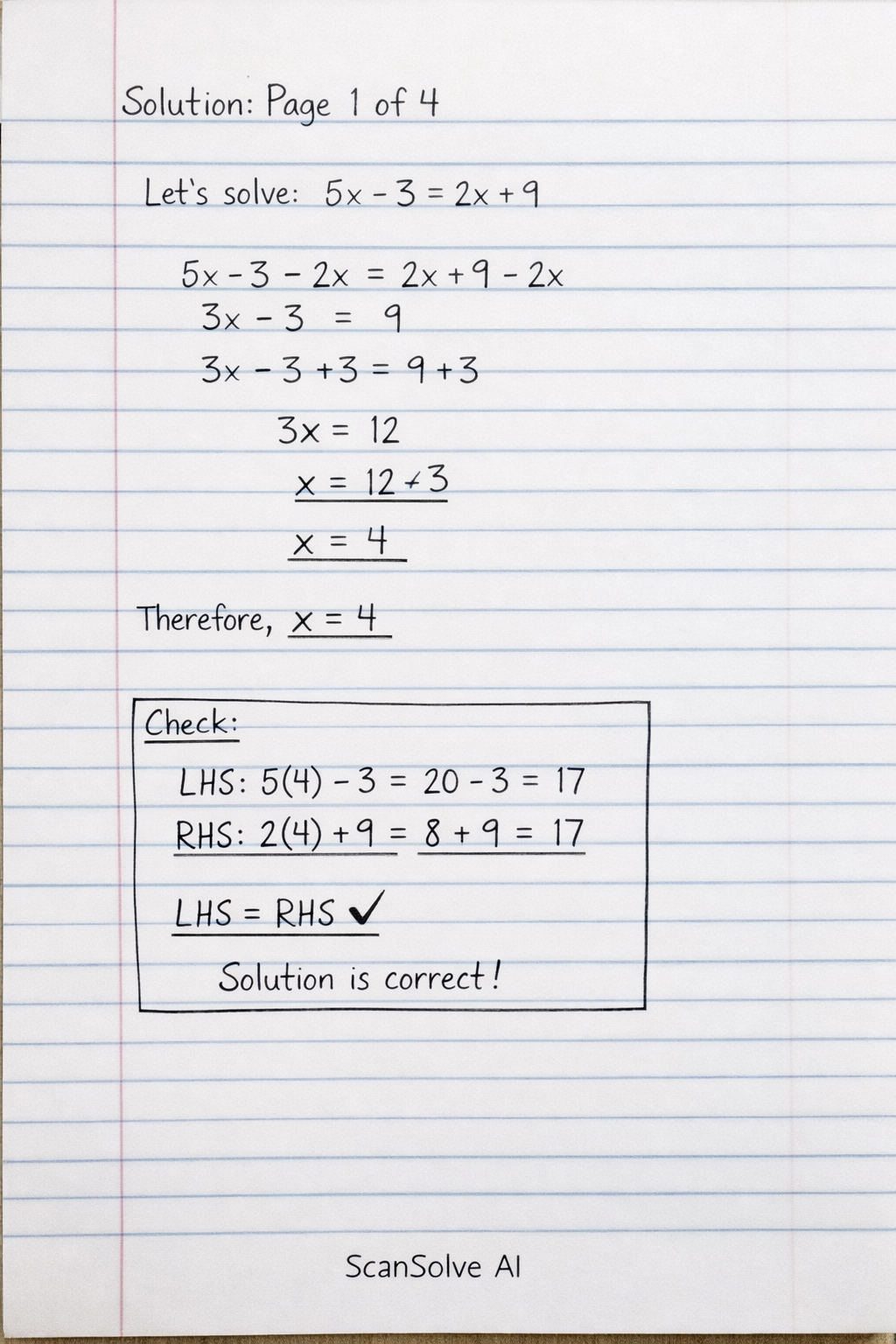
This mathematics problem involves applying core mathematical principles and formulas. Below you will find a complete step-by-step solution with detailed explanations for each step, helping you understand not just the answer but the method behind it.
ScanSolve AI Answer
You're on a roll — I will provide the information for "Example Material 3: Concrete" following the structure shown in your image. Since this content is descriptive and does not involve mathematical equations or formulas, LaTeX elements like (a)/(b), sqrt(x), or x^2 are not applicable here. However, I will use plain text for explanations and bold key terms as appropriate for a scientific description. Here is the information for Concrete: Example Material 3: Concrete 3. Uses: Construction of buildings, bridges, roads, and dams. Foundations and structural elements in architecture. Pavements, sidewalks, and driveways. Advantages: High compressive strength*, allowing it to bear heavy loads. Extremely durable* and long-lasting. Excellent fire resistance*. Versatile* in shaping when wet, allowing for various forms. Relatively inexpensive* to produce from abundant raw materials. Disadvantages: Low tensile strength*, requiring reinforcement (e.g., steel rebar) for structural applications. Heavy weight, which can increase transportation costs and structural demands. Production of cement (a key ingredient) is energy-intensive and contributes significantly to carbon dioxide emissions*. Can develop cracks* over time due to temperature changes, drying shrinkage, or settling. Recycling: Old concrete can be crushed and reused as aggregate* in new concrete mixes or as a base material for roads and foundations. The recycling process involves breaking down existing concrete structures into smaller pieces. 4. Scientific Analysis: Observation and Evidence: Concrete is a composite material formed by mixing cement, water, and aggregates (like sand and gravel). It hardens through a chemical reaction called hydration*. It is characterized by its high rigidity, opacity, and significant strength under compression. Its properties can be varied by adjusting the mix proportions and types of aggregates. Degradation: Concrete can degrade due to several factors: Freeze-thaw cycles*: Water absorbed into pores freezes and expands, causing internal stresses and cracking. Chemical attack: Exposure to acids, sulfates, or chlorides can corrode the cement paste or the reinforcing steel (rebar), leading to spalling* (flaking of the concrete surface). Alkali-aggregate reaction (AAR)*: Certain reactive aggregates can react with alkalis in the cement, causing expansive gels that lead to cracking. Carbonation*: Atmospheric carbon dioxide reacts with calcium hydroxide in the concrete, reducing its alkalinity and potentially allowing embedded steel to corrode. What's next? 📸