
We read your photo as:
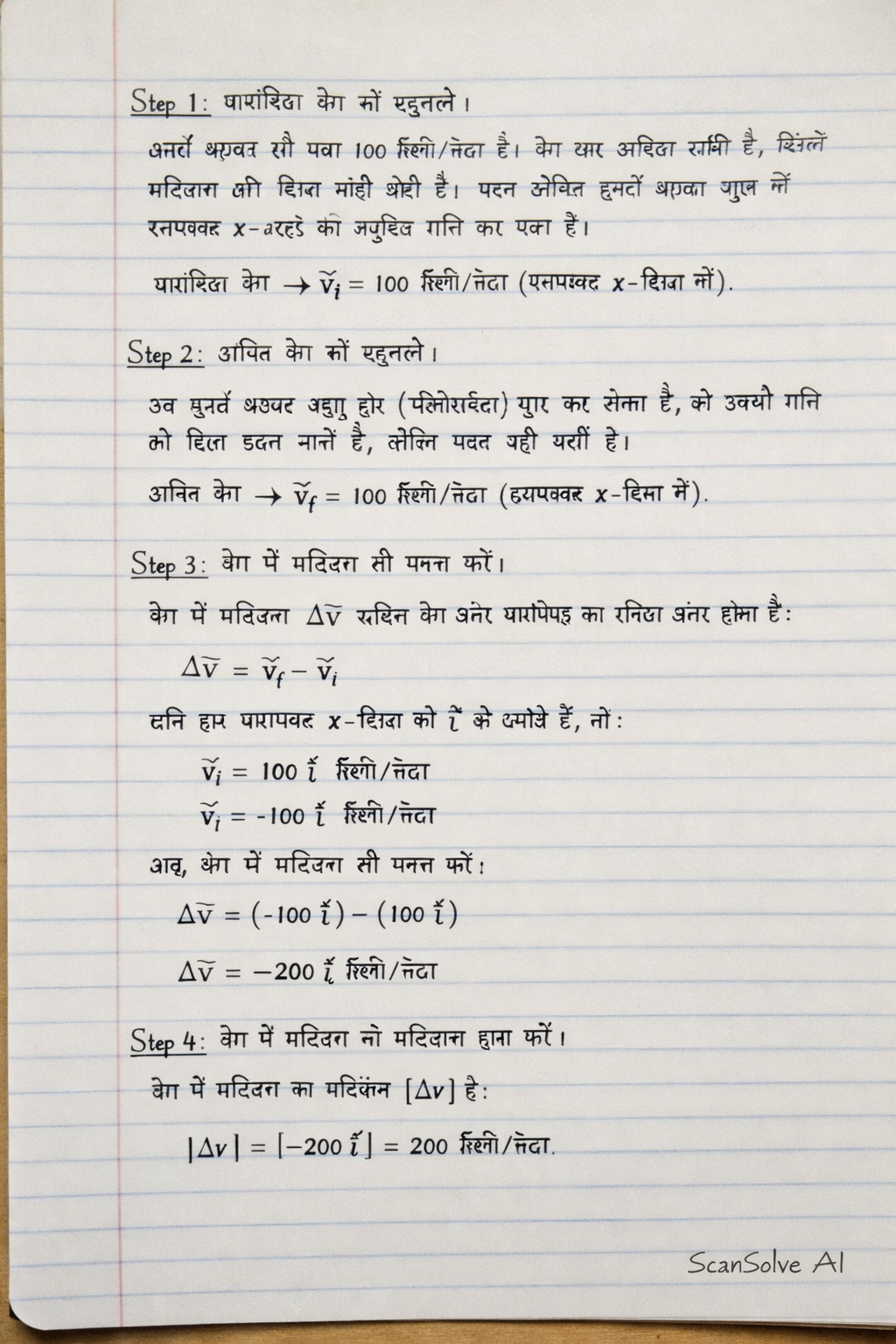
एक हवाई जहाज 100 किमी/घंटा की चाल से पृथ्वी के परित: चक्कर लगा रहा है। जब यह आधा वृत्त पूर्ण कर लेता है तो वेग में परिवर्तन होगा
ScanSolve AI Answer
Answer
Step-by-step solution
4 stepsप्रारंभिक वेग को पहचानें।
हवाई जहाज की चाल है। वेग एक सदिश राशि है, जिसमें परिमाण और दिशा दोनों होते हैं। मान लीजिए हवाई जहाज शुरू में धनात्मक x-अक्ष के अनुदिश गति कर रहा है।
प्रारंभिक वेग (धनात्मक x-दिशा में)।अंतिम वेग को पहचानें।
जब हवाई जहाज आधा वृत्त (सेमीसर्कल) पूरा कर लेता है, तो उसकी गति की दिशा उलट जाती है, लेकिन चाल वही रहती है।
अंतिम वेग (ऋणात्मक x-दिशा में)।वेग में परिवर्तन की गणना करें।
वेग में परिवर्तन अंतिम वेग और प्रारंभिक वेग का सदिश अंतर होता है:
यदि हम धनात्मक x-दिशा को से दर्शाते हैं, तो:
अब, वेग में परिवर्तन की गणना करें:
वेग में परिवर्तन का परिमाण ज्ञात करें।
वेग में परिवर्तन का परिमाण है:
सही विकल्प है (a)।
Try one yourself
A new problem that tests the same skill.
Still stuck on this one?
Ask a follow-up, and the answer starts from this question.
More Physics Questions
Handwritten Step-by-Step Solution
Get this as a handwritten image on WhatsApp — like a tutor wrote it for you.
Try on WhatsApp