
We read your photo as:
A machine lifts 30 tonnes of weed to a height of 15 m in 5 minutes. The input power of the machine is 20 kW. a) Determine the efficiency of the machine. b) Comment on the efficiency and suggest improv
ScanSolve AI Answer
Answers
2 partsStep-by-step solution
8 stepsHere are the solutions to the physics problems.
ITEM 2
Part a· 4 steps
Determine the efficiency of the machine
Convert given values to standard SI units.
Mass of weed,
Height,
Time,
Input power of machine,
Acceleration due to gravity,Calculate the useful work done (potential energy gained by the weed).
Calculate the useful output power.
Calculate the efficiency () of the machine.
Part b
Comment on the efficiency of the machine and suggest measures to improve it.
An efficiency of 73.5% means that 73.5% of the electrical energy supplied to the machine is converted into useful work (lifting the weed), while the remaining 26.5% is lost, primarily as heat and sound due to friction and air resistance. This is a reasonably good efficiency for a machine, but there is still room for improvement.
Measures to improve efficiency include:
- Reducing friction by lubricating moving parts and using appropriate bearings.
- Regular maintenance to ensure all components are in optimal working condition.
- Using more efficient motors or optimizing the machine's design to minimize energy losses.
ITEM 3
Determine where the other child has to seat so that the see-saw is in equilibrium.
Identify the given values.
Mass of child 1,
Distance of child 1 from pivot,
Mass of child 2,
Distance of child 2 from pivot,Apply the principle of moments for equilibrium.
For the see-saw to be in equilibrium, the clockwise moment must equal the anticlockwise moment.
Moment = Force distance from pivot.
Force = mass acceleration due to gravity ().
So, .
Since (acceleration due to gravity) is common on both sides, it cancels out:
Substitute the known values and solve for .
State the final answer.
The other child has to sit at a distance of or from the pivot.
ITEM 4
Report on EnergyEnergy is simply the ability to do work or cause change. Everything that happens in the world, from a car moving to a plant growing, requires energy. Energy cannot be created or destroyed, but it can change from one form to another.
We get energy from various sources. Some sources are renewable, meaning they can be replenished naturally, like solar energy from the sun, wind energy, and hydroelectric energy from moving water. Other sources are non-renewable, meaning they are limited and take a very long time to form, such as fossil fuels like coal, oil, and natural gas, and nuclear energy from uranium.
Energy exists in many types. For example, there is kinetic energy, which is the energy of movement, like a running person. There is also potential energy, which is stored energy, such as a ball held high above the ground. Other types include thermal energy (heat), chemical energy (in food or fuel), electrical energy (used in homes), light energy (from the sun), and sound energy. Understanding these different forms helps us use energy wisely.
Still stuck on this one?
Ask a follow-up, and the answer starts from this question.
More Physics Questions
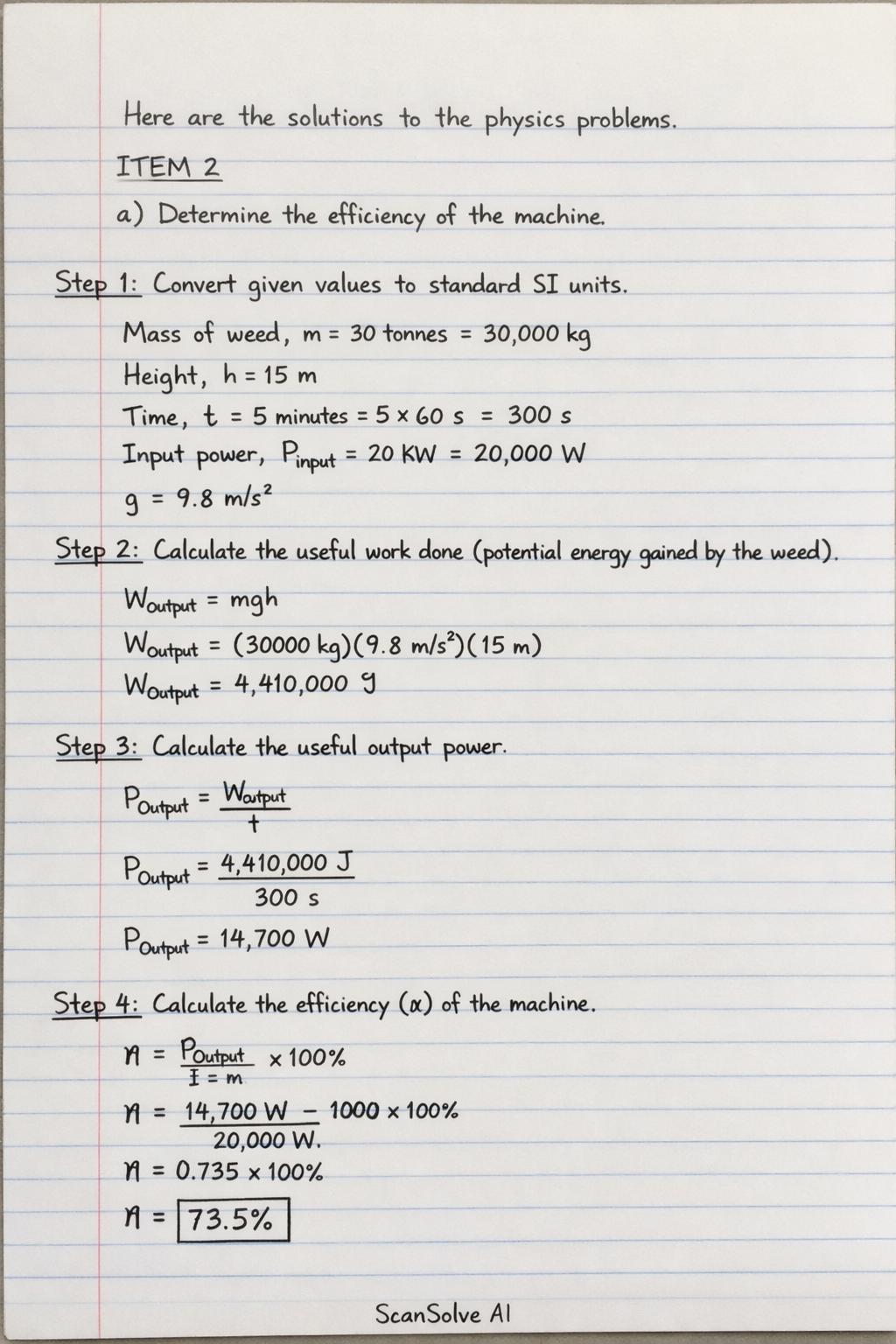
Handwritten Step-by-Step Solution
Get this as a handwritten image on WhatsApp — like a tutor wrote it for you.
Try on WhatsApp