
We read your photo as:
A) Question 1: South Africa's energy crisis
Physics
ScanSolve AI Answer
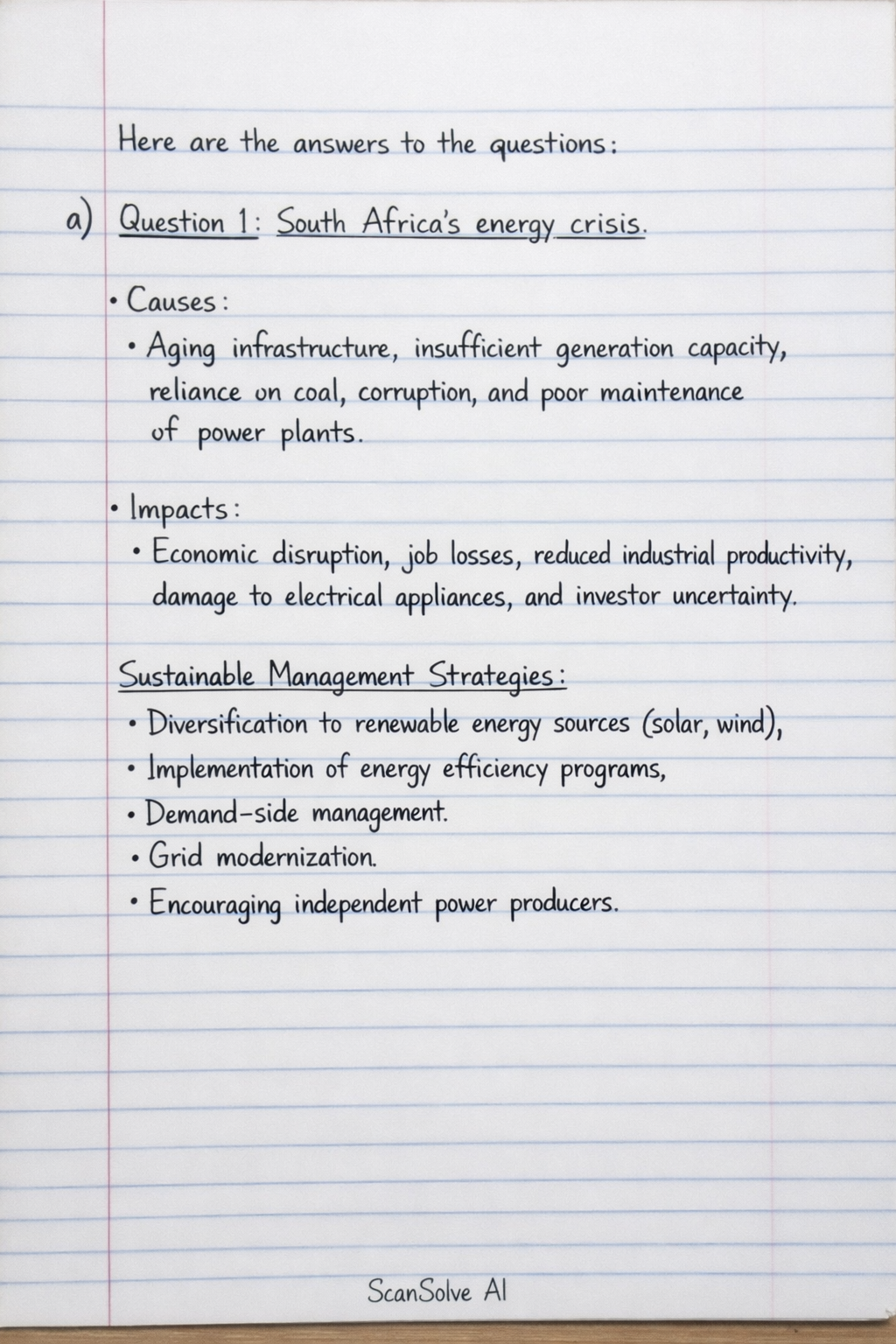
Here are the answers to the questions:
a) Question 1: South Africa's energy crisis
- Causes: Aging infrastructure, insufficient generation capacity, reliance on coal, corruption, and poor maintenance of power plants.
- Impacts: Economic disruption, job losses, reduced industrial productivity, damage to electrical appliances, and investor uncertainty.
- Sustainable Management Strategies: Diversification to renewable energy sources (solar, wind), implementation of energy efficiency programs, demand-side management, grid modernization, and encouraging independent power producers.
b) Question 2: Climate change, mudslides, and flash floods in KwaZulu Natal
- Causes/Reasons for mudslides and flash floods: Intense and prolonged rainfall (exacerbated by climate change), deforestation, rapid urbanization leading to increased impermeable surfaces, inadequate drainage systems, and unstable geological slopes.
- Possible Solutions: Development of early warning systems, investment in robust storm water infrastructure, reforestation and ecological restoration, strict land-use planning to avoid construction in high-risk areas, and climate change adaptation policies.
c) Question 3: Drought in South Africa
- Causes: Climate change leading to reduced rainfall and increased temperatures, natural phenomena like El Niño, inefficient water management practices, rapid population growth, and high agricultural water demand.
- Impacts: Severe water scarcity, food insecurity due to crop failures and livestock losses, significant economic losses in agriculture, potential health issues from contaminated water, and ecosystem degradation.
- Strategies to Minimize Impacts: Promoting water conservation and efficient irrigation techniques, exploring alternative water sources like desalination and wastewater recycling, investing in dam infrastructure, developing drought-resistant crops, and public awareness campaigns on water saving.
d) Question 4: Globalization and the digital inclusion gap
- How globalization can worsen the digital inclusion gap: It can lead to a focus on urban areas for technological development, high costs of advanced technology making it inaccessible for poorer populations, brain drain of skilled workers, and increased competition that can hinder local tech industries.
- How globalization has improved technology in underdeveloped countries: It facilitates the transfer of technology and knowledge, attracts foreign direct investment in infrastructure, provides access to global markets for technology products, lowers the cost of devices due to mass production, and expands connectivity through internet and mobile networks, fostering e-commerce and remote work opportunities.
Was this helpful?
Still stuck on this one?
Ask a follow-up, and the answer starts from this question.
Got a different question?Ask your own question
More Physics Questions
QSouth Africa's energy crisis is recurring, which poses a threat to energy management. Outline the…QSouth Africa's energy is recurring, which poses a threat to energy management Please follow the…QOutline Step 1 of your research task: defining the problem statement for a South African energy…QSummarize the challenges South Africans face due to electricity problems, focusing on the impact on…QResearch task on sustainable alternative energy sources in South Africa for Grade 12, covering…
Handwritten Step-by-Step Solution
Get this as a handwritten image on WhatsApp — like a tutor wrote it for you.
Try on WhatsApp