
We read your photo as:
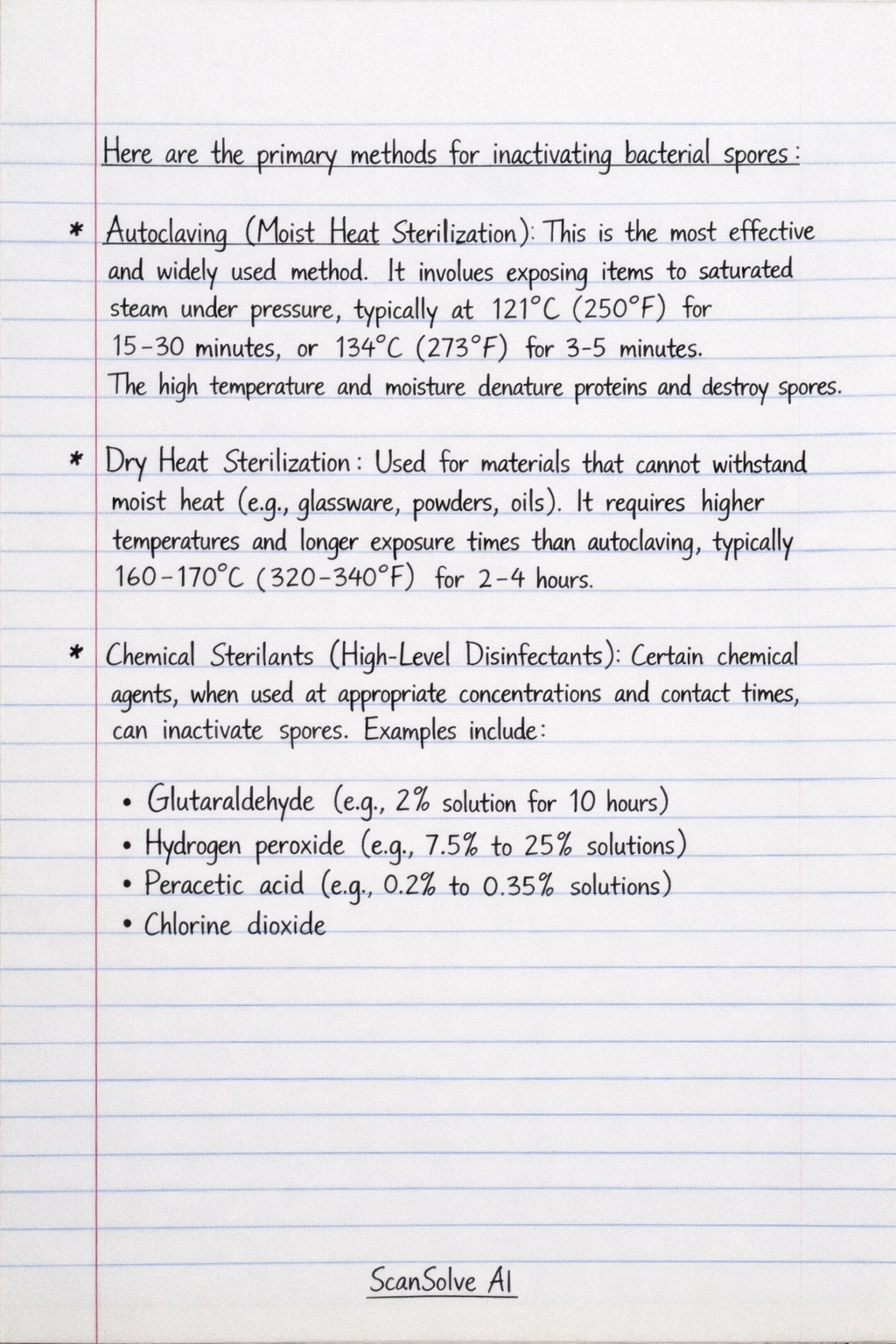
Autoclaving (Moist Heat Sterilization): This is the most effective and widely used method. It involves exposing items to saturated steam under pressure, typically at 121^ C ($250^
Physics
ScanSolve AI Answer
Here are the primary methods for inactivating bacterial spores:
- Autoclaving (Moist Heat Sterilization): This is the most effective and widely used method. It involves exposing items to saturated steam under pressure, typically at () for minutes, or () for minutes. The high temperature and moisture denature proteins and destroy spores.
- Dry Heat Sterilization: Used for materials that cannot withstand moist heat (e.g., glassware, powders, oils). It requires higher temperatures and longer exposure times than autoclaving, typically () for hours.
- Chemical Sterilants (High-Level Disinfectants): Certain chemical agents, when used at appropriate concentrations and contact times, can inactivate spores. Examples include:
- Glutaraldehyde (e.g., solution for 10 hours)
- Hydrogen peroxide (e.g., to solutions)
- Peracetic acid (e.g., to solutions)
- Chlorine dioxide
- Ionizing Radiation: Gamma rays and electron beams are highly effective for sterilizing heat-sensitive medical devices, pharmaceuticals, and food products. The radiation damages the DNA of spores, preventing their germination and replication.
Was this helpful?
Still stuck on this one?
Ask a follow-up, and the answer starts from this question.
Got a different question?Ask your own question
More Physics Questions
QWhat are the factors affecting the sterilization when using an autoclave and how to determine object…QA) What is Sterilization? b) Outline the various sterilization methods available.QIn English describe the procedure of disinfecting clothing and house hold articles in different…QWhat is the standard temperature and time for the batch or holding method of pasteurization?QWhich laboratory apparatus, besides a Bunsen burner, provides controlled heating, especially for…
Handwritten Step-by-Step Solution
Get this as a handwritten image on WhatsApp — like a tutor wrote it for you.
Try on WhatsApp